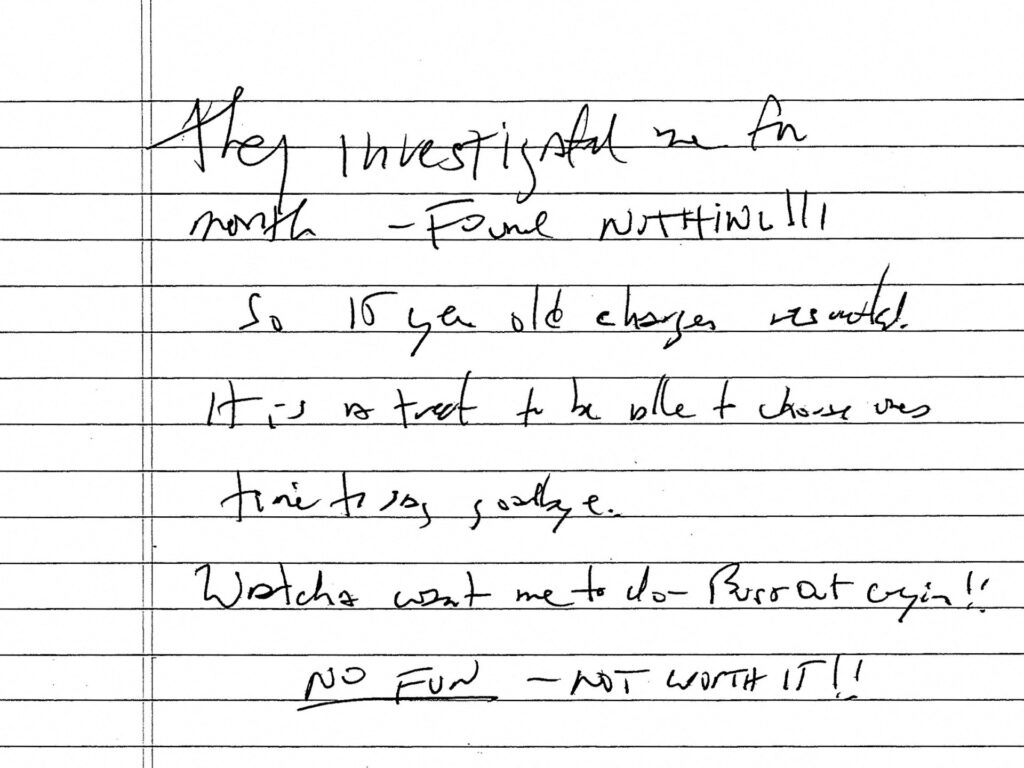
In a notable development in the ongoing legal proceedings surrounding Jeffrey Epstein’s controversial death, a U.S. judge has released a document presented as Epstein’s suicide note. The note was filed as part of a criminal case involving Epstein’s former cellmate, drawing significant public and media attention.
The judge, however, made a pointed decision to withhold any statements regarding the authenticity of the document. By not confirming whether the suicide note is genuine or fabricated, the court has left room for further investigation and consideration within the legal process.
Jeffrey Epstein, a financier and convicted sex offender, died in his jail cell in August 2019 under circumstances that have been widely scrutinized and remain the subject of conspiracy theories and intense public interest. The release of this note adds a new layer of complexity to the already intricate case.
The note’s contents and its potential implications for the related criminal case have not been publicly detailed by the court, fueling speculation. Epstein’s death was officially ruled a suicide, but questions about the adequacy of jail conditions and the actions of prison staff persist.
Advocates and critics have long called for transparency and accountability in the handling of Epstein’s incarceration and death. The emergence of the purported suicide note may prompt renewed inquiries and legal debates regarding evidentiary standards and procedural integrity.
The former cellmate implicated in the ongoing criminal proceedings has brought attention to the circumstances surrounding Epstein’s final days, with the suicide note serving as a key piece of evidence in the case.
Legal experts suggest that the court’s cautious approach reflects the sensitivity of the case and the need to avoid prejudicing outcomes while investigations are still active.
While the release of the note does not resolve lingering questions about Epstein’s death, it marks an important moment in the judicial examination of related matters.
Public reaction has been mixed, with some viewing the note as a potential explanation, while others remain skeptical and continue to demand deeper scrutiny.
The FBI and other authorities continue their investigations, aiming to clarify unresolved issues surrounding the case.
As the legal process unfolds, further disclosures and court decisions are expected to shed light on the veracity of the suicide note and its relevance to the criminal proceedings involving Epstein and his associates.
This case remains a focal point in discussions about justice, prison oversight, and the integrity of the American legal system.
The judge’s release of the purported suicide note without endorsement of its authenticity underscores the complexity and caution exercised in handling such high-profile and sensitive evidence.
Observers anticipate that subsequent hearings and filings will reveal more information, potentially influencing public understanding and judicial outcomes.
In conclusion, the release of the purported Jeffrey Epstein suicide note by a U.S. judge represents a significant yet carefully guarded step in the intricate legal saga that continues to capture national and international attention.