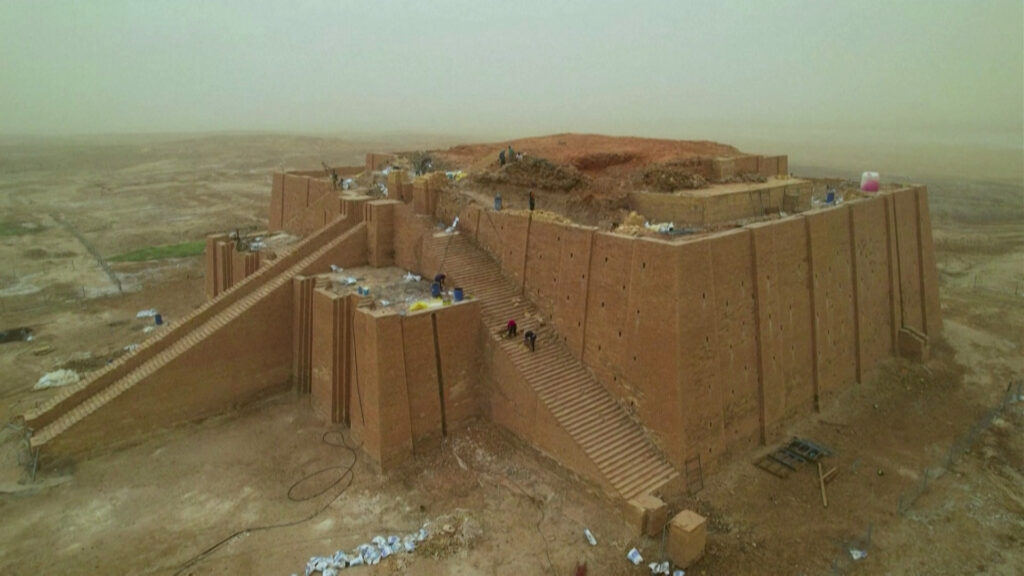
Restoration efforts are currently in progress at the ancient Ziggurat of Ur, an iconic stepped temple located in southern Iraq. This monumental structure, dating back to approximately 2100 BCE and attributed to the Sumerian king Ur-Nammu, is a key archaeological and cultural treasure that reflects the ingenuity of early Mesopotamian civilization.
The ziggurat, which was originally constructed as a massive terraced platform dedicated to the moon god Nanna, has undergone various phases of deterioration over millennia due to natural erosion, weathering, and human activity. Recognizing its historical value and the need for preservation, restoration teams have embarked on a meticulous project to revive the site using traditional construction techniques and materials.
These methods mirror those used by the original builders, including the use of mud bricks and bitumen for binding, which are both authentic and culturally significant. The aim is not only to strengthen the structural integrity of the monument but also to preserve its authenticity and historical context.
Archaeologists and restoration experts emphasize the importance of combining modern conservation science with traditional craftsmanship to ensure the ziggurat can withstand environmental challenges moving forward. The project has also involved training local artisans in these age-old techniques, fostering community engagement and skills transfer.
Rehabilitation work includes careful removal of deteriorated materials, replacement with handmade bricks matching the original size and composition, and reinforcing the internal core without compromising the external appearance. The site is also being prepared to welcome increased tourism, with measures to protect it against future damage.
The restoration of the Ziggurat of Ur symbolizes a broader commitment to preserving Iraq’s rich archaeological heritage amid ongoing challenges posed by conflict and environmental factors. This initiative not only highlights the significance of the ziggurat in human history as an architectural and religious monument but also serves as a model for heritage conservation in the region.
This project helps to reconnect present and future generations with their cultural roots and promotes global awareness of ancient Mesopotamian civilization’s contributions to human development. As work progresses, the Ziggurat of Ur is expected to regain much of its former grandeur, standing as a testament to the enduring legacy of early urban societies in the cradle of civilization.