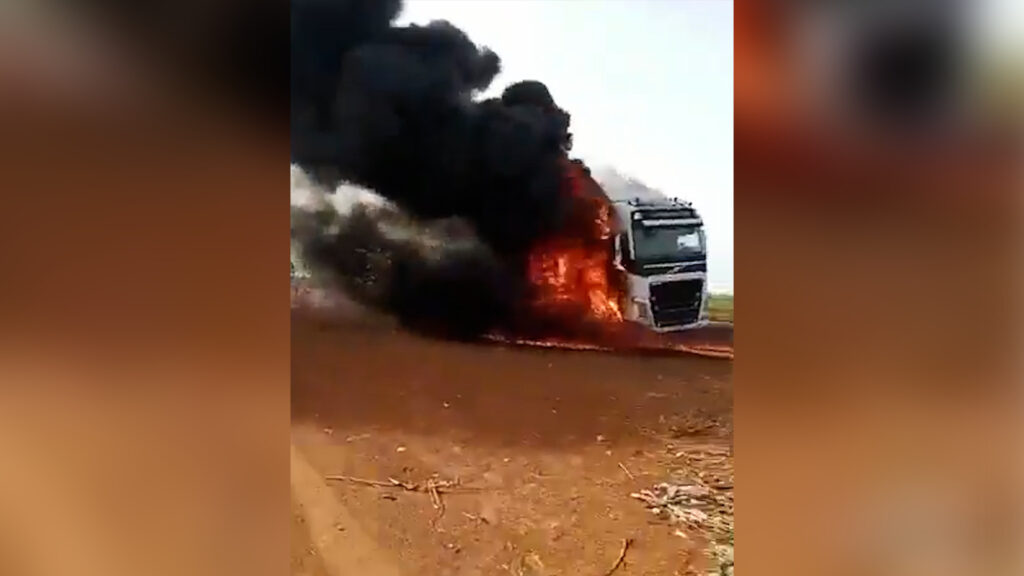
In a troubling escalation of violence, Al-Qaeda-linked fighters in Mali have set fire to food trucks as part of their ongoing blockade of roads around the capital city, Bamako. This aggressive action has further disrupted the fragile stability in the region and heightened concerns about civilian access to essential supplies.
The blockade, which has been ongoing for several days, appears to be a strategic move by the militants to exert control and pressure on the Malian government. By targeting food trucks, the fighters have directly threatened food security in the capital, potentially leading to shortages and increased hardship for the local population.
Roadblockades and acts of arson have become common tactics in conflicts involving militant groups in West Africa. These methods not only hamper the movement of goods and people but also instill fear among civilians and authorities alike. The destruction of food trucks is particularly alarming, as it impacts humanitarian aid efforts and the daily sustenance of thousands of residents.
Bamako, Mali’s largest city, serves as the administrative and economic hub of the nation. Any disruption of supply chains in this area can have widespread ramifications, affecting markets, prices, and the overall stability of the region.
Local authorities have condemned the attacks, calling them acts of terror aimed at destabilizing the country and undermining peace efforts. Security forces have been deployed to try to regain control of the roads and protect commerce and civilian safety.
International observers and humanitarian organizations have expressed their concern over the escalating violence and its impact on vulnerable populations. Many have called for increased support to ensure that aid can reach those in need despite the ongoing crisis.
The conflict in Mali is part of a broader struggle involving various Islamist militant groups in the Sahel region, with Al-Qaeda affiliates frequently engaging in insurgent activities. Efforts by the Malian government, supported by international allies, to counter these groups have met with mixed success.
The recent attacks underscore the persistent threat posed by these fighters and the challenges faced by Mali in maintaining security and stability. There is an urgent need for comprehensive solutions that address both the security and humanitarian dimensions of the crisis.
As the situation develops, the international community is urged to remain vigilant and responsive to the needs of Mali’s population. Ensuring safe passage for food and aid supplies is critical to preventing a worsening humanitarian disaster.
The people of Mali continue to bear the brunt of this conflict, with many caught between the militant groups and government forces. The destruction of food trucks symbolizes not just a tactical assault but a broader assault on the livelihoods and well-being of innocent civilians.
Peace and stability in Mali will require concerted efforts from local leaders, international partners, and communities themselves to overcome the threat posed by extremist groups and rebuild a peaceful future for all citizens.