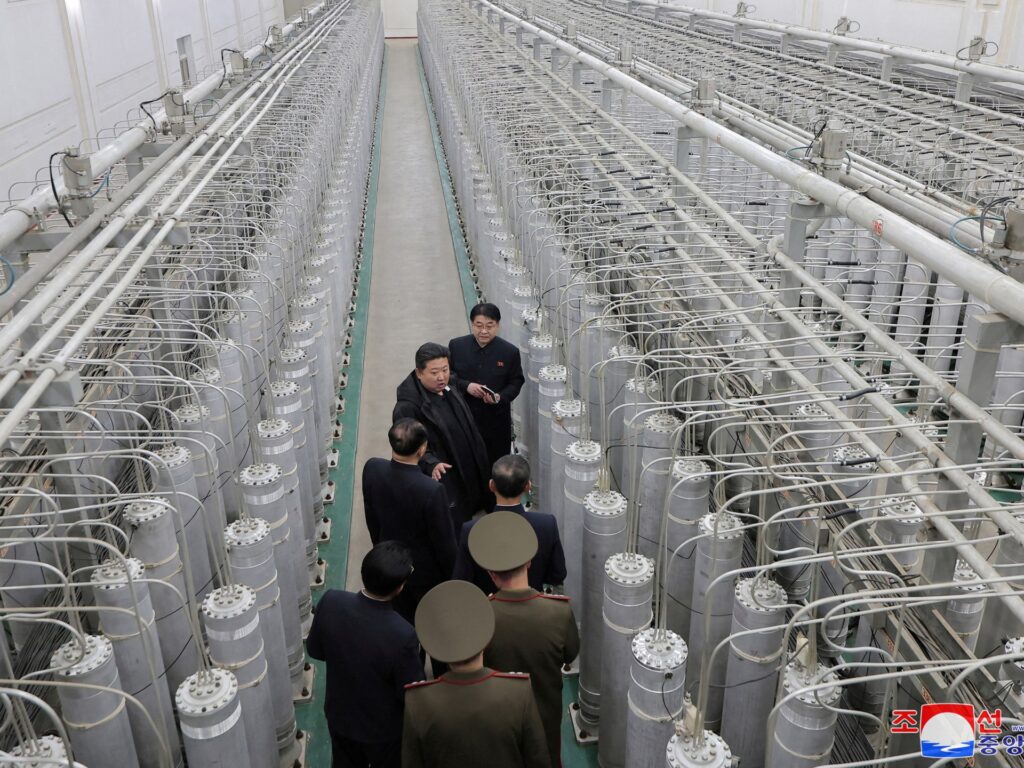
North Korea has officially stated that it does not consider itself bound by any nuclear non-proliferation treaties, marking a firm stance on its nuclear program. Pyongyang, the capital of North Korea, emphasized that its status as a nuclear-armed state will remain unchanged despite external rhetorical claims or international calls for denuclearization.
This declaration comes amid ongoing global efforts to prevent the spread and development of nuclear weapons. North Korea’s announcement underscores its defiance of international norms and treaties, particularly the Treaty on the Non-Proliferation of Nuclear Weapons (NPT), to which it was previously a party but has since withdrawn.
By asserting that external rhetorical claims will not affect its nuclear status, the North Korean leadership is signaling a continuation, if not an intensification, of its nuclear weapons program. This position complicates diplomatic efforts to bring the country back to the negotiating table for denuclearization talks.
The statement also reflects Pyongyang’s prioritization of what it perceives as national security and sovereignty over international agreements and pressure. The regime sees its nuclear arsenal as a critical deterrent against perceived threats, particularly from the United States and its allies.
International response to North Korea’s stance has been one of concern and condemnation. Many countries view Pyongyang’s continued development and possession of nuclear weapons as a destabilizing factor in the region and a threat to global peace and security.
The refusal to be bound by nuclear non-proliferation treaties also hinders progress toward peace on the Korean Peninsula, where tensions have historically been heightened due to the North’s nuclear ambitions and missile tests.
Analysts warn that North Korea’s unwavering stance may lead to increased sanctions and isolation but also raises the risk of misunderstandings and potential conflict escalation. The international community continues to explore diplomatic and strategic options to address the challenges posed by North Korea’s nuclear program.
In summary, North Korea’s official statement rejecting any binding commitments under nuclear non-proliferation treaties signifies a critical moment in global security. It highlights the persistent challenges in achieving denuclearization and the broader implications for international peace and stability.