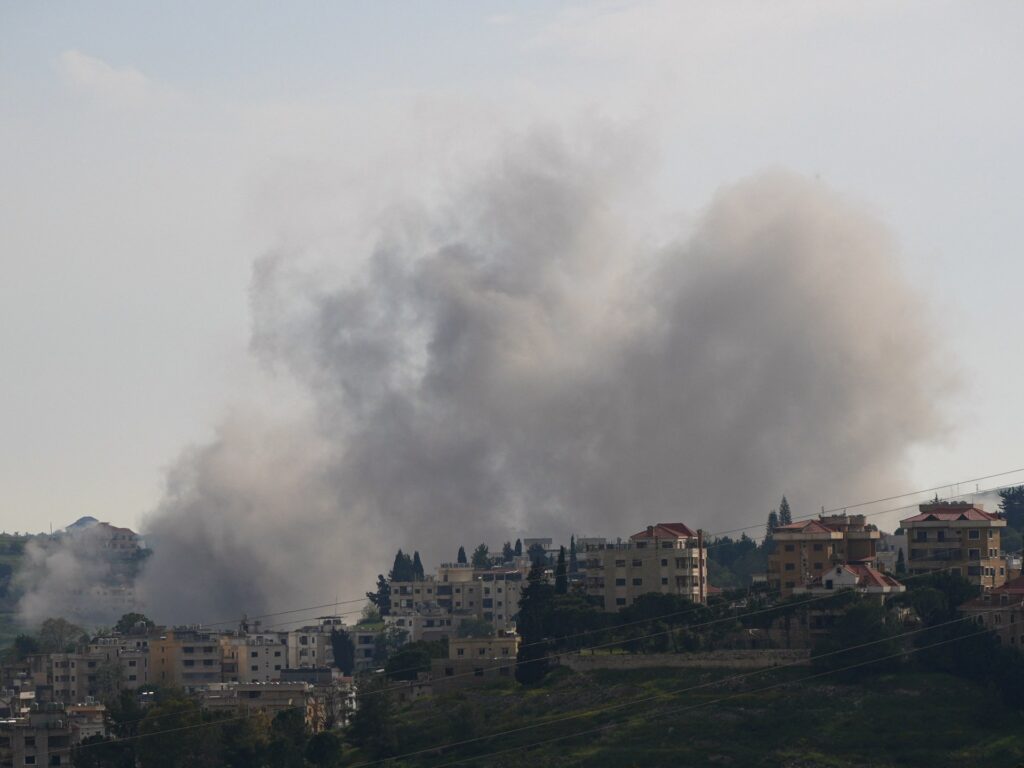
Israel has recently issued new forced displacement orders affecting more than ten villages and towns in southern Lebanon. These orders notably impact several communities within the Nabatieh district, located north of the Litani River, a region that has long been a focal point in the ongoing tensions between Israel and Lebanon.
The affected areas span a number of small villages and towns, many of which have deep historical and cultural significance to their residents. The orders call for the evacuation of these communities, prompting concern and condemnation from various local and international stakeholders. The forced displacement directive comes amid heightened security concerns and persistent conflict between Israeli forces and Hezbollah militants operating in southern Lebanon.
The Nabatieh district, which lies just north of the Litani River, has traditionally been a stronghold for Hezbollah, a Shiite militant group and political party considered a terrorist organization by Israel and several other countries. The new orders are part of a broader Israeli strategy to counteract what it perceives as threats emanating from this area. The displacement directive disrupts the lives of thousands of civilians who reside in these villages, raising serious humanitarian issues.
Human rights organizations have expressed alarm over the forced displacement orders, arguing that they violate international law, particularly the Fourth Geneva Convention, which prohibits the forced transfer of civilian populations in conflict zones unless the security of the population or imperative military reasons demand it. The displacement could exacerbate the already fragile humanitarian situation in southern Lebanon, where many communities have suffered from previous conflicts and economic hardships.
Lebanese officials have condemned the Israeli orders, asserting that such actions undermine Lebanon’s sovereignty and threaten regional stability. The Lebanese government has called upon international bodies, including the United Nations and the Arab League, to intervene and pressure Israel to rescind the displacement directives. The situation has also drawn attention to the continuing volatility in the border regions between Israel and Lebanon.
Israel maintains that the displacement orders are essential security measures designed to protect its citizens from potential attacks by Hezbollah and other militant groups. Officials argue that the areas targeted are used as bases for launching rocket attacks into northern Israel, and that evacuating these civilian populations could reduce collateral damage in the event of military operations.
However, critics question the legality and morality of the displacement, emphasizing the severe impact on innocent civilians who are forced to leave their homes and livelihoods. The disruption caused by these orders includes loss of property, interruption of education and healthcare services, and psychological trauma experienced by displaced families.
The international community remains divided, with some countries supporting Israel’s security concerns, while others criticize the approach as disproportionate and harmful to civilian populations. Diplomatic efforts continue amid fears that the forced displacement could escalate tensions further, potentially leading to renewed conflict in the already volatile region.
As the situation develops, the affected communities in southern Lebanon face an uncertain future. The orders represent a significant escalation in the ongoing Israel-Lebanon conflict, highlighting the complexities of security, sovereignty, and humanitarian considerations in one of the Middle East’s most troubled regions.