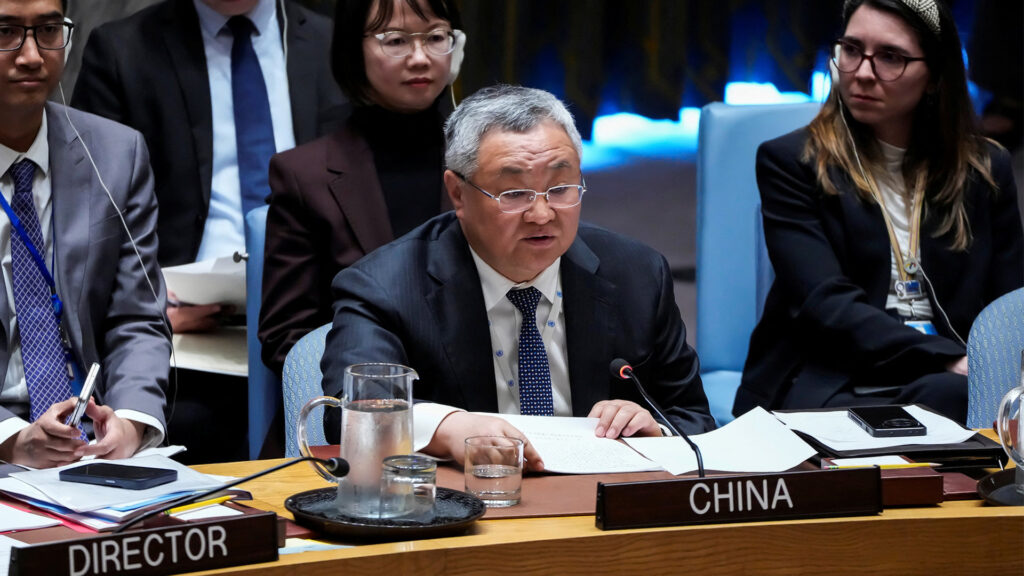
China’s Permanent Representative to the United Nations, Ambassador Fu Cong, has emphasized the critical importance of maintaining peace and reopening the Strait of Hormuz, stating these issues will prominently shape the discussions between U.S. President Donald Trump and Chinese President Xi Jinping. The Strait of Hormuz, a strategic chokepoint through which a significant portion of the world’s oil supply passes, has recently seen heightened tensions threatening global energy security.
Ambassador Fu Cong underscored that ensuring a ceasefire in the contentious region and securing unimpeded navigation through the strait are urgent priorities amid ongoing geopolitical conflicts. The blockade or closure of the Strait could disrupt oil flows from the Middle East, negatively impacting international markets and economies worldwide.
The Ambassador’s comments come ahead of what is expected to be a high-stakes meeting targeting cooperation and de-escalation of conflicts affecting global stability. Fu Cong pointed out that coordinated diplomatic engagement, particularly between the United States and China as major global powers, is essential to prevent further deterioration in the region’s security environment.
He further stated that both nations share a mutual interest in safeguarding global trade routes and energy supplies, integral to their national interests and international economic health. The strait’s closure or any conflict there could have ripple effects, sparking supply shocks and economic uncertainties globally.
The anticipated Trump-Xi talks are thus framed not only as a bilateral dialogue but as a significant platform for addressing urgent international security challenges. Ambassador Fu urged for pragmatic solutions focused on dialogue and cooperation to avert further conflict and ensure the free flow of goods and energy.
The situation in the Strait of Hormuz is a reminder of the interconnected nature of international relations and the critical role diplomacy plays in maintaining peace and security. Fu’s remarks highlight the broader strategic challenges that define the contemporary geopolitical landscape and the importance of high-level negotiations in resolving them.
In conclusion, the Ambassador’s statement reinforces the shared responsibilities of global powers in managing crises and underscores the strategic importance of the Trump-Xi meeting. The international community is watching closely as both leaders prepare to address this pivotal issue, whose resolution or escalation could significantly influence global stability and economic wellbeing.