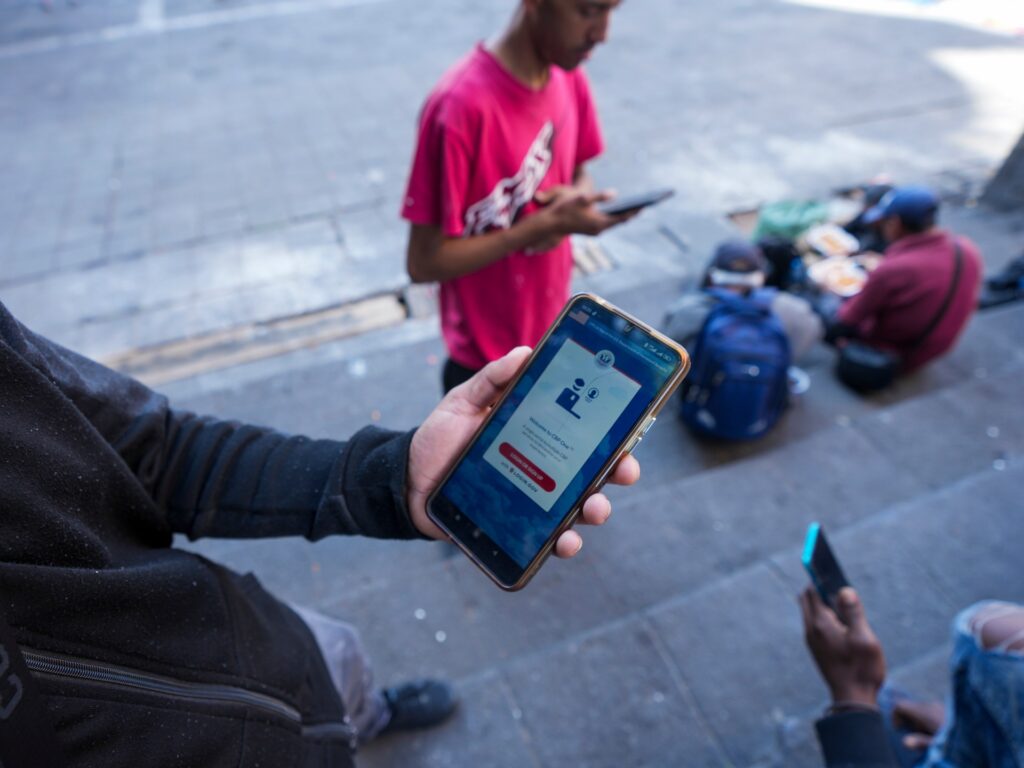
Former President Donald Trump has renewed his efforts to terminate the temporary legal status granted to individuals who entered the United States using the CBP One app, a policy initially established during the Biden administration. This move aims to reverse protections that allowed certain entrants to remain legally in the country after utilizing the CBP One application for entry processing. Previously, a federal judge had blocked attempts to end this temporary legal status, citing concerns over the potential impact on those individuals and possible procedural issues.
The CBP One app, introduced under President Biden’s administration, serves as a digital platform for travelers, enabling smoother and more controlled entry into the United States along the border. It was designed to facilitate safer, faster processing and provide more transparency compared to traditional methods. The app has been particularly important for migrants who use legal pathways to cross into the U.S., giving them a form of provisional legal recognition.
Trump’s bid to revoke the legal status linked to CBP One entrants is part of his broader immigration policy agenda, focusing on stringent immigration control and enforcement. This reflects a continuation of policies from his presidency, emphasizing border security and a reduction of pathways for unauthorized entry or extended legal status for migrants.
Legal experts note that this challenge will likely reignite debates over immigration law and executive authority. The initial judicial block was grounded in the argument that sudden withdrawal of legal status could cause undue harm and procedural unfairness to those affected. Opponents of the Trump proposal argue that the CBP One app provides necessary humanitarian relief and legal clarity for migrants under complex circumstances.
Supporters of Trump contend that ending the CBP One legal status is crucial to restoring effective border control and deterring unauthorized migration. They assert that the Biden-era measures have inadvertently encouraged increased border crossings by offering temporary legal protections that undermine existing immigration laws.
The administration’s further attempt to implement this rollback faces potential additional legal scrutiny, as courts evaluate whether the move complies with federal immigration statutes and administrative procedures. If upheld, the repeal could lead to the removal or detention of thousands currently residing under the temporary status granted through the CBP One mechanism.
The situation underscores the ongoing tensions between federal agencies, the judiciary, and policymakers over immigration policy in the United States. The Trump administration’s renewed focus on rescinding CBP One-related legal protections represents a significant clash over how best to manage border security and migrant rights.
Future court rulings will likely set important precedents for the scope of executive power over immigration status and the rights of individuals entering through technologically innovative but politically contentious pathways like the CBP One app. Observers anticipate that this legal battle will be closely watched for its implications on immigration policy and the lives of thousands navigating U.S. border entry processes.
As this story develops, stakeholders including immigrant advocacy groups, government officials, and legal experts remain deeply engaged in assessing the impacts of these policy shifts. The ultimate resolution will shape the landscape of immigration enforcement and human rights considerations along the U.S. southern border for years to come.