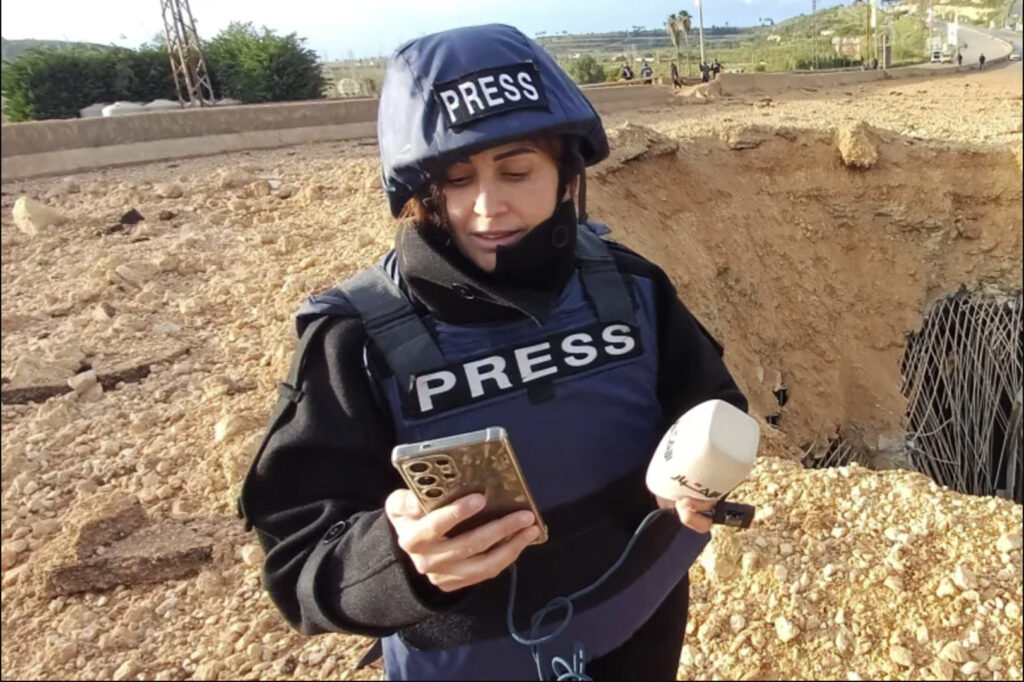
Amal Khalil, a Lebanese journalist renowned for her fearless reporting in conflict zones, was tragically pursued and killed by Israeli forces, a chilling incident that has sent shockwaves through the journalistic and international community. The details that have emerged reveal a calculated and relentless pursuit by the Israeli military, underlining the grave dangers faced by journalists in war-torn regions.
Khalil was covering sensitive and critical stories close to the Israeli-Lebanese border, where tensions have historically run high. Israeli forces, according to eyewitness accounts and investigative reports, identified Khalil as a target due to her outspoken coverage and presence in flashpoint areas.
The pursuit reportedly began when Khalil was traveling to cover a story about local resistance efforts and civilian impacts of military operations. Surveillance teams tracked her movements over several days, utilizing advanced intelligence and reconnaissance technology to pinpoint her location.
On the day of the killing, Israeli forces executed a coordinated operation involving aerial drones and ground troops. Reports suggest that the use of drones allowed for continuous monitoring, limiting Khalil’s chances to evade capture or harm.
Despite attempts by Khalil to safeguard herself and bystanders, the Israeli forces launched a targeted strike. The operation was swift and lethal, resulting in Khalil being fatally wounded, as confirmed by medical personnel and witnesses at the scene.
Human rights organizations have condemned the killing, emphasizing that targeting journalists is a violation of international law, which mandates protection for media personnel in conflict zones. The incident has sparked international outcry demanding accountability and a thorough investigation.
The Lebanese government and media outlets have expressed profound sorrow and outrage, calling Khalil a symbol of courage and dedication to truth. Her death has intensified calls within Lebanon and worldwide for stronger protections for reporters and for an end to the unchecked violence against civilians and journalists alike.
The pursuit and killing of Amal Khalil highlight the perilous conditions under which journalists operate and the broader geopolitical struggles that engulf the region. Her legacy is a stark reminder of the cost of truth-telling in areas riddled with conflict and the dire need for international mechanisms that safeguard freedom of the press and human rights.