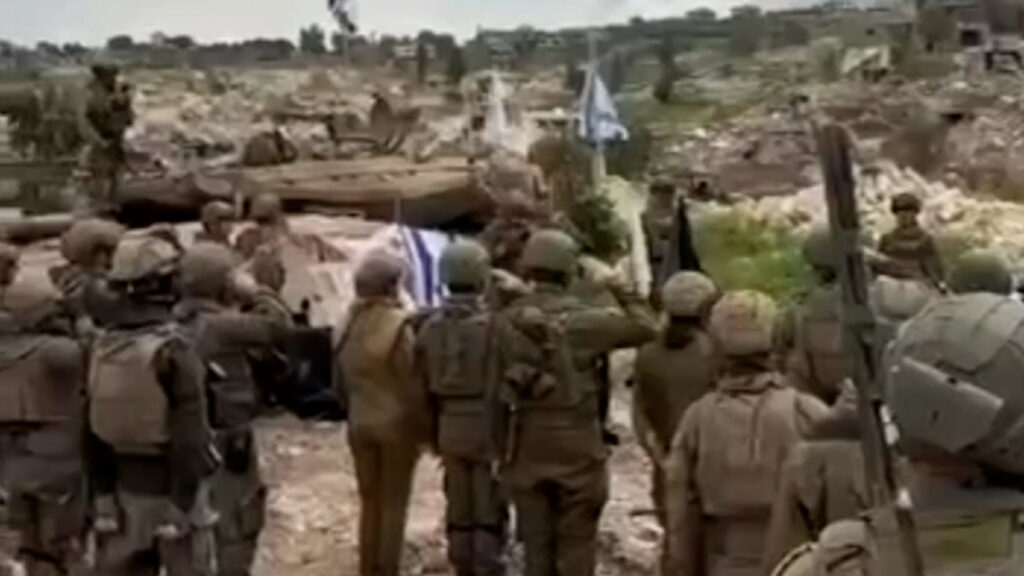
In a recent event that has caught international attention, Israeli soldiers were seen singing the Israeli national anthem on the ruins of a demolished town in southern Lebanon. The scene unfolds against a backdrop of conflict and tension in the region, highlighting the ongoing struggles between Israel and Lebanon.
The town, which was reportedly demolished during previous military operations, now lies in ruins. The act of singing the national anthem in such a place is symbolically powerful and has sparked a range of reactions from different communities and international observers.
This occurrence reflects the deeper historical and political complexities in the area. Southern Lebanon has been a focal point of conflict, notably during the Israeli-Lebanese wars and various military engagements involving Hezbollah and other groups.
The Israeli soldiers’ rendition of their national anthem on the site can be interpreted as a demonstration of national pride and a symbolic assertion of victory or presence in a contested zone. However, it also raises important questions about the impacts of military actions on civilian populations and the preservation of cultural and historical sites.
Various analysts suggest that such acts can affect the peace process and exacerbate tensions, as they may be seen as provocative or insensitive by Lebanese citizens and the broader international community.
The international community often calls for restraint and respect for sovereignty in such disputed areas, emphasizing the need for dialogue and peaceful resolution of conflicts.
Meanwhile, social media and news outlets have circulated footage of the soldiers, drawing widespread reactions. Supporters see it as a display of patriotism and morale boosting for troops stationed in challenging environments.
Conversely, critics view the act as disrespectful to the memory of those who lived in the town before its destruction and as a reminder of the cycle of violence that has plagued the region for decades.
The incident highlights the continuing instability in regions affected by prolonged conflicts and underscores the importance of efforts aimed at reconciliation and rebuilding trust between communities.
As tensions remain high, the focus on such symbolic acts serves as a reminder of the human cost of conflict and the challenges faced in pursuing lasting peace in the Middle East.
The Israeli government has not officially commented on the incident, while Lebanese authorities have condemned the act as provocative and disrespectful.
This episode adds another chapter to the complex narrative of Israeli-Lebanese relations, demonstrating how symbolic gestures can influence public perception and diplomatic discourse.
Observers hope for renewed commitments to peace talks and confidence-building measures to prevent future escalations.
In the meantime, the ruins of the Lebanese town stand as a stark testament to the lasting impact of conflict and the urgent need for sustainable solutions in the region.
This event serves as a poignant reminder of the fragility of peace and the power of symbolic actions in shaping the course of history in conflict zones.