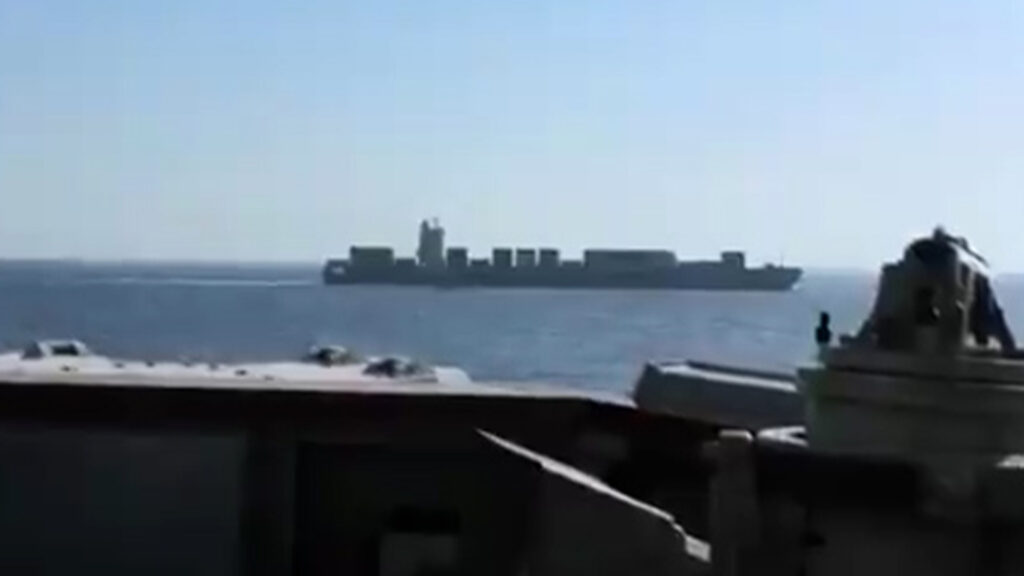
In a significant maritime incident near the Strait of Hormuz, US forces recently attacked and seized the Iranian-flagged ship Touska. The US Central Command released a video that reportedly captures the moment a guided-missile destroyer fires upon the vessel before boarding and taking control. This aggressive maneuver underscores the heightened tensions in one of the world’s most strategically important waterways.
The Strait of Hormuz is a critical chokepoint through which a substantial portion of the world’s oil shipments travel daily. Any disruption or conflict in this narrow passage can have far-reaching consequences on global energy markets and international relations.
According to the footage made public by the US Central Command, the guided-missile destroyer identified the Touska, which is registered under the Iranian flag. The ship appeared to be noncompliant with US orders, prompting the military to engage. The video shows precise missile fire aimed to disable the ship, paving the way for US forces to board safely.
The operation reflected a well-coordinated effort by the US Navy to assert control and security within a notoriously volatile area. Officials have stated that the attack was necessary due to perceived provocations and the potential threat posed by the Iranian vessel. However, details of what triggered the firing are still emerging.
This incident comes amid escalating tensions between the United States and Iran, which have struggled with mutual distrust and conflicting interests in the Middle East for decades. Both nations frequently jockey for influence in the Gulf region, and such confrontations on the high seas exacerbate diplomatic frictions.
Maritime security experts emphasize that the seizure of the Touska represents a significant escalation, as direct military engagement involving Iranian-flagged vessels near the Strait of Hormuz can quickly spiral into broader conflict. This narrow waterway is tightly monitored by various international naval forces, making any aggressive act highly consequential.
Iranian officials have yet to officially respond to the incident, but previous similar occurrences have led Tehran to condemn US actions as violations of sovereignty and international law. The incident could prompt further diplomatic protests or reprisals by Iran.
Global powers are closely watching developments, concerned about the risk of a full-scale confrontation in the Gulf. The United Nations and allied countries may call for restraint and urge both sides to engage in dialogue to prevent an escalation.
The seizure of the Touska could impact energy prices worldwide, given the pivotal role the Strait of Hormuz plays in oil exports. Market analysts are already monitoring for any supply chain disruptions or increased insurance costs for commercial vessels operating in the region.
This episode is a stark reminder of the fragile balance in geopolitical hotspots where military power is often displayed as a tool of diplomatic messaging. As the situation unfolds, the international community will be looking for signs of de-escalation or, conversely, further deterioration in US-Iran relations.