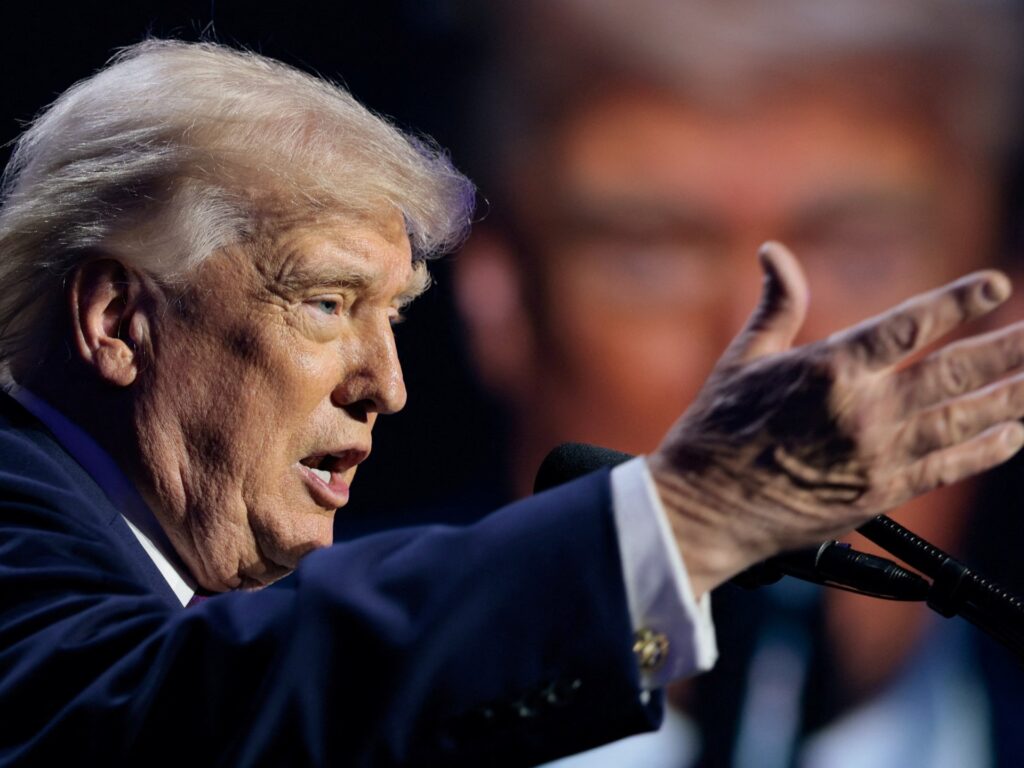
In a recent statement, US President Donald Trump announced that American forces intercepted an Iranian cargo ship named Touska, which was attempting to circumvent a naval blockade near the strategic Strait of Hormuz. According to Trump, US forces stopped the ship by ‘blowing a hole’ in its engine room, effectively disabling the vessel and preventing it from proceeding any further.
The Strait of Hormuz is a critical maritime chokepoint that connects the Persian Gulf with the Arabian Sea, through which a significant portion of the world’s oil supply is transported. Due to escalating tensions between the US and Iran, the United States has established a naval presence in the region to enforce sanctions and monitor shipping activities.
President Trump’s claim highlights the ongoing conflict and tension in the Gulf region. The interception of the Touska reflects the US administration’s commitment to enforcing sanctions on Iran and disrupting Iranian shipping activities suspected of violating those sanctions.
Iran has not yet commented publicly on the incident. However, this event is likely to exacerbate already heightened tensions between Washington and Tehran, which have been characterized by distrust, diplomacy breakdowns, and threats of further military actions.
The US blockade near the Strait of Hormuz aims to prevent Iran from exporting oil and weapons that could destabilize the region further. Iran, in turn, considers these measures as acts of aggression and violations of international law.
Analysts suggest that such confrontations increase the risk of miscalculation and potential military escalation. The Gulf region remains one of the most volatile areas globally, with several nations invested in the outcomes of US-Iranian relations.
This incident with the Touska cargo ship adds to a series of maritime confrontations seen in recent years, where both Iran and the US have accused each other of provocations and interference with shipping lanes.
Internationally, there are calls for de-escalation and diplomatic solutions to avoid conflict in this sensitive corridor. The safety of civilian shipping and the stability of global energy markets depend heavily on maintaining peace and securing these sea routes.
The US administration’s stance is firm on enforcing economic sanctions through naval measures, while Iran’s response will be closely watched by the international community. As the situation develops, diplomatic efforts may intensify to prevent further incidents and promote dialogue between the conflicting parties.