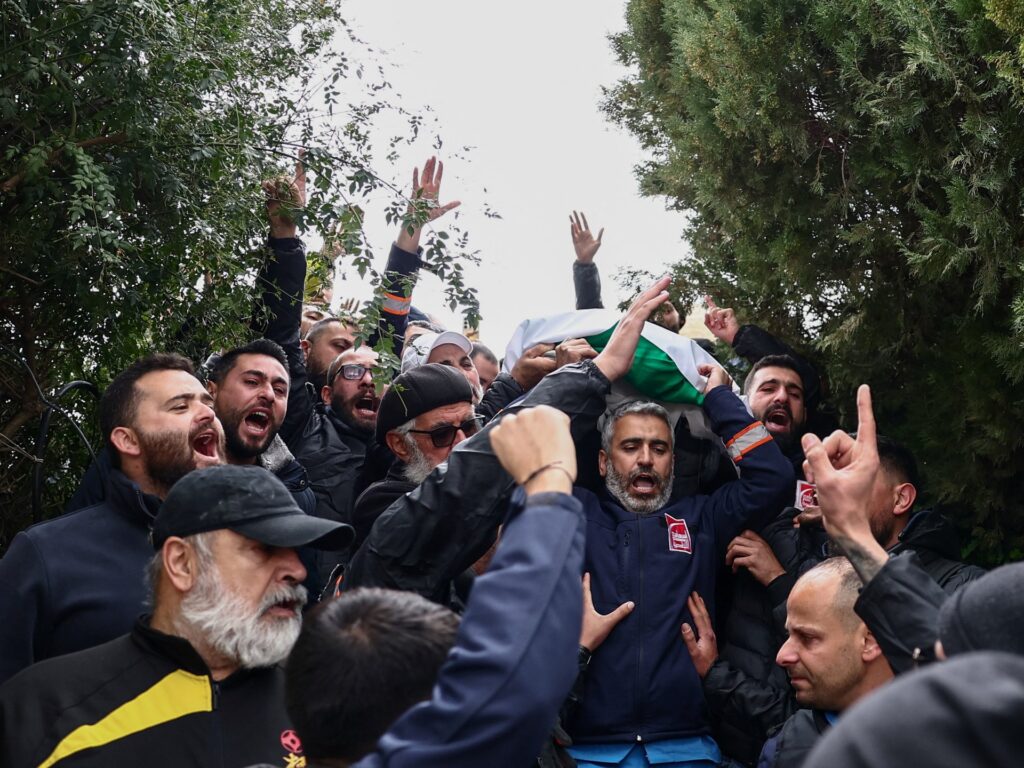
In a harrowing account from south Lebanon, ambulance crews have come forward to describe the terrifying experience of Israeli ‘triple-tap’ attacks that claimed the lives of four paramedics and left six others wounded. These targeted strikes evoke a disturbing method where an initial attack is followed by subsequent hits aimed deliberately at emergency responders arriving to assist the wounded.
The ‘triple-tap’ strike strategy has reportedly been used to maximize destruction by hitting the same location multiple times, ensuring that rescue operations are severely hampered. Ambulance workers testified that after the first strike struck, they rushed in to aid the victims, only to face additional attacks moments later, turning rescue missions into perilous undertakings.
This tactic has raised significant concern among humanitarian organizations and international observers due to its ruthless targeting of medical personnel and emergency responders, roles protected under international law. The crews reported that the strikes were precise, timed to strike when ambulances and rescuers were present at the scene, leading to casualties among medical staff and civilians alike.
Paramedic Hakim Rami, one of the few survivors, recounted the trauma of the incident, highlighting the ethical and humanitarian violations inherent in such attacks. “We are trained to save lives, not to become targets ourselves,” he said, underscoring the devastating impact on morale and emergency response capabilities.
Local hospitals in south Lebanon have been overwhelmed by the influx of wounded, further strained by the threats posed to ambulance crews who find themselves risking their lives to provide lifesaving aid. The targeted attacks have not only claimed lives but also impeded timely medical assistance in conflict zones.
The international community has condemned the ‘triple-tap’ practice as a war crime. Human rights groups have called for urgent investigations and accountability for those responsible, emphasizing the need to safeguard medical personnel amidst hostilities.
This recent spate of attacks highlights the vulnerability of emergency medical workers in conflict zones and the dire consequences of tactics that deliberately endanger non-combatants. Medical professionals continue to stress the critical importance of respecting humanitarian principles to ensure safe and unimpeded access to medical care in war-torn areas.
As tensions persist in the region, the stories of these ambulance crews serve as a somber reminder of the brutal realities faced by those on the front lines of emergency response. Their courage and commitment to saving lives under threat stand as a testament to the resilience and humanity that persists even amid violence and conflict.