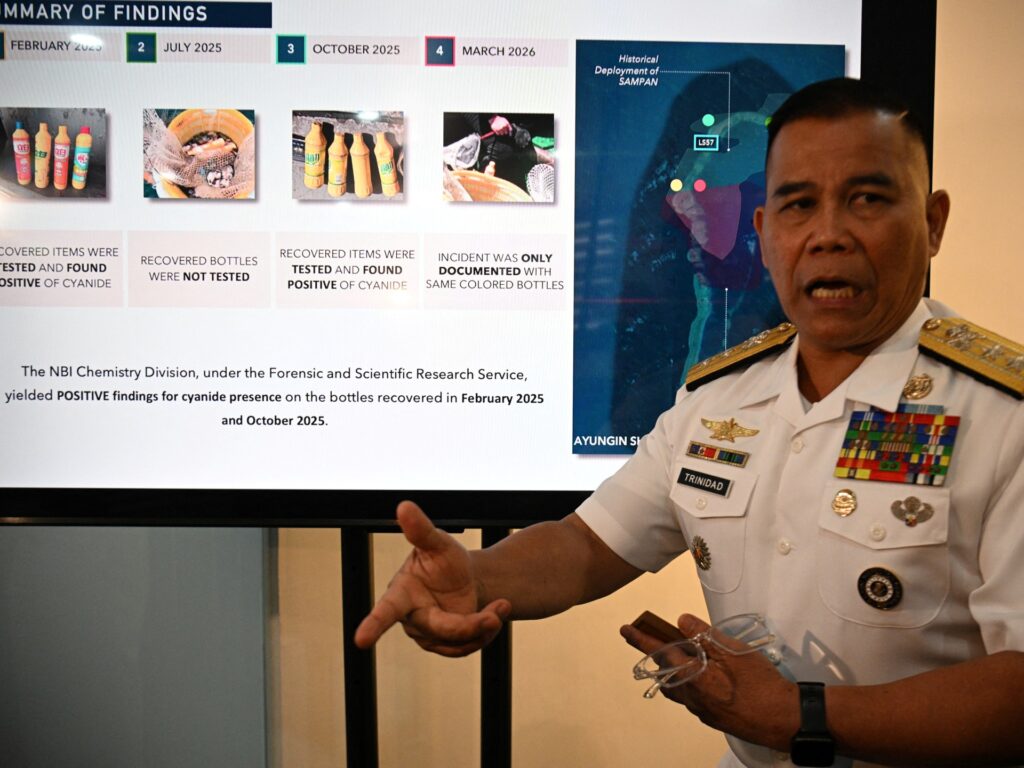
The Philippines has raised serious allegations against China, accusing it of using cyanide to poison an atoll in the disputed South China Sea. This accusation has sparked significant concern among environmentalists and government officials due to the potential catastrophic impact on marine life and the fragile reef system in the area.
The incident reportedly involves a reef near a grounded Chinese warship, where officials fear that cyanide, a highly toxic chemical, has been deliberately deployed. Cyanide is known for its lethal effects on aquatic organisms, and its presence in underwater ecosystems can cause widespread damage.
Marine biologists warn that the use of cyanide could severely harm the South China Sea’s biodiversity. Reefs are delicate ecosystems that support a wide range of marine species. If poisoned, these reefs could experience massive die-offs of coral and fish populations, disrupting the ecological balance and endangering fisheries that local communities rely on.
The reef in question also plays a crucial role in maintaining the structural integrity of the surrounding seascape. Weakening the reef could exacerbate environmental degradation and affect the habitat of numerous marine organisms. Additionally, the cyanide exposure could prolong the damage caused by the grounded warship, which has already posed risks to the environment.
Officials from the Philippines have called on international bodies to investigate the matter thoroughly. They emphasize that the use of harmful chemicals in disputed maritime zones violates international environmental laws and threatens peace and stability in the region.
China has yet to respond publicly to the allegations. However, tensions remain high in the South China Sea due to ongoing territorial disputes involving multiple countries. This accusation adds a new layer of complexity, highlighting environmental concerns amid geopolitical conflicts.
Environmental advocacy groups have condemned the alleged cyanide use, urging all parties to prioritize sustainable practices and protection of marine habitats. They stress that safeguarding the South China Sea’s ecological health is vital not only for biodiversity but also for the millions of people whose livelihoods depend on its resources.
The incident underscores the urgent need for cooperative frameworks to manage and protect disputed maritime environments. As accusations and counterclaims continue, experts warn that neglecting environmental protection could lead to irreversible damage.
In summary, the Philippines’ accusation of China using cyanide to poison a South China Sea atoll raises alarm over environmental destruction and regional stability. The situation necessitates immediate attention from international stakeholders to ensure the protection of marine life and uphold international environmental standards in contested waters.