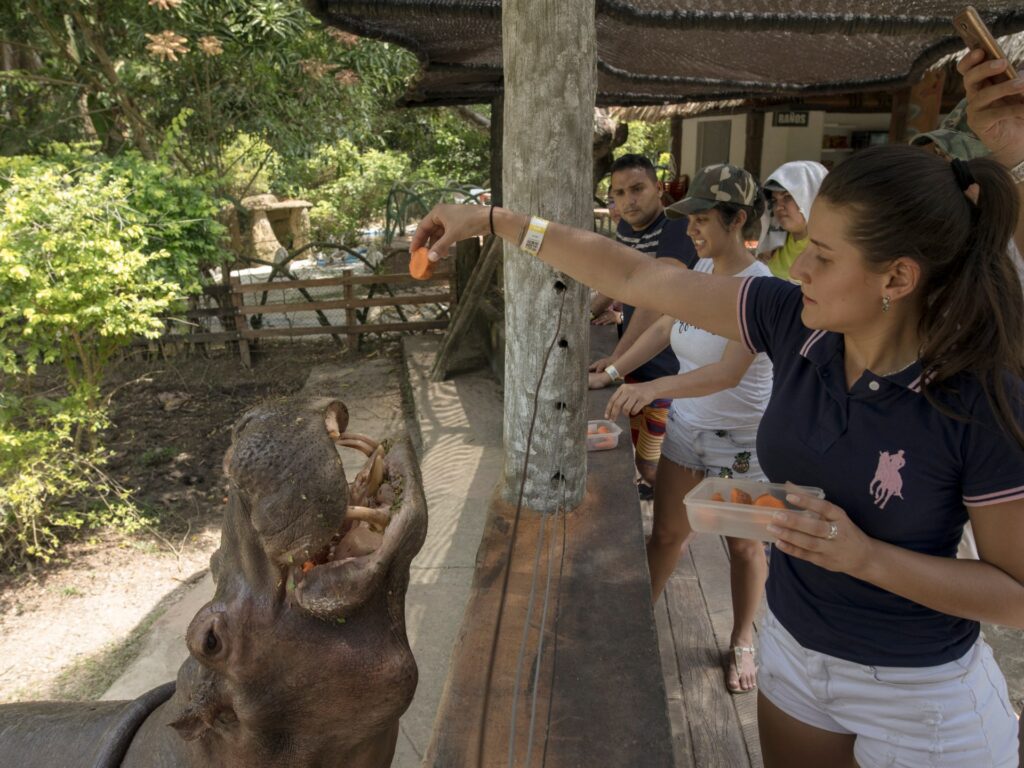
In the 1980s, notorious drug lord Pablo Escobar introduced four hippos to his private zoo on his estate in Colombia. These animals, initially a curious part of Escobar’s lavish lifestyle, have since multiplied and established a significant population in the wilds of Colombia. Today, they number around 100 and have become both a tourist attraction and a growing ecological concern.
The hippos were never native to Colombia. Originally from Africa, their presence in the South American country poses unique challenges for local ecosystems. Over the decades, the population has expanded largely unchecked. The hippos roam freely in the Magdalena river basin, disrupting local wildlife and vegetation. Their invasive nature threatens native species and water quality, affecting fisheries and agricultural lands.
For years, Colombian authorities and environmentalists debated how to manage the expanding hippo population. The animals’ popularity with tourists who are fascinated by these unexpected creatures has made straightforward solutions complicated. Additionally, the high cost and difficulty of culling or relocating these massive animals delayed decisive action.
Recently, the government has announced plans to cull the hippo population to prevent further ecological damage. This decision follows studies showing that the hippos’ growth rate and environmental impact could cause irreversible damage to Colombia’s biodiversity if left uncontrolled. The culling program aims to be humane and controlled, balancing ecological needs with animal welfare considerations.
Local communities have mixed feelings about the cull. While many recognize the environmental risks posed by the hippos, others view the animals as an unusual attraction that brings tourists and income to the region. The conflict illustrates the complex legacy of Escobar’s reign and its unforeseen consequences decades later.
Conservationists argue that the situation underscores the importance of strict regulations around exotic species and the challenges invasive species pose globally. They emphasize that without intervention, the hippos could significantly alter habitats, outcompete native species, and disrupt ecological balance.
The story of Colombia’s hippos is a unique case study in how human actions, even those intended for private entertainment, can have far-reaching environmental impacts. The unfolding efforts to cull the population highlight the difficulties in managing invasive species once they have established a foothold.
In the coming years, Colombia’s approach to the hippo population will likely serve as a reference for other countries facing similar issues with invasive species and ecological disruption. While the hippos once symbolized Escobar’s power and extravagance, they now represent a pressing environmental challenge that Colombia must address with care and urgency.