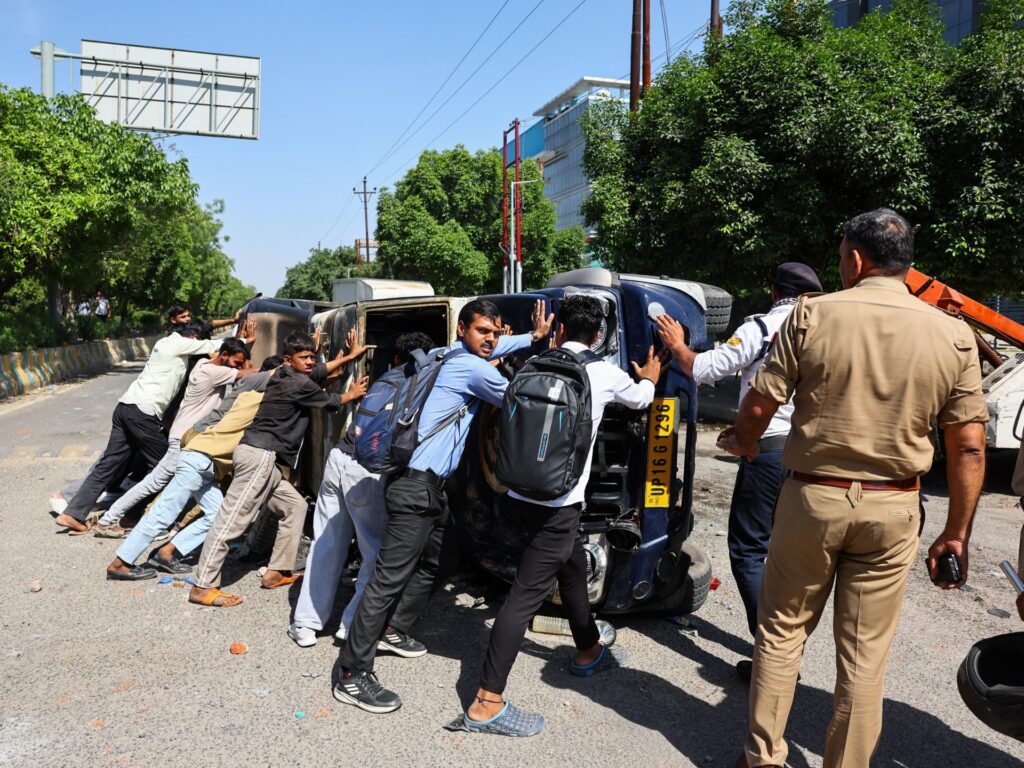
In the suburb of Noida, located near India’s national capital, factory workers faced tear gas deployment as they protested for higher wages. The unrest comes amid a backdrop of soaring living costs globally, a situation exacerbated by geopolitical tensions such as the war in Iran. The workers, demanding wage increases to cope with inflation, gathered in sizable numbers to voice their discontent and call for better pay to match the rising expense of everyday life. Noida, known for its industrial zones and manufacturing hubs, has seen an uptick in labor unrest as employees grapple with stagnant salaries amidst escalating prices of essential goods and services. The protest turned volatile when law enforcement intervened to disperse the crowd, using tear gas as a measure to control the demonstration. This incident highlights the broader economic pressures felt by workers not only in India but worldwide as inflationary trends impact purchasing power and quality of life. The situation underscores the delicate balance between labor rights and public order while shining a spotlight on the urgent need for policymakers and businesses to address wage disparities and ensure economic security for workers in challenging times. As the Iran conflict continues to influence global markets, its ripple effects are starkly visible in local economies thousands of miles away, as witnessed in the protests in Noida. The workers’ plight draws attention to the human cost of geopolitical strife and economic instability, advocating for responsive governance and fair labor practices to foster sustainable livelihoods during periods of crisis.