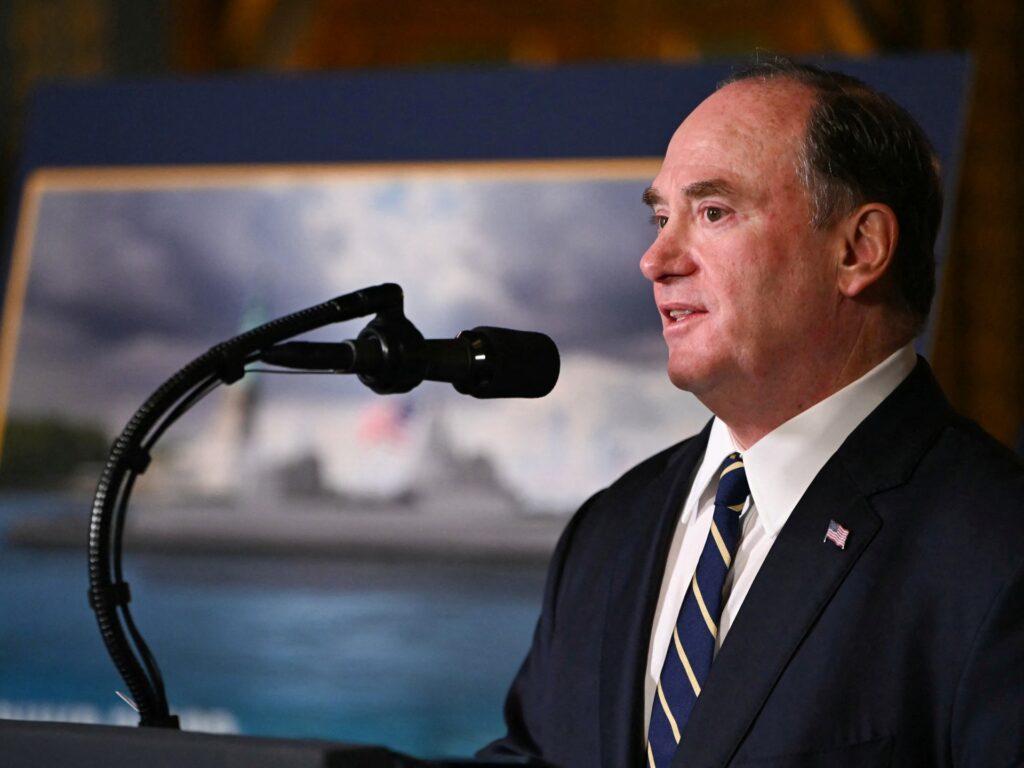
John Phelan, recently dismissed from his position as the US Navy Secretary by Pete Hegseth, emerges as a significant figure amid rising tensions and challenges within the US military leadership. Phelan’s firing spotlights ongoing turbulence in the military’s top ranks during a critical period marked by the US-Israeli conflict with Iran. As Secretary of the Navy, Phelan held a crucial role overseeing naval operations and strategic planning. His removal by Hegseth, a notable figure in defense circles, signals potential discord or shifts in military policy and leadership philosophy. This leadership shake-up reflects broader strains within the US defense establishment as it navigates the delicate and volatile dynamics of the war involving US and Israeli forces against Iran. Phelan’s tenure had been under scrutiny in the context of operational decisions, strategic alignment, and coordination with allies. The decision to replace him amid ongoing conflict underscores the urgent demand for cohesive and effective leadership as the US military contends with multifaceted threats and international pressure. This event is not isolated but part of a series of rapid leadership changes, highlighting the complexities and high stakes of modern military engagements in the Middle East. Analysts view Phelan’s firing as a symptom of deeper challenges in aligning military strategies with political objectives, particularly in a theater as fraught as the US-Israeli confrontation with Iran. The implications of this change extend beyond personnel; it affects morale, strategic planning, and operational readiness. The US Navy, a critical component of America’s military projection, stands at a crossroads requiring renewed focus and adaptability. Phelan’s departure may prompt reevaluation of naval tactics and inter-agency cooperation vital for navigating the conflict’s challenges. Observers will watch closely how Hegseth’s leadership influences the Navy’s role in the broader war effort, including coordination with Israeli forces and managing tensions with Iran. This firing underscores the high volatility and political sensitivity within US military leadership during ongoing conflict. The leadership instability reflects not only on the Navy but signals potential adjustments in overall US defense posture. Meanwhile, the unfolding US-Israeli conflict with Iran continues to demand strategic clarity and resilience from American military institutions. As such, Phelan’s removal is a critical lens through which to understand the pressures shaping US military command during this pivotal moment. The future of US naval engagement and its impact on regional stability depend significantly on how leadership challenges like these are managed. In summary, John Phelan’s firing by Pete Hegseth brings to light the turbulence in US military leadership against the backdrop of complex geopolitical conflicts, emphasizing the importance of unified and effective command structures in times of war.