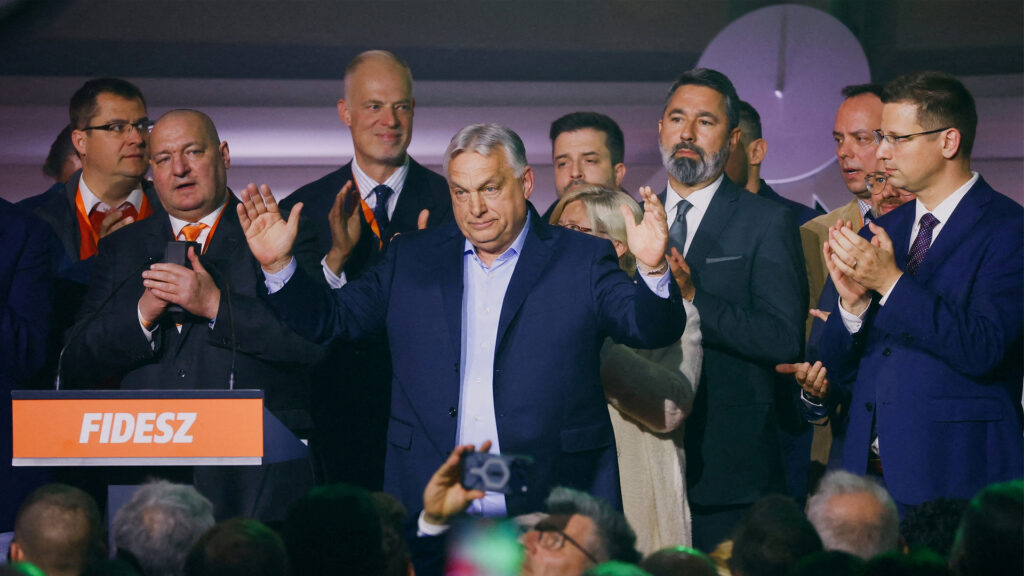
In a stunning political upheaval, Viktor Orban, Hungary’s far-right Prime Minister who ruled for 16 years, has been decisively voted out in a historic election marked by a record voter turnout. Orban’s tenure, noted for its nationalist policies and controversial governance, has come to an end as Hungarians showed their desire for change. The election saw unprecedented engagement from the electorate, reflecting a significant shift in public sentiment.
Orban first came to power in 2010, leading the Fidesz party, and his administration has been characterized by a strong stance on immigration, media control, and judicial reforms that critics argue undermined democratic institutions. His approach, while popular among a substantial portion of the population for its nationalist and economic policies, faced increasing opposition domestically and internationally.
The recent election turnout broke records, indicating high public motivation to participate in the democratic process. Citizens from various political backgrounds united in their push to unseat Orban, signaling a major fragmentation of the political landscape in Hungary. Opposition parties, often fragmented, managed to coalesce behind a unified front, presenting a formidable challenge to Orban’s dominance.
Analysts view this election as a pivotal moment for Hungary, potentially steering the country towards more moderate governance and restored democratic norms. The new leadership faces the formidable task of healing societal divisions and addressing the challenges left by Orban’s years in office. Public expectations are high as they look forward to policies that will promote transparency, protect civil liberties, and rejuvenate Hungary’s position in the European Union.
The international community has welcomed the election outcome, hoping for renewed collaboration and a return to rule-of-law principles. The change in Hungary’s leadership could also have broader implications for the region, influencing the political dynamics in Central and Eastern Europe.
Viktor Orban’s political legacy will be scrutinized and debated for years to come, as the country transitions to new governance. His supporters commend him for bringing stability and economic growth, while critics emphasize the erosion of democratic institutions and freedoms during his regime.
The road ahead for Hungary is marked by uncertainty but also hope. Voters’ remarkable turnout and decisive mandate reflect a vibrant democratic spirit and a demand for positive transformation. As the new government takes office, the world watches closely to see how Hungary will redefine its future and restore unity within its borders.