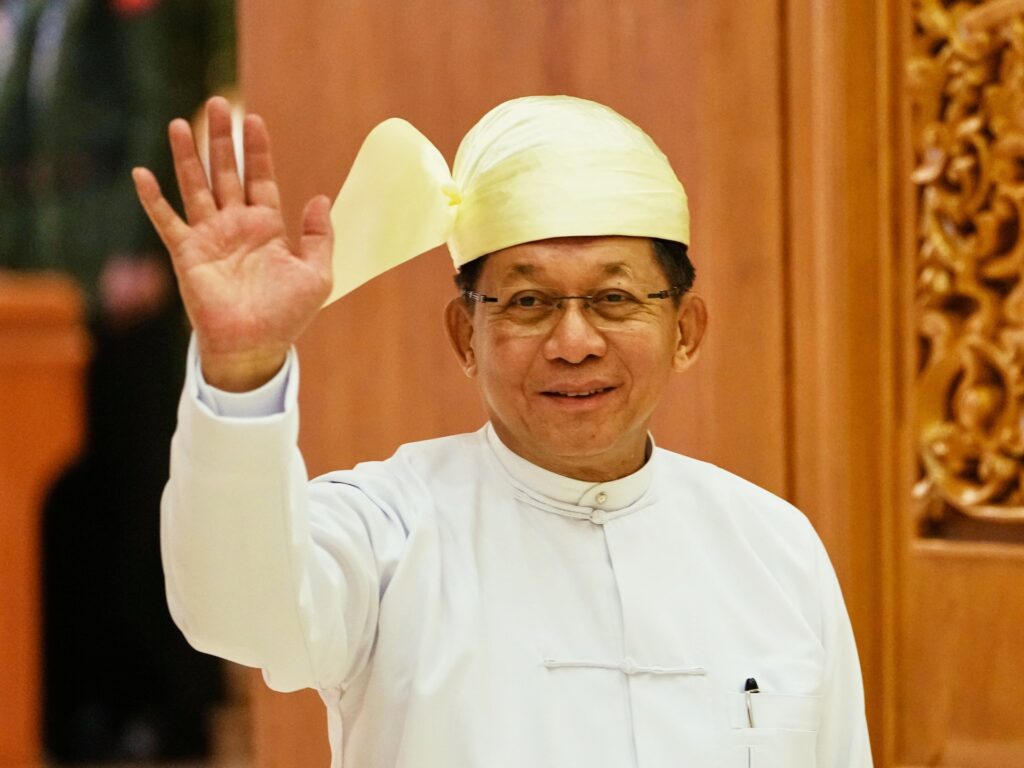
Min Aung Hlaing, the military leader responsible for the February 2021 coup in Myanmar, has been officially sworn in as the country’s president. This development marks a significant turning point in Myanmar’s political landscape, which has been plunged into chaos following the military takeover that ousted the elected government.
The coup led to widespread protests, civil unrest, and international condemnation, severely affecting Myanmar’s stability and its relations on the global stage. Despite this turmoil, Min Aung Hlaing has expressed intentions to “enhance” Myanmar’s international relations and strengthen ties with the Association of Southeast Asian Nations (ASEAN).
ASEAN, the regional intergovernmental organization comprising ten Southeast Asian countries, has been involved in efforts to mediate and restore peace in Myanmar. The military leader’s focus on improving ties with ASEAN comes at a critical time as member countries seek to balance respect for sovereignty with regional stability and humanitarian concerns.
Min Aung Hlaing’s ascendancy to the presidency consolidates military control over Myanmar’s government, raising concerns among democratic advocates and world powers about the future of Myanmar’s democratic institutions and human rights prospects.
The international community, including the United Nations and western nations, has largely imposed sanctions and condemned the coup, demanding a return to civilian rule. However, Min Aung Hlaing’s vow to engage more closely with ASEAN could signal a strategic move to gain regional legitimacy and reduce Myanmar’s diplomatic isolation.
Observers note that the path ahead remains uncertain. While Min Aung Hlaing calls for enhanced international engagement, ongoing conflicts within Myanmar and persistent opposition from pro-democracy forces represent significant challenges.
The situation in Myanmar underscores the complex interplay between domestic political dynamics and regional diplomatic efforts. As Min Aung Hlaing assumes the presidency, international eyes remain focused on how Myanmar’s relationship with ASEAN and the broader world will evolve amid efforts to restore order and address humanitarian needs.
In conclusion, Min Aung Hlaing’s swearing-in as president marks a contentious chapter in Myanmar’s history. His stated goal to foster better international and ASEAN relations suggests a potential opening for dialogue but also highlights the delicate task of navigating Myanmar through a period of profound crisis and uncertainty.