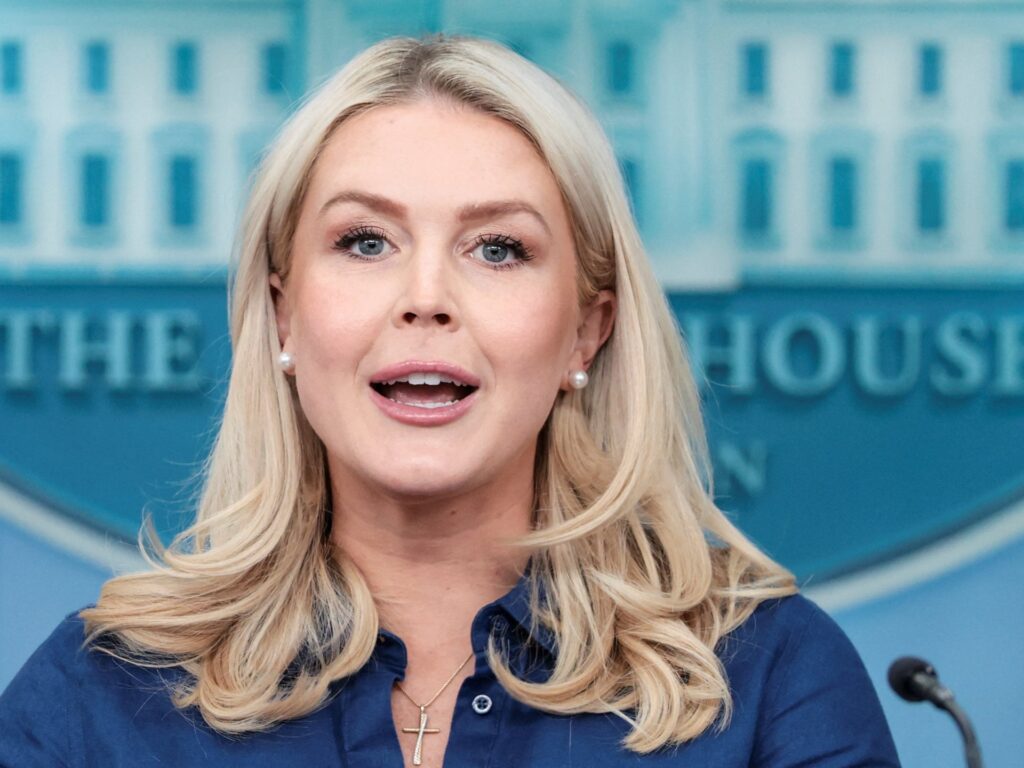
The White House has reaffirmed former President Donald Trump’s established ‘red line’ regarding Iran’s nuclear enrichment activities, emphasizing a firm stance against any advancements that violate international agreements. This declaration underscores the continuity of a critical aspect of U.S. policy despite changes in administration.
In a related development, Trump’s spokesperson announced that Vice President JD Vance will spearhead the United States delegation for high-stakes negotiations with Iran. These talks are scheduled to take place in Pakistan on Saturday and are pivotal in addressing the complex nuclear issues at hand.
The Trump administration’s approach to Iran’s nuclear program has been marked by stringent measures and clear boundaries, aimed at preventing Iran from acquiring nuclear weapons capabilities. The ‘red line’ concerning nuclear enrichment has been a symbolic and practical marker in diplomatic efforts to constrain Iran’s nuclear ambitions.
Vice President JD Vance’s leadership in the upcoming negotiations signals an intensified U.S. commitment to diplomatic engagement, seeking to resolve tensions while upholding national security interests. The choice of Pakistan as a negotiation venue reflects its strategic position and influence in regional geopolitics, potentially serving as a neutral ground for dialogue.
Experts suggest that the talks could focus on key issues such as uranium enrichment levels, verification mechanisms, and the resumption or modification of the 2015 Joint Comprehensive Plan of Action (JCPOA), commonly known as the Iran nuclear deal. The objective is to prevent nuclear proliferation while promoting regional stability.
This diplomatic move comes amid increasing concerns over Iran’s nuclear activities and the geopolitical ramifications for the Middle East and beyond. The reaffirmation of Trump’s ‘red line’ serves as a warning against crossing established limits that could escalate conflicts.
The involvement of Vice President Vance highlights the importance the U.S. places on these negotiations, potentially opening pathways for renewed communication and conflict resolution. It also reflects a nuanced approach combining firm deterrence with willingness to engage diplomatically.
As the negotiations approach, international communities and stakeholders await further developments, hoping for progress that balances diplomatic solutions with security imperatives. The outcome of these talks could have significant implications for global non-proliferation efforts and the future of U.S.-Iran relations.
In summary, the White House’s reaffirmation of Trump’s nuclear enrichment ‘red line’ against Iran, coupled with the appointment of Vice President JD Vance to lead critical talks in Pakistan, marks a decisive moment in ongoing efforts to address one of the most challenging security issues on the international agenda. The coming days will reveal whether diplomacy can effectively navigate the complex dynamics at play.