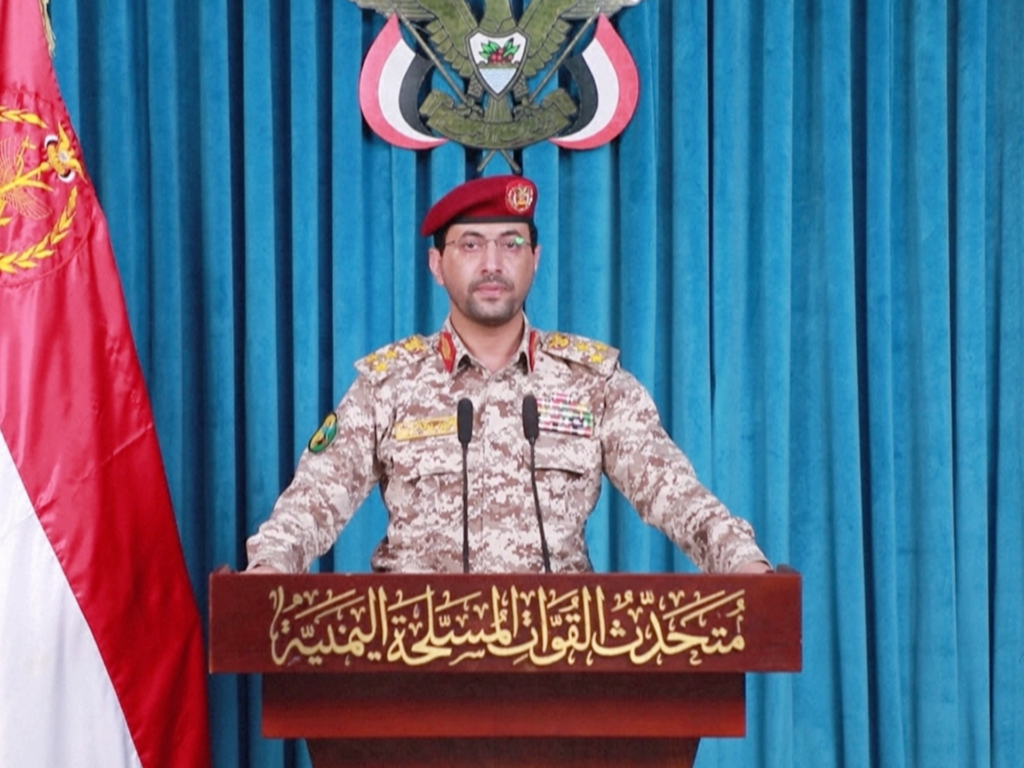
In a significant escalation of regional tensions, Yemen’s Houthi movement has claimed responsibility for a missile attack targeting Israel’s Ben Gurion Airport located near Jaffa. The Houthi military spokesman announced that the strike involved the use of cluster munitions, marking a serious development in the ongoing conflicts that involve various actors in the Middle East.
The claim was made public through official Houthi channels, where the spokesman detailed that the missile attack was a direct response to actions taken by Israel in the region. The use of cluster missiles, which scatter multiple submunitions over a wide area, raises concerns about potential casualties and widespread damage given the airport’s critical infrastructure and heavy civilian presence.
Ben Gurion Airport, Israel’s main international gateway, plays a crucial role in the country’s connectivity to the rest of the world. Any attack on this facility disrupts travel and could have economic repercussions, alongside the immediate threat to safety and security.
The incident adds a new layer of complexity to the regional security landscape. Historically, the Houthis, backed by Iran, have been primarily engaged in conflict within Yemen, fighting against a Saudi-led coalition. Their claim of attacking Israeli territory signals a broader scope of confrontation extending beyond Yemen’s borders.
Israel’s government and security forces are expected to respond to this claim, with assessments underway regarding the extent of any damage and casualties caused by the attack. Israeli authorities typically maintain heightened security measures at key infrastructure sites, especially airports, to mitigate such threats.
International observers and governments around the world are closely monitoring the situation, given the potential for this strike to escalate tensions in the Middle East. The use of cluster munitions is particularly alarming to humanitarian organizations because of their long-lasting danger to civilians, often causing injuries or deaths long after the initial conflict.
This claim by the Houthis comes amid ongoing turmoil in the region, where proxy conflicts and alliances significantly impact political and military dynamics. The strike reflects an increasingly volatile environment, where non-state actors are willing to extend their reach in response to geopolitical grievances.
The attack on Ben Gurion Airport underlines the interconnectedness of Middle Eastern conflicts, where actions in one country can provoke responses on distant fronts. The situation demands careful diplomatic engagement to prevent further escalation and to seek avenues for de-escalation and peace.
As investigations continue, the international community is urged to condemn attacks on civilian infrastructure and to support efforts aimed at stabilizing the region. The protection of critical transportation hubs and the safety of civilian populations must remain a priority amidst heightened tensions.
This event serves as a stark reminder of the fragility of peace and the ongoing risks posed by protracted conflicts involving multiple state and non-state actors in the Middle East. The world watches closely as developments unfold, hoping for calm and resolution in an area that has seen decades of conflict and unrest.