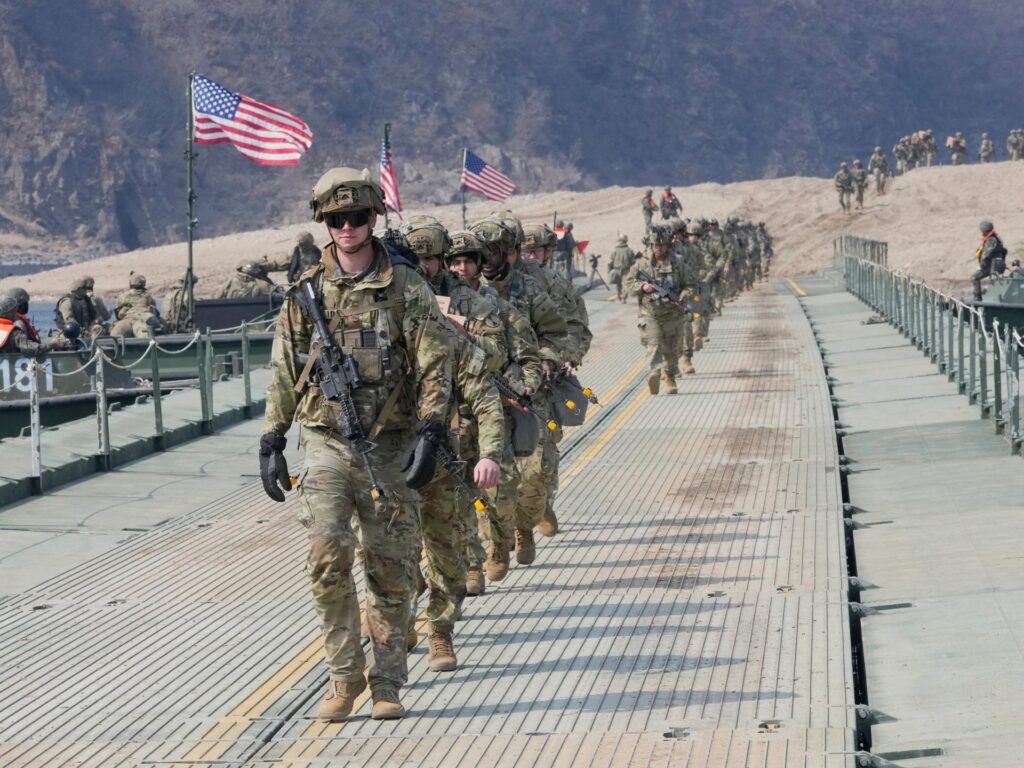
The Pentagon is reportedly gearing up for weeks of ground operations in Iran, focusing on the nation’s strategic regions. This development signifies a potential escalation in U.S. military involvement in the Middle East, reflecting increasing tensions between the two nations.
According to sources, planning for these operations has been ongoing, with the Pentagon outlining strategies for limited but impactful ground actions. However, there remains significant uncertainty regarding whether former President Donald Trump has approved these plans.
The hesitation around Trump’s approval stems from the complex geopolitical implications of deeper U.S. military engagement in Iran, a country that has long been a focal point of American foreign policy in the region. Analysts suggest that any ground operation would need to carefully balance military objectives with the risks of broader conflict.
The strategic regions targeted for these operations are not explicitly detailed in reports, but they are believed to be crucial areas for Iran’s military and nuclear infrastructure. Securing these locations could disrupt Iran’s capabilities and influence in the region.
Military experts highlight that the Pentagon’s preparation for extended ground involvement marks a shift from previous strategies that prioritized air strikes and sanctions. Ground operations demand significant logistical support and entail higher risks for U.S. personnel.
The timing of these preparations coincides with ongoing diplomatic efforts and heightened tensions, including Iran’s nuclear ambitions and regional activities perceived as destabilizing by the U.S. and its allies.
Critics of the proposed operations warn of the potential for a protracted conflict, emphasizing that ground warfare could exacerbate regional instability and provoke widespread anti-American sentiment.
Supporters argue that limited ground action could deliver strategic advantages, disrupting Iran’s operational capabilities and sending a strong message about U.S. resolve.
While the Pentagon is moving forward with its plans, the ultimate decision rests with presidential approval, which remains uncertain. The situation continues to develop, with Washington closely monitoring the evolving dynamics in Iran and the broader Middle East.
This emerging scenario underscores the complexities of U.S. decision-making in foreign military engagement, balancing assertiveness with caution in one of the world’s most volatile regions.
As the situation unfolds, global observers watch closely, aware that the ramifications could extend far beyond the immediate conflict zones, impacting regional security, international alliances, and global geopolitical stability.
The Pentagon’s readiness for an extended US ground presence in Iran highlights a significant moment in U.S. foreign policy, one that may shape the trajectory of Middle Eastern affairs in the years to come.