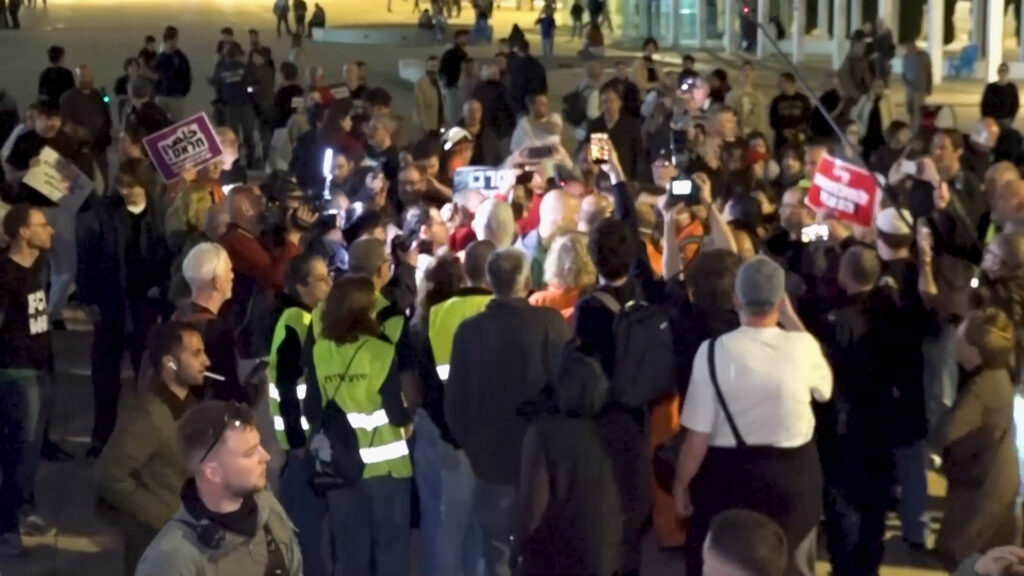
On Saturday, Tel Aviv witnessed a significant anti-war protest that escalated into clashes between demonstrators and the police. The protest was organized by activists opposing the ongoing US-Israeli stance and potential military actions against Iran. The situation intensified as law enforcement officers moved in to disperse the crowd using measures to restore order. Authorities confirmed that up to 18 individuals were arrested during the unrest. The demonstrators voiced their strong opposition to escalating hostilities and the prospect of war, calling for diplomatic solutions rather than military confrontations. This event highlights the growing tensions within Israeli society and among its allies concerning regional security policies and the implications of potential conflict with Iran. The police deployment was substantial, aiming to prevent further escalation and maintain public safety in the city. Eyewitnesses reported moments of chaos as protesters resisted the dispersal efforts, some of which descended into violent encounters. Organizers and participants stressed that their protest was primarily peaceful, aimed at raising awareness and urging political leaders to seek peaceful resolutions. The authorities stated that arrests were made to address instances of violence and maintain order. This incident underscores the challenges democratic societies face when balancing the right to peaceful protest with the imperative to prevent violence and disruption. It also reflects the divisiveness surrounding foreign policy decisions, especially those involving military interventions. The detained individuals were taken into custody for further questioning, and investigations are ongoing to determine the full scope of the events and any charges that may be filed. The government emphasized its commitment to safeguarding both the security of its citizens and the right to lawful assembly. Meanwhile, anti-war activists continue to mobilize support and plan additional demonstrations, signaling that public dissent is far from abating. The international community is closely watching developments in the region and the responses of local authorities to civil unrest tied to geopolitical tensions. This protest in Tel Aviv is a microcosm of wider global debates about war, peace, and the responsibilities of governments towards their people and international partners. In the coming days, political leaders are expected to address the concerns raised and work toward strategies that may de-escalate the situation in the Middle East. Meanwhile, citizens remain deeply divided on the best path forward, reflecting the complexity of the issues at stake. The unfolding events serve as a reminder of the potent power of public protest as a tool for political expression and change, even amid the risks of confrontation with authorities. Further updates are anticipated as the story develops and as authorities provide more detailed reports on the incidents and their aftermath.