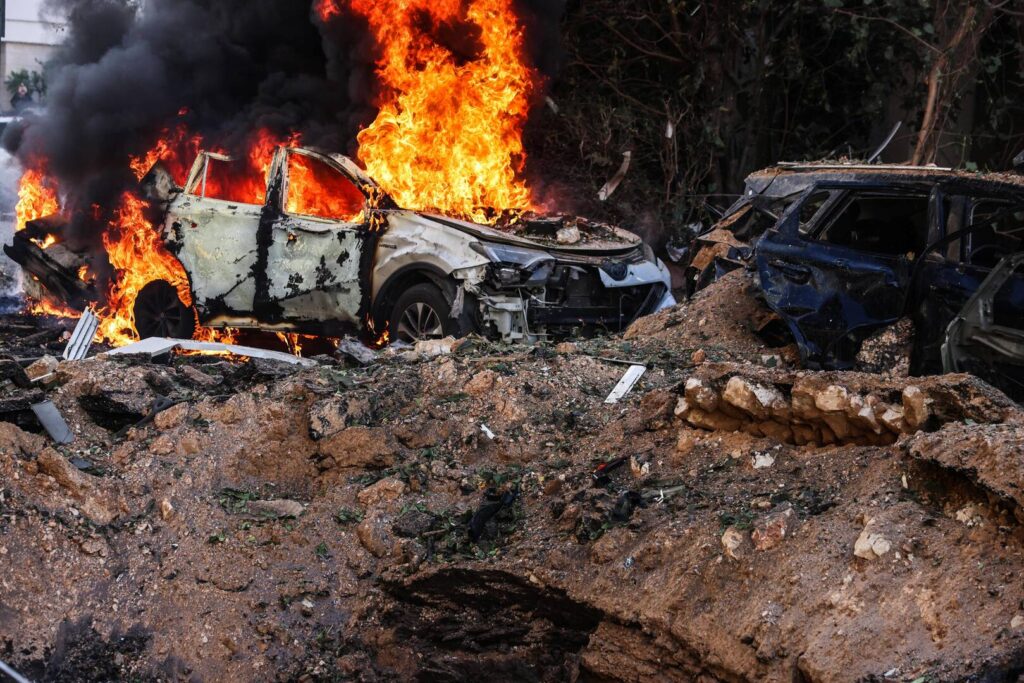
Fire engulfs a car at a site following Iranian missile barrages in central Israel, amid the U.S.-Israel conflict with Iran, in Tel Aviv, Israel, March 24, 2026. REUTERS/Tomer Appelbaum ISRAEL OUT. NO COMMERCIAL OR EDITORIAL SALES IN ISRAEL
A new wave of missile attacks launched by Iran has caused notable injuries and significant damage across various parts of Israel. The escalation follows the release of a video by Iran showing the launch of multiple missiles, signaling a continuation of heightened tensions in the region.
The missiles targeted several areas across Israel, leading to casualties and destruction in residential and commercial zones. Emergency services have been deployed to manage the aftermath, including medical aid for the injured and efforts to control fires and structural damage.
This missile barrage marks a worrying development in the Israeli-Iranian tensions, which have been simmering for years due to geopolitical conflicts and territorial disputes. The attack has prompted strong condemnation from Israeli officials who vow to respond decisively to safeguard their nation’s security and citizens.
International reactions have varied, with some countries calling for restraint and peaceful dialogue, while others have criticized Iran’s actions as provocative and dangerous, exacerbating regional instability.
The video released by Iran appears to serve both as a demonstration of military capability and a propaganda tool to showcase their readiness to confront Israel. Analysts suggest that this show of force could further destabilize the already volatile Middle East.
Israel has reportedly activated its defense systems and is mobilizing its military resources in anticipation of possible follow-up attacks. The situation remains fluid, with the potential for further escalation if diplomatic interventions do not take hold.
The global community watches closely as events unfold, concerned about the broader implications for regional and international security. The missile strikes have also raised fears of potential impacts on civilians and infrastructure beyond immediate areas of conflict.
This incident underscores the urgent need for renewed efforts in peace negotiations and conflict resolution mechanisms to prevent such escalations in the future. The humanitarian impact of such attacks is severe, causing trauma, displacement, and long-term challenges for affected populations.
As investigations continue and more information becomes available, the world anticipates responses from key stakeholders, including the United Nations, neighboring countries, and major powers invested in Middle Eastern stability.
Efforts to de-escalate tensions must be prioritized to avoid a broader conflict that could engulf the region and impact global security and economic conditions. Dialogue, diplomacy, and adherence to international law are more critical than ever in the face of these violent confrontations.
The missile attacks highlight the fragile nature of peace in the region and the complex web of alliances and hostilities that define Middle Eastern geopolitics. Both Iran and Israel face internal and external pressures that shape their strategic decisions, with civilians often bearing the consequences.
The aftermath of the attacks will likely influence political discourse within Israel and Iran and impact their respective domestic and foreign policy agendas. It is a stark reminder of the ongoing conflict and the need for sustained international participation in peacebuilding efforts.