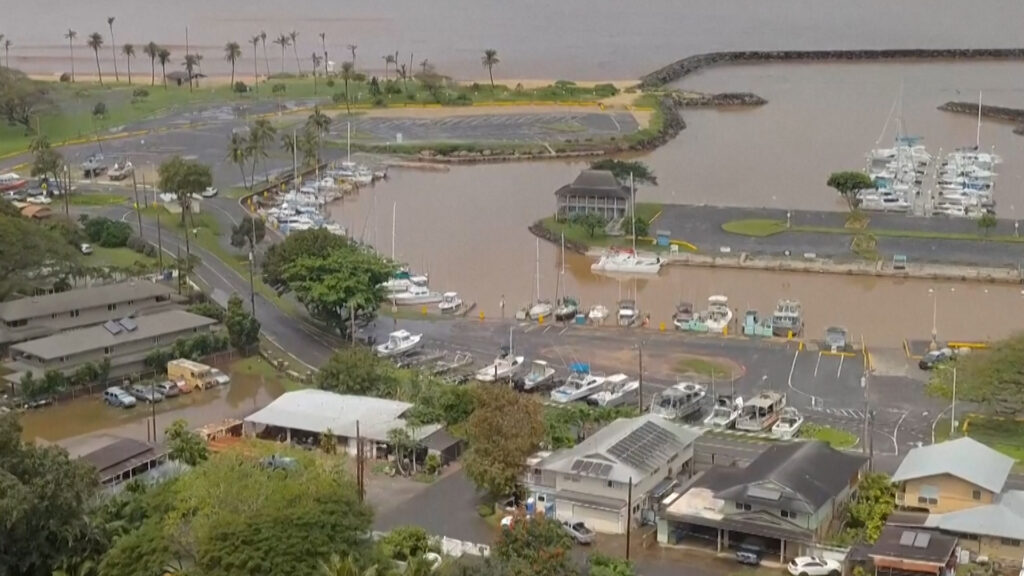
Heavy rains brought by the second Kona Low storm have caused significant flooding across Oahu, Hawaii, with extensive impact particularly on the North Shore. Dramatic drone footage has captured the severity of the flooding, showing widespread water accumulation on roads, in neighborhoods, and over natural landscapes.
The Kona Low is a weather phenomenon unique to the Hawaiian Islands, characterized by prolonged periods of heavy rainfall and strong winds. This second occurrence of the storm this season has resulted in increased water levels that have overwhelmed drainage systems and led to hazardous conditions for residents and visitors alike.
Local authorities have been actively monitoring the situation and issuing warnings to the public to avoid flood-prone areas. Emergency response teams are on alert to assist with evacuations, rescues, and cleanup efforts as the storm continues to affect the region.
The flooding has caused disruptions to traffic and transportation, with several road closures reported particularly along the North Shore where the drone footage indicates the most severe inundations. Businesses in affected areas have been forced to shut down temporarily due to the water damage.
Environmental concerns have also been raised as the flooding poses risks to local ecosystems, including beaches and coastal habitats. Efforts are underway to assess the full impact of the storm on the island’s natural resources.
Residents are being advised to stay indoors, keep emergency supplies ready, and stay updated through local news channels and official updates. The Hawaii Emergency Management Agency has emphasized the importance of preparedness and caution as the Kona Low continues to bring challenging weather conditions.
Meteorologists note that Kona Low storms, while infrequent, can bring devastating impacts when they occur, highlighting the importance of improved infrastructure and disaster readiness in the island state. Recovery and repair efforts are expected to continue in the coming weeks as communities work to return to normalcy.
This latest flooding event underscores the vulnerability of island environments to extreme weather and the critical role of technology, such as drone surveillance, in documenting and managing disaster response.