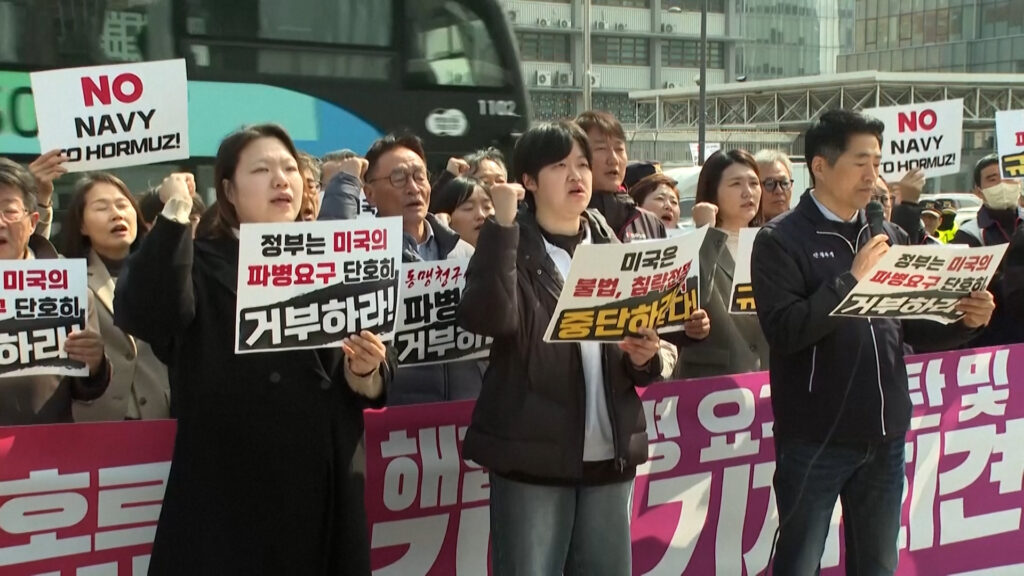
In a significant display of dissent, activists in South Korea have taken to the streets to protest against a recent request from former U.S. President Donald Trump. The demand in question involves assistance from South Korea to secure the Strait of Hormuz, a crucial and strategic waterway in the Middle East. The Strait of Hormuz is a vital artery for global oil transportation, making its security pivotal not only to regional stability but also to the global economy.
Protesters in South Korea have voiced strong criticism of this request, reflecting concerns over the potential implications of South Korea’s involvement in the region. Many activists argue that South Korea, geographically distant from the Middle East, should not be dragged into a security conflict that primarily involves the interests of external powers. The protesters highlighted the risks associated with such a move, including the potential for escalating tensions, regional instability, and the dangers faced by South Korean personnel.
The demand from the Trump administration came amidst heightened tensions between the United States and Iran, as well as other geopolitical challenges in the Middle East. The U.S. sought to build an international coalition to ensure the safe passage of ships through the Strait of Hormuz, which Iran has previously threatened to block in response to sanctions and military pressure.
South Korean activists have also pointed out that participation in securing the strait could complicate the country’s diplomatic relations with Iran and other Middle Eastern nations. South Korea has economic ties with the region, including energy imports and trade agreements, which could be jeopardized by involvement in military or security operations.
Furthermore, critics in South Korea are questioning the rationale behind the Trump administration’s reliance on allied countries to share the burden of U.S. security ambitions. They argue that such demands impose unfair responsibilities on nations like South Korea, which may not have direct stakes in the conflicts escalating in the Middle East.
The protests have garnered considerable media attention within South Korea and internationally, underscoring the sensitive nature of the issue. This public outcry reveals the challenges that allied countries face when balancing their own national interests with the strategic demands of larger powers.
South Korea’s government has so far remained cautious in its response, reflecting the delicate diplomatic position the country holds. While it maintains a strong alliance with the United States, Seoul must also navigate its relationships with other global players and manage domestic public opinion.
In summary, the protest against Donald Trump’s request for South Korean involvement in securing the Strait of Hormuz highlights a broader debate on the responsibilities of allied nations in global security issues. The situation underscores the complexities of international diplomacy where economic interests, security concerns, and political alliances converge. As the geopolitical landscape continues to evolve, South Korea’s stance and public sentiment will be critical factors in shaping the future of its foreign policy and regional security engagements.