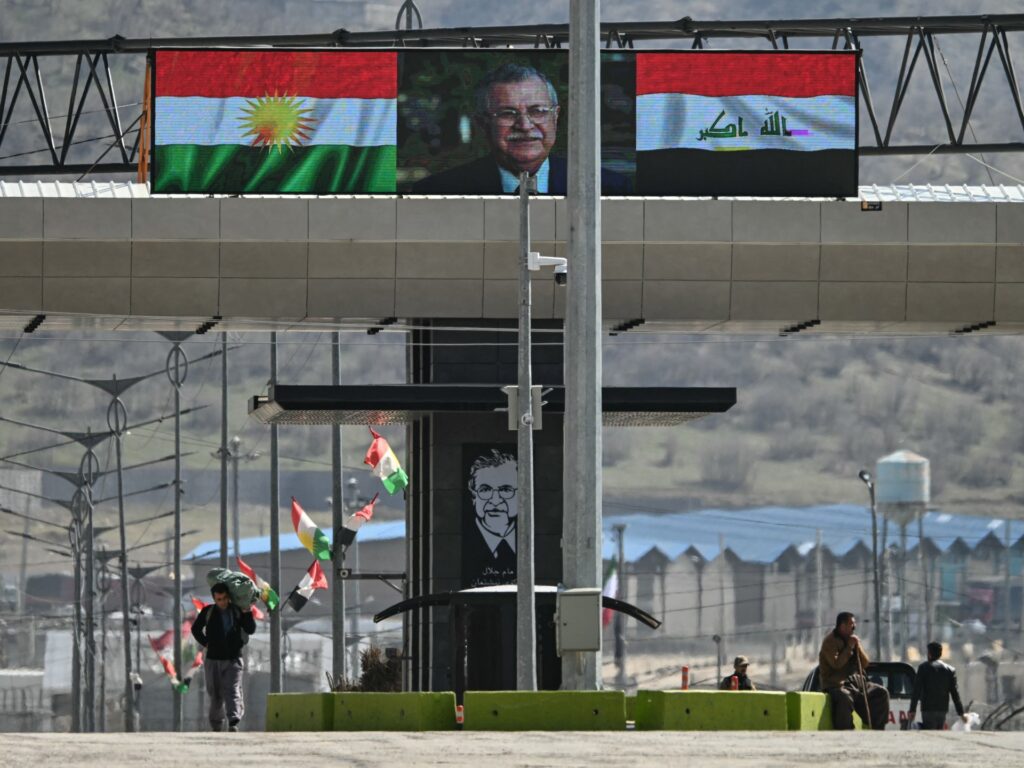
In recent times, Iraq has found itself at the center of a complex and volatile conflict involving the United States, Israel, and Iran. The country is facing attacks from multiple fronts, revealing the precarious position it occupies in this broader geopolitical struggle.
Iraq is caught between the escalating hostilities of Iran and its proxies on one hand and direct or indirect US military actions on the other. This clash has dragged the nation into a war that extends beyond its borders, exposing its vulnerable security situation and complicating its political landscape.
Iran, seeking to assert its influence in the region, has relied heavily on proxy militias operating within Iraq. These groups have frequently been involved in launching attacks against US and allied forces stationed in the country. Their operations are part of Iran’s broader strategy to counter US presence and pressure across the Middle East.
Conversely, the United States, concerned about Iran’s expanding reach and retaliatory threats, has conducted various military campaigns targeting Iranian-backed militias. These strikes aim to dismantle the infrastructure that supports Iranian operations, but they often take place on Iraqi soil, making Iraq a battleground for proxy conflicts.
Israel, though not physically attacking from within Iraq, remains a major player in this conflict. Alongside the US, Israel views Iran’s regional ambitions as a significant threat. It supports efforts to contain Iran’s influence, which indirectly impacts Iraq’s security as the country becomes a theater for proxy engagements.
The dual pressure from Iran and the US/Israel alliance has severely destabilized Iraq’s internal security. Civilians and infrastructure bear the brunt of this violence, with frequent rocket attacks, bombings, and military raids disrupting daily life.
Moreover, Iraq’s government is caught in a diplomatic and political bind. It must navigate relationships with both the US and Iran, two powerful countries with competing interests. This balancing act hampers Iraq’s ability to assert sovereignty and maintain stability.
The ongoing attacks underscore the broader challenges faced by Iraq: the risk of becoming an arena for an extended regional conflict and the difficulty of safeguarding its territorial integrity amid competing external pressures.
In conclusion, Iraq’s involvement in the US-Israel war on Iran is not a simple case of choice but rather a consequence of its geographical and political realities. The country is involuntarily pulled into hostilities from all directions, highlighting the complex and precarious nature of the current Middle Eastern geopolitical landscape.