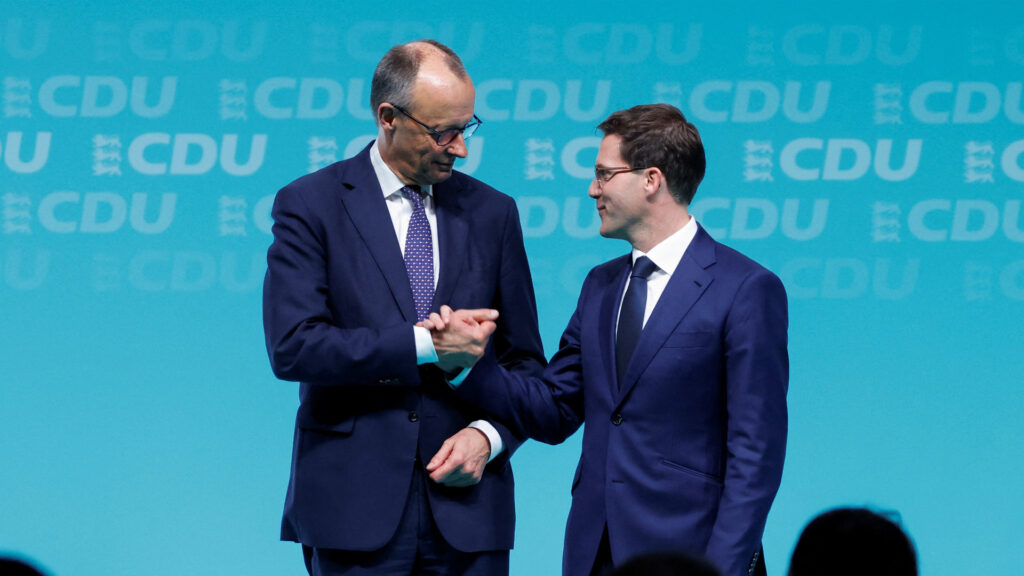
At a recent election rally, German Chancellor Friedrich Merz made headlines for his firm stance on international issues, particularly regarding the Israel-Palestine conflict. During the event, a pro-Palestinian protester voiced opposition to Israel, prompting Chancellor Merz to respond decisively with the words, “We stand with Israel.”
This interaction highlights Merz’s clear position in support of Israel despite vocal opposition from some groups within Germany. It also underlines the Chancellor’s commitment to standing with long-standing allies amid ongoing geopolitical tensions in the Middle East.
The moment came during a rally as part of election campaigning, where public engagement often brings diverse and passionate opinions to the surface. The pro-Palestinian protester sought to express solidarity with the Palestinians, a group that has garnered sympathy globally due to the ongoing conflict and humanitarian concerns.
However, Chancellor Merz’s response was both a political and moral declaration, underscoring the German government’s position as supportive of Israel’s right to exist and defend itself. Germany, historically linked to Israel through the legacy of World War II and the Holocaust, often exhibits a strong diplomatic relationship with the Jewish state.
Merz’s rebuke encapsulates a broader context in which Germany navigates its foreign policy—balancing support for Israel while managing the diverse views within its own population and the international community.
This incident draws attention to the evolving political landscape in Germany, where leaders must address complex international conflicts even as they campaign domestically. The chancellor’s firm stand is likely to resonate with pro-Israel voters while inciting debate among those advocating for Palestinian rights.
The election rally incident is a reflection of the deeply divisive nature of Middle Eastern politics worldwide, where global leaders are often called upon to take clear positions. Merz’s unequivocal support for Israel reinforces his commitment to maintaining strong ties and providing stability in international relations.
As tensions in the Middle East continue, Germany’s role as a key EU member and global player will be scrutinized closely. Chancellor Merz’s statement at the rally serves as a reminder that foreign policy stances can have significant implications for both domestic politics and Germany’s international standing.
In conclusion, the exchange between Chancellor Friedrich Merz and the pro-Palestinian protester at the election rally is emblematic of the challenges faced by contemporary politicians. Balancing principled alliances and varied public opinion, Merz’s assertive declaration, “We stand with Israel,” signifies Germany’s unwavering support for Israel amidst ongoing conflict and debate worldwide.