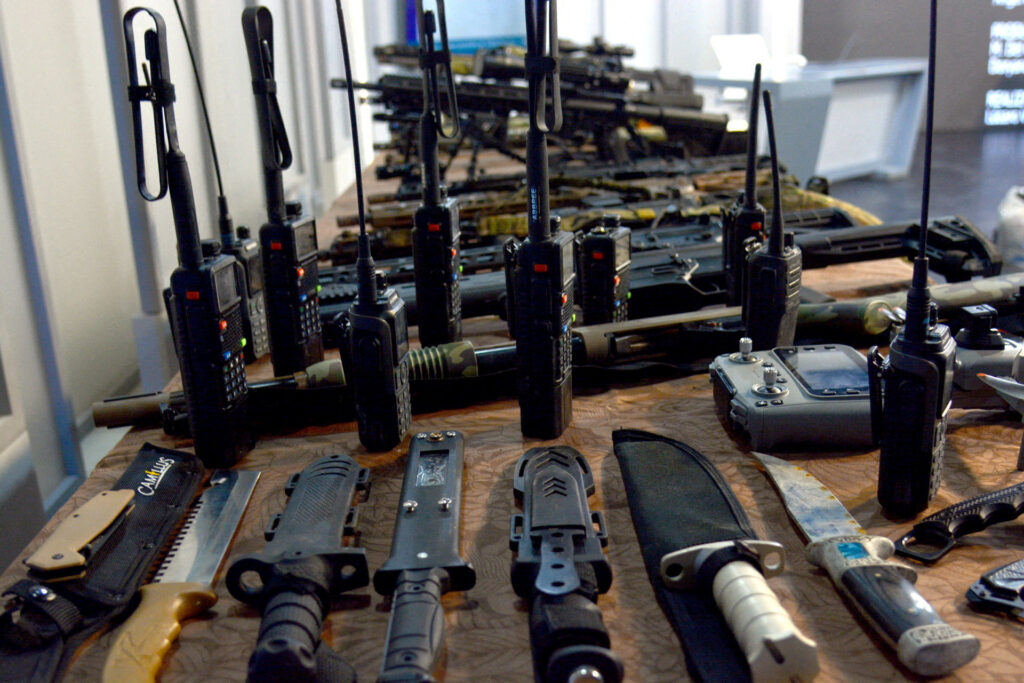
Gear and weapons seized from a Florida-registered speedboat are displayed for the media, as Cuban authorities confirmed Roberto Alvarez Avila died on March 4 from injuries sustained after Cuban forces confronted armed Cuban nationals who entered Cuban waters from the United States on February 25, in Havana, Cuba, February 27, 2026. Omara Garcia Mederos/ACN/Handout via REUTERS ATTENTION EDITORS - THIS IMAGE HAS BEEN SUPPLIED BY A THIRD PARTY REFILE - CORRECTING INFORMATION "DISPLAYED FOR THE MEDIA, AFTER CUBAN AUTHORITIES CONFIRMED" TO "DISPLAYED FOR THE MEDIA, AS CUBAN AUTHORITIES CONFIRMED\
The Cuban government has announced a fifth fatality resulting from a recent shootout involving a speedboat registered in Florida. The incident escalated tensions as authorities claim the 10 individuals on board the speedboat were planning to ‘unleash terrorism’ in Cuba. Officials in Havana reported that the confrontation occurred when the speedboat attempted to enter Cuban waters under suspicious circumstances. The government’s statement highlighted the severity of the plot and underscored their commitment to national security by taking decisive actions.
According to Cuban authorities, the intercepted speedboat raised alarms due to its Florida registration and the suspicious behavior of its occupants. The government suggested that the group’s intentions were hostile, aiming to destabilize peace and safety within the island nation. They affirmed that law enforcement acted swiftly and firmly, which led to a deadly exchange resulting in multiple casualties, inclusive of three individuals from the speedboat and two Cuban officers.
This incident has heightened political sensitivities amidst already strained relations between Cuba and entities associated with Florida. Cuban officials accused certain groups abroad of fomenting violence and unrest in Cuba through clandestine operations such as this attempted infiltration. They used the event to rally domestic support for more stringent security measures and surveillance to prevent similar threats in the future.
The government emphasized that they remain vigilant against external and internal threats and will continue to prioritize the safety of Cuban citizens. Continuous investigations are underway to identify any wider networks connected to this plot, and further arrests are anticipated. Meanwhile, Cuban citizens call for peace and stability as consciousness around national security grows.
Internationally, the event has drawn varied reactions. Some governments have expressed concern about the violence and called for peaceful dialogue, urging restraint and respect for Cuba’s sovereignty. Analysts suggest that this development could complicate diplomatic ties between Cuba and the United States, particularly with Florida having a significant Cuban exile community known for its political activism.
As Cuba mourns the loss of life and works to address the ramifications of the shootout, the government reiterates its stance against any acts it perceives as terrorism or aggression. It signifies a broader context of ongoing geopolitical tensions in the region and the fragile security dynamics surrounding Cuba.
The incident serves as a stark reminder of the complex challenges Cuba faces in balancing internal security with international diplomacy and the ongoing struggle to maintain national sovereignty in a region fraught with political contention. The Cuban leadership’s quick response and firm stance underscore the importance placed on deterring threats and preserving peace within the island’s borders.