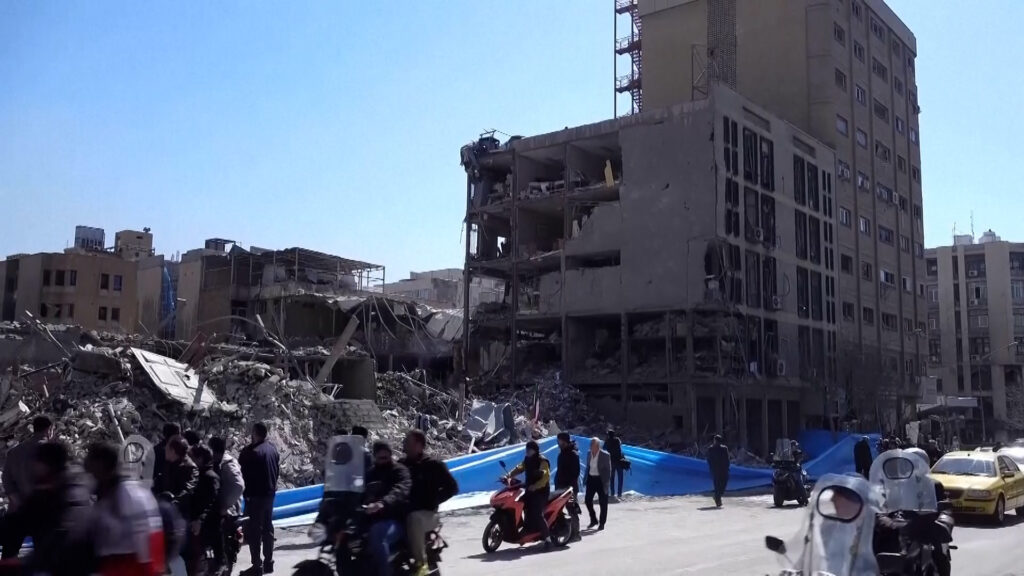
Recent military actions reportedly conducted by US and Israeli forces have caused significant damage to critical government infrastructure in Tehran, Iran. Among the impacted sites are a diplomatic police center and a state-owned cultural institute, both vital to Iran’s civic and cultural operations.
The diplomatic police center, which plays a crucial role in managing and securing international diplomatic missions and engagements within Iran’s capital, has been severely damaged. This building acts as a backbone for maintaining diplomatic protocol and security for foreign emissaries and Iranian officials alike. Its destruction raises concerns about potential diplomatic repercussions and the operational capabilities of diplomatic security in Tehran moving forward.
Additionally, the state-owned cultural institute, a hub for promoting Iranian cultural heritage and facilitating cultural exchange programs, has also been destroyed. This institution serves to preserve Iran’s rich history and support the arts and cultural dialogues both nationally and internationally.
Officials in Iran have condemned the strikes, labeling them as acts of aggression that undermine regional stability. Iranian leaders have vowed to respond to these attacks, which they describe as violations of their sovereignty and international law.
The United States and Israel have not yet officially confirmed responsibility for the strikes, but this development adds a new layer of tension to the already strained relations between Iran and these countries. Analysts suggest that these attacks may be linked to ongoing concerns over Iran’s nuclear program and regional influence.
International reactions have been varied, with some countries calling for restraint and dialogue to prevent further escalation, while others emphasize the need to uphold international law and sovereignty.
This incident marks a significant escalation in US-Israeli actions within the region, highlighting the fragile nature of Middle Eastern geopolitics and the persistent conflicts that shape it. It also draws attention to the vulnerability of key infrastructure amidst military confrontations.
As the situation develops, the global community watches closely, urging peaceful resolution and vigilance against further violence. The impact of these strikes on diplomatic relations, regional security, and cultural preservation is profound and will likely influence future diplomatic strategies and security policies in the Middle East.
The damaged buildings symbolize not just physical destruction but also the breakdown in communication and cooperation, escalating the risk of wider conflict. Efforts to rebuild and recover from these attacks will require significant resources and a coordinated approach to restore trust and security.
This event is a stark reminder of the complexities and consequences of geopolitical conflicts in the modern world, where cultural and diplomatic institutions can become targets, affecting more than just the immediate political landscape but also the societal fabric of a nation.