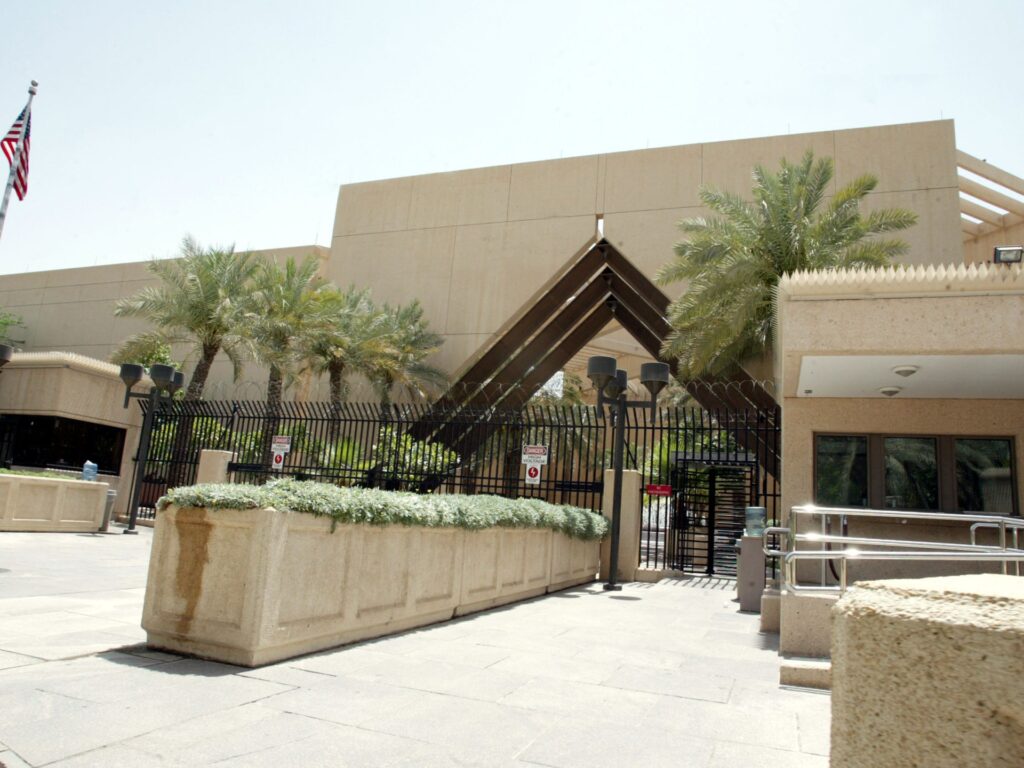
In a significant escalation of regional tensions, the US Embassy in Riyadh was struck by drones, resulting in a fire. According to the Saudi Defense Ministry, the fire caused only minor damage to the embassy compound, and no casualties have been reported. Meanwhile, Iran has claimed responsibility for a separate strike targeting the US’s military base in Bahrain, intensifying concerns about a potential broader conflict in the Gulf region.
The drone attack on the Riyadh embassy marks a concerning development in the already strained relationships between the US, Saudi Arabia, and Iran. The Saudi Defense Ministry’s statement highlighted that despite the fire, the damage to the embassy was limited, suggesting that security measures in place were effective in mitigating a more severe impact.
Iran’s claim of striking the US base in Bahrain reflects the ongoing proxy hostilities and strategic competition between Tehran and Washington. The Bahrain base is a critical hub for US naval operations in the Persian Gulf, making it a strategic target in the context of regional power struggles.
This series of attacks underscores the heightened volatility in the Gulf, where diplomatic and military tensions have been escalating over recent years. The US has maintained a significant military presence in the region to counterbalance Iranian influence and protect key allies, including Saudi Arabia.
The implications of these drone strikes are multifaceted. They not only signify a direct challenge to US assets and allies but also highlight the evolving nature of warfare in the Middle East, where unmanned aerial vehicles (drones) are increasingly used for offensive operations.
Security experts note that the use of drones allows for targeted strikes without putting pilots at risk, and their relative affordability makes them accessible to various state and non-state actors. This tactic complicates traditional defense mechanisms and raises the stakes for diplomatic resolutions.
In response to the attacks, US officials have likely increased security protocols at their installations across the region and are assessing the potential need for retaliatory actions or heightened military readiness.
The Saudi government expressed condemnation of the attacks, reaffirming its commitment to safeguarding foreign diplomatic missions within its borders. The incident also attracted international attention as nations closely monitor the situation for any spillover effects.
The events come at a time when efforts for dialogue between the US and Iran, as well as within the Gulf Cooperation Council, face numerous challenges. These attacks may potentially derail diplomatic initiatives aimed at stabilizing the region.
Analysts emphasize the importance of de-escalating tensions to prevent further conflict, urging all parties to engage in constructive communication. The deployment of diplomatic channels alongside firm defensive postures will be crucial in managing the crisis.
The US Embassy in Riyadh and the Bahrain base will remain focal points for security and intelligence operations as authorities seek to prevent additional attacks. The international community is watching closely to see how this conflict evolves and what measures will be taken to restore calm.
In summary, the drone attacks on the US Embassy in Riyadh and the US military base in Bahrain represent a troubling development in Middle Eastern geopolitics, reflecting deep-rooted conflicts and the shifting tactics of modern warfare. The situation demands careful management to avoid escalation and preserve regional stability.