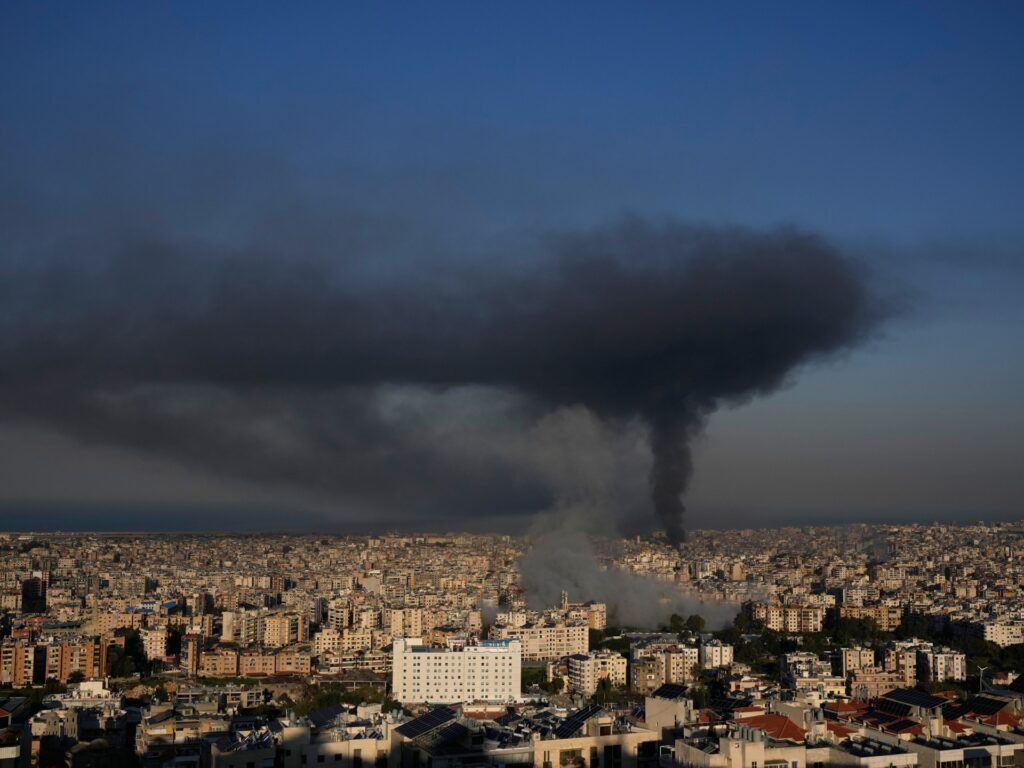
In a significant escalation of tensions between Israel and Lebanon, the Israeli military has conducted airstrikes on Beirut, targeting locations associated with Hezbollah. This marks another round of conflict as hostilities between the two sides intensify. The Israeli army stated that its strikes are aimed at neutralizing Hezbollah targets, which it considers a major threat to Israel’s security.
Hezbollah, the Lebanon-based militant group, responded by launching drone attacks into Israeli territory. These attacks represent a continued campaign by Hezbollah to exert pressure on Israel amidst ongoing regional conflicts.
The air raids by Israel have resulted in considerable displacement across Lebanon, with many civilians forced to flee their homes due to the destruction and threat of further attacks. The situation has added to the humanitarian crisis in the region, exacerbating fears of a broader escalation.
Analysts note that this latest exchange of fire underscores the fragile state of security in Lebanon and Israel, where longstanding hostilities and unresolved political differences have frequently led to violence.
The international community has expressed concern about the potential for a wider conflict, calling for restraint from both parties. Diplomatic efforts are being urged to prevent further deterioration of the situation.
The Israeli military maintains that its operations are focused on defending its borders and preventing Hezbollah from gaining strategic advantages that could threaten Israeli civilians.
Meanwhile, Hezbollah’s use of drones signifies a tactical evolution in its arsenal, highlighting the group’s ability to target Israel with relatively sophisticated technology.
The ongoing conflict has heightened fears among Lebanese civilians, many of whom already face economic and political struggles within their country. The displacement caused by the Israeli airstrikes has overwhelmed local infrastructure and relief efforts.
International organizations are monitoring the situation closely, ready to provide humanitarian assistance as needed.
This latest round of hostilities began amidst a backdrop of increased political instability in Lebanon and regional tensions tied to broader Middle Eastern conflicts.
The risk of further escalation remains high, with both sides showing readiness to continue their campaign if their demands and security concerns are not addressed.
Experts warn that without effective diplomatic intervention, the cycle of violence between Israel and Hezbollah could spiral into an even larger confrontation affecting neighboring states.
This incident reiterates the persistent volatility along the Israel-Lebanon border, where sporadic flare-ups of violence have become a recurring and dangerous pattern.
Residents of Beirut and surrounding areas are bracing for the possibility of additional strikes, with many seeking safety in shelters and away from urban centers.
The humanitarian impact is growing, as interrupted access to essential services and infrastructure damage compound the daily hardships faced by civilians.
In response, various countries and international bodies are calling for urgent dialogue and ceasefire measures to prevent any further loss of life and restore stability to the region.
As the situation develops, the focus remains on de-escalation, the protection of civilian lives, and the avoidance of a full-scale war.
The world watches closely, hoping for a peaceful resolution to a conflict that has already inflicted significant damage and suffering on the people of Lebanon and Israel alike.