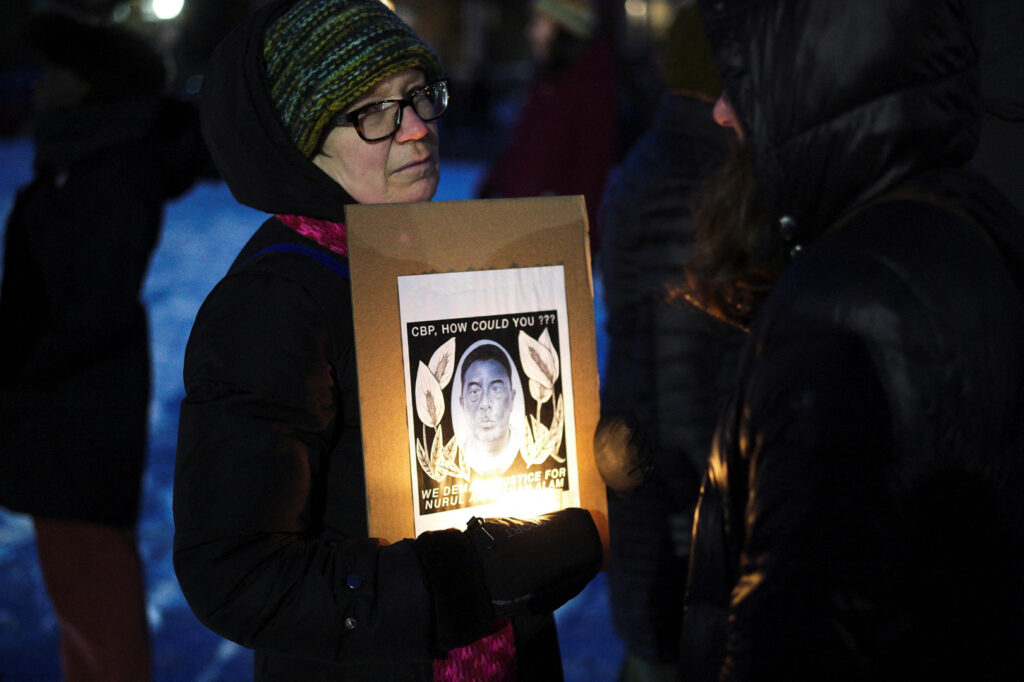
Activists gather in the Elmwood Village neighborhood following the death of Nurul Amin Shah Alam, a nearly blind refugee from Myanmar who was missing since his release from a jail into the custody of the U.S. Border Patrol and who was later found dead, in Buffalo, New York, U.S., February 26, 2026. REUTERS/Craig Ruttle
Nurul Amin Shah Alam, a Rohingya refugee nearly blind, was found dead shortly after US Border Patrol agents released him. The tragic incident has raised serious concerns about the treatment and care of vulnerable refugees in border custody.
Shah Alam, who had limited vision, was taken into custody by border authorities but was released days before his body was discovered. Details about the circumstances leading to his death remain unclear, prompting calls for thorough investigation.
The Rohingya, a persecuted ethnic minority from Myanmar, face severe hardship when fleeing their homeland, often enduring dangerous journeys through multiple countries. The vulnerable condition of refugees like Shah Alam highlights the critical need for adequate medical attention and humanitarian support during their transit and detention.
Human rights organizations have condemned the incident, urging border enforcement agencies to adopt measures that ensure the safety and dignity of refugees, particularly those with disabilities or health impairments. They emphasize that immigration enforcement should not come at the cost of human life.
Advocates call for increased transparency in border detention facilities, improved access to healthcare for detainees, and more robust oversight of detention and release protocols to prevent similar tragedies. This incident adds pressure on policymakers to reconsider refugee processing and support mechanisms at border crossings.
The death of Nurul Amin Shah Alam serves as a somber reminder of the vulnerabilities faced by refugees worldwide. It underscores the imperative of treating every individual with care and respect, especially those who have escaped from persecution and require compassionate assistance.
Ongoing investigations aim to uncover the exact causes and contributing factors of his death while pushing for reforms to safeguard the wellbeing of displaced persons in border custody. The international community watches closely as this incident spotlights critical humanitarian and human rights issues.
In response, several humanitarian groups have mobilized efforts to provide aid to Rohingya refugees and raise awareness of their plight. The tragedy has sparked a renewed dialogue on the obligations of countries to protect refugees and uphold international human rights standards.
As the story unfolds, it is hoped that Nurul Amin Shah Alam’s death will not be in vain but rather a turning point leading to more humane policies and practices for refugees at borders globally.