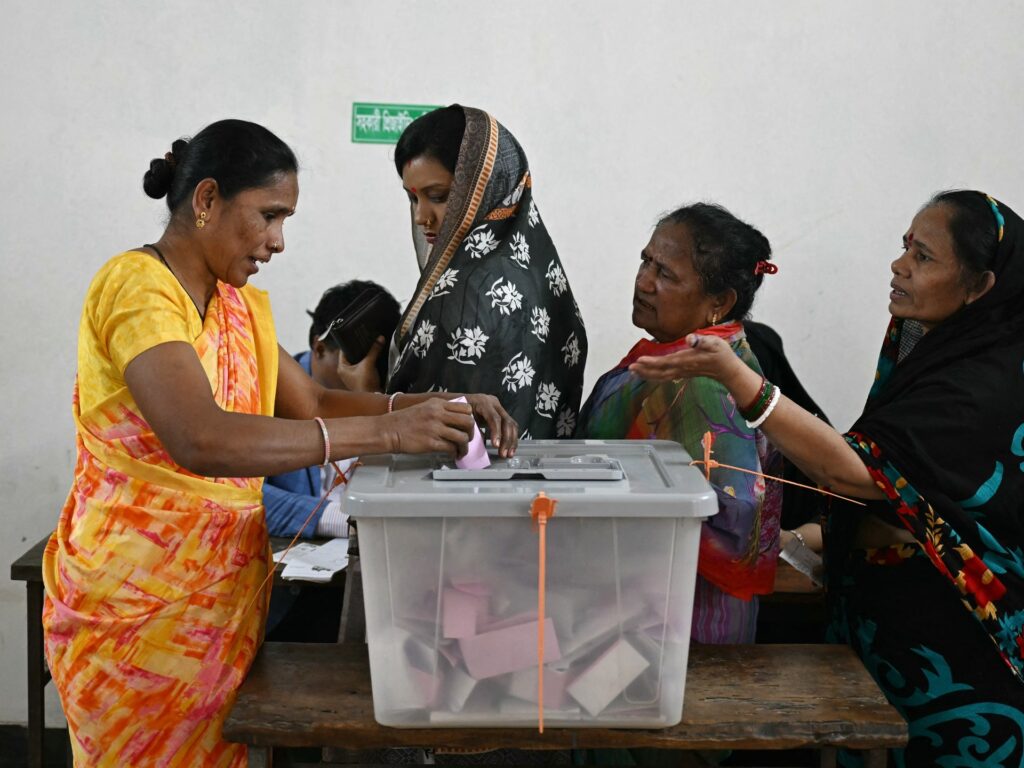
The 2026 parliamentary elections in Bangladesh have begun, with prominent political figures Yunus and Tarique Rahman casting their ballots early in the day. This election is highly anticipated due to the fierce contest between Tarique Rahman’s Bangladesh Nationalist Party (BNP) and a coalition led by Jamaat-e-Islami, comprising 11 parties. The political atmosphere is charged, with both sides mobilizing their supporters for what is expected to be a pivotal election in Bangladesh’s political landscape.
Tarique Rahman, a key leader of the BNP and a frontline candidate, has positioned his party as the main challenger to the ruling alliance. His campaign has focused on key national issues such as economic development, governance reforms, and strengthening democratic institutions. Meanwhile, the Jamaat-e-Islami-led coalition has united 11 smaller parties, aiming to consolidate votes from various segments of society, and presents itself as a viable alternative to the BNP.
The election day has seen heavy voter turnout amid tight security arrangements across the country, reflecting the significance of this vote. Observers note that this election could reshape the political dynamics in Bangladesh, impacting policy directions and governance for the coming years.
Yunus, another influential figure involved in the elections, also participated by voting, signaling high-profile engagement in the democratic process. The presence of such leaders at polling stations underscores the importance attributed to this election by all parties involved.
Analysts suggest that the direct contest between BNP and the Jamaat-e-Islami-led coalition may polarize voters but also energize political participation nationwide. The government has emphasized the need for a peaceful, transparent election process, with mechanisms in place to monitor fair play and address any disputes promptly.
As votes continue to be counted after polling has closed, initial results are being awaited eagerly by political stakeholders and the general public. The outcome will likely influence Bangladesh’s policy landscape and governance structure, reflecting the will of its citizens in determining their political future.
The 2026 Bangladesh election is not only a contest of political parties but also a reflection of broader societal aspirations for stability, progress, and democratic governance. With notable leaders like Yunus and Tarique Rahman actively participating, the election underscores the vibrant, competitive nature of Bangladeshi democracy.
This election will be closely followed by regional and international observers, owing to Bangladesh’s strategic importance in South Asia and its role in regional stability. As the nation awaits final results, citizens remain hopeful for a peaceful and decisive resolution that respects the democratic mandate of the people.
In summary, the 2026 parliamentary elections in Bangladesh are a critical juncture for the country’s political future. The contest between Tarique Rahman’s BNP and the Jamaat-e-Islami-led coalition of 11 parties is central to this electoral process. With high-profile voting from leaders like Yunus and Tarique Rahman themselves, the elections are poised to be a defining moment in Bangladesh’s democracy, with outcomes that will shape the nation’s trajectory in the years to come.