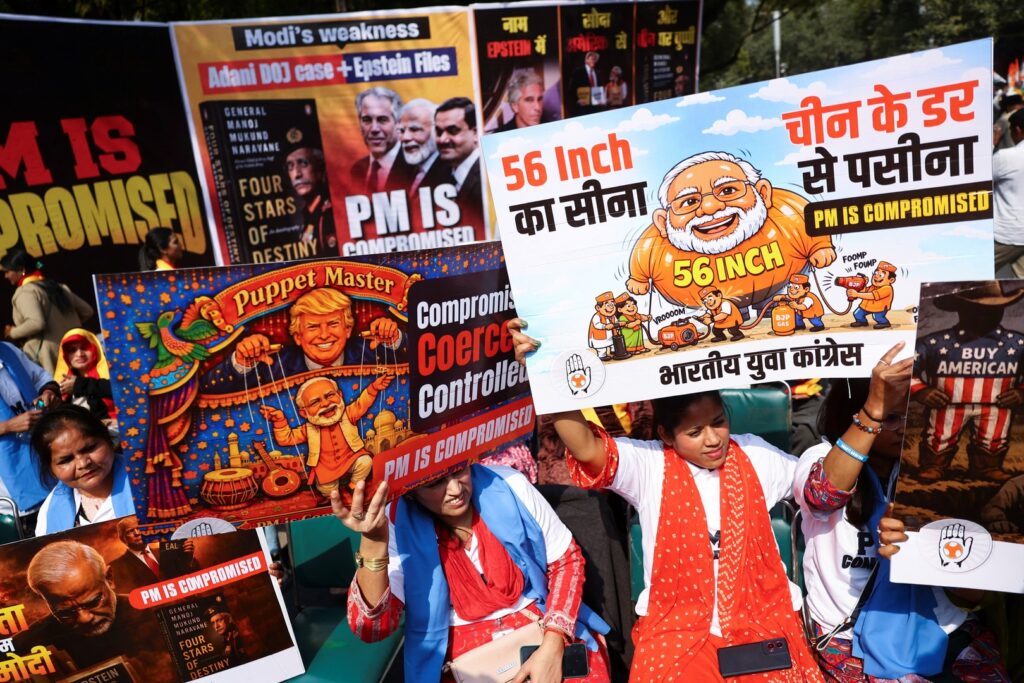
Indian Youth Congress supporters hold placards and shout slogans against Indian Prime Minister Narendra Modi after his name surfaced in the Epstein files, and over a row in parliament linked to excerpts from former Chief of Army Staff General M.M. Naravane's unpublished memoir quoted by the opposition, in New Delhi, India, February 10, 2026. REUTERS/Anushree Fadnavis
In a recent development, protests have erupted in New Delhi as demonstrators gather to voice their concerns and demand clarity following the naming of Indian Prime Minister Narendra Modi in documents linked to the Jeffrey Epstein files. These files have been a source of global controversy, revealing connections and alleged associations involving Epstein, who was a convicted sex offender with extensive high-profile networks.
The revelation of Modi’s name in the Epstein-linked documents has triggered a wave of public outcry and activism in the Indian capital. Protesters are calling for a thorough investigation and transparency from government officials regarding the nature of Modi’s involvement or connection to Epstein.
Jeffrey Epstein’s files have implicated a range of public figures from different countries, attracting intense media scrutiny and public interest worldwide. The files consist of various documents, including flight logs, financial records, and correspondence, which continue to unveil the extent of Epstein’s connections.
In New Delhi, the protests have brought together activists, political opponents, and ordinary citizens united by concerns over accountability and ethical governance. Demonstrators have carried banners and chanted slogans demanding that the government address these allegations openly and promptly.
Political analysts suggest that this development could have significant repercussions on domestic politics in India. Modi’s leadership has been under scrutiny for various reasons, and this new controversy adds to the challenges he and his administration face.
Officials from the Prime Minister’s office have yet to release an official statement addressing the claims or the protests. However, political insiders speculate that the government may attempt to downplay the situation or discredit the sources of the documents.
The protests in New Delhi reflect a broader global trend where societies are increasingly unwilling to overlook allegations involving powerful individuals connected to Epstein’s network. Public demand for justice and truth remains strong amid ongoing investigations in multiple countries.
As the story unfolds, international observers and Indian citizens alike are watching closely to see how the government responds. The transparency of the investigation and the handling of these sensitive issues will likely influence public trust and political stability in India.
This incident underscores the continuing ripple effects of the Epstein case, highlighting how its legacy impacts different regions worldwide and raises critical questions about accountability at the highest levels of power.
For now, New Delhi remains a focal point of public dissent, as citizens gather to express their frustration and insist on answers concerning the implications of the Prime Minister’s alleged connections to Jeffrey Epstein.