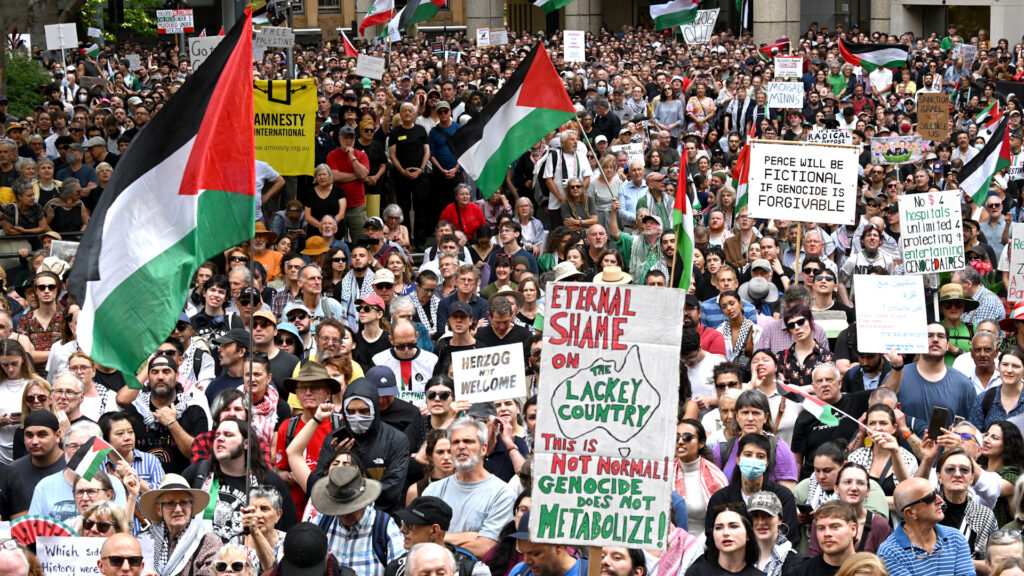
In recent days, cities across Australia have seen a surge of public demonstrations opposing the visit of Israeli President Isaac Herzog. The protests, organized by a variety of activist groups and community members, highlight ongoing tensions and differing perspectives regarding Israeli policies and actions. The rallies have taken place in major urban centers, with protestors voicing their concerns through marches, speeches, and public gatherings.
One of the central themes of the protests is a call for recognition and support for Palestinian rights, with many participants expressing solidarity with the Palestinian people. Demonstrators have criticized the visit as a symbol of endorsement for policies they view as oppressive or unjust. Signage and chants throughout the rallies have called for international awareness and action to address the conflict.
The protests have been largely peaceful, although local authorities have been present to maintain order and facilitate public safety. Some counter-protesters have also appeared in support of the Israeli President, leading to moments of tension but no major incidents reported.
Media coverage of the events emphasizes the diversity of voices within the Australian community, reflecting deep divisions on Middle Eastern politics that resonate beyond national borders. Advocacy groups have used social media platforms to amplify their messages and coordinate ongoing activities related to the visit.
Political leaders and analysts have weighed in on the protests, acknowledging the complexity of the issues at hand while advocating for respectful discourse and peaceful expression of viewpoints. The visit of President Herzog has thus become a focal point for broader conversations about international relations, human rights, and the role of governments in addressing contentious global matters.
As the visit continues, it remains clear that public opinion in Australia is strongly divided, and the protests underscore the passionate engagement of citizens in international affairs. The situation highlights the importance of dialogue and the challenges faced by democratic societies in balancing diverse perspectives and maintaining constructive discussions on sensitive topics.