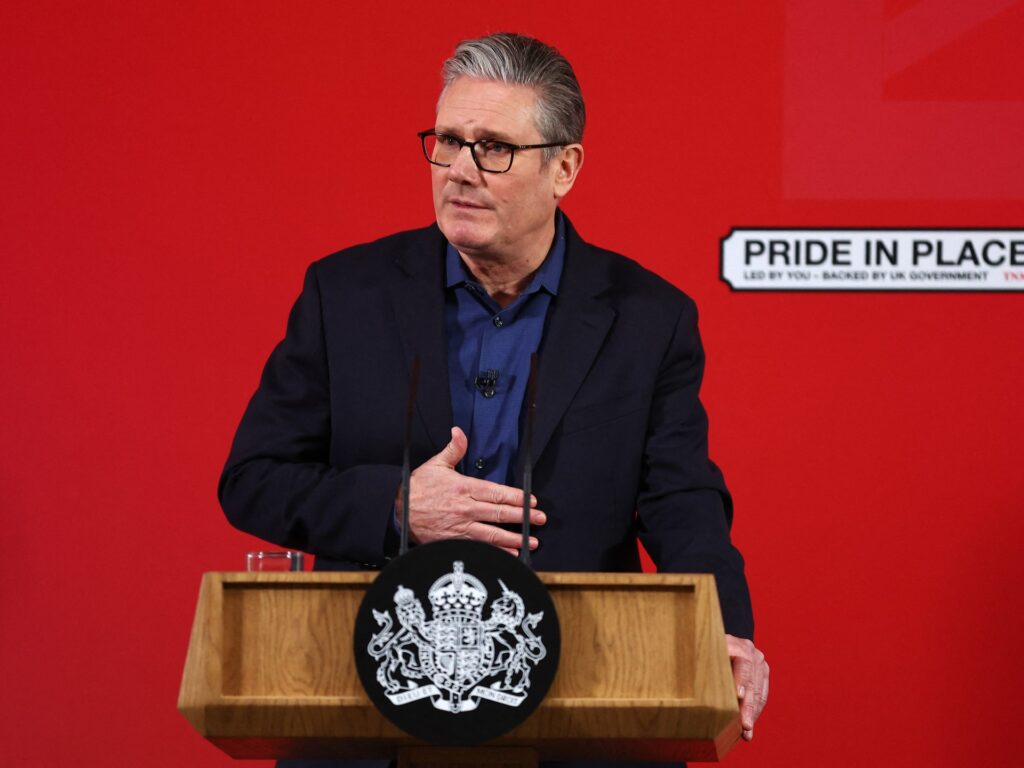
In a significant development within the UK political landscape, Prime Minister Keir Starmer’s communications chief has resigned amidst the ongoing fallout from the Jeffrey Epstein scandal. This unexpected resignation adds to the turmoil facing the government. The controversy intensified after Prime Minister Starmer faced fierce criticism for supporting Peter Mandelson’s nomination as the UK ambassador to the United States despite Mandelson’s known previous associations with the disgraced financier Jeffrey Epstein.
The Epstein scandal, which has implicated numerous high-profile individuals worldwide, continues to cast a long shadow over political circles. Peter Mandelson, a senior Labour Party figure and former European Trade Commissioner, has long been a contentious presence in British politics, but his connections to Epstein have now propelled the issue to the forefront.
Starmer’s decision to back Mandelson’s ambassadorial appointment was seen by many as a calculated political move. However, this endorsement drew sharp backlash from political opponents, the media, and the public, who perceive it as a major misjudgment given the sensitivities surrounding the Epstein scandal. Mandelson’s links to Epstein, however indirect or historical, are perceived as a potential liability for the UK government’s diplomatic operations in the US, a critical ally.
The communications chief’s departure is seen as a direct consequence of the escalating pressure. Sources close to Downing Street suggest that the resignation stemmed from irreconcilable differences over communication strategy and the handling of the crisis. The communications team reportedly struggled to manage the public narrative amid increasing scrutiny and criticism.
Opposition parties have seized on the resignation and the Mandelson controversy to further question Starmer’s judgment and leadership. Calls for greater transparency and a thorough review of political appointments have grown louder.
The Prime Minister’s office has issued a statement acknowledging the communications chief’s resignation, expressing gratitude for his service and emphasizing that the government remains focused on delivering its agenda despite the distractions.
Political analysts note that this episode could have longer-term implications for the Labour Party’s image, especially as the country prepares for forthcoming elections. The association with Epstein-related figures and the internal shake-up in Starmer’s team could impact public confidence.
Meanwhile, the UK government faces the challenge of balancing diplomatic priorities with the urgent need to address ethical and reputational concerns arising from this scandal. The appointment of ambassadors, a routine but crucial element of foreign policy, has now become a highly sensitive issue.
This resignation highlights the difficulties political figures face when navigating the complex web of alliances and controversies in modern governance. The Epstein scandal, with its far-reaching implications, continues to influence political dynamics in the UK and beyond.
As the situation unfolds, it remains to be seen how Prime Minister Starmer will rebuild trust and manage the fallout, but the resignation marks a pivotal moment in the scandal’s ongoing impact on UK politics.