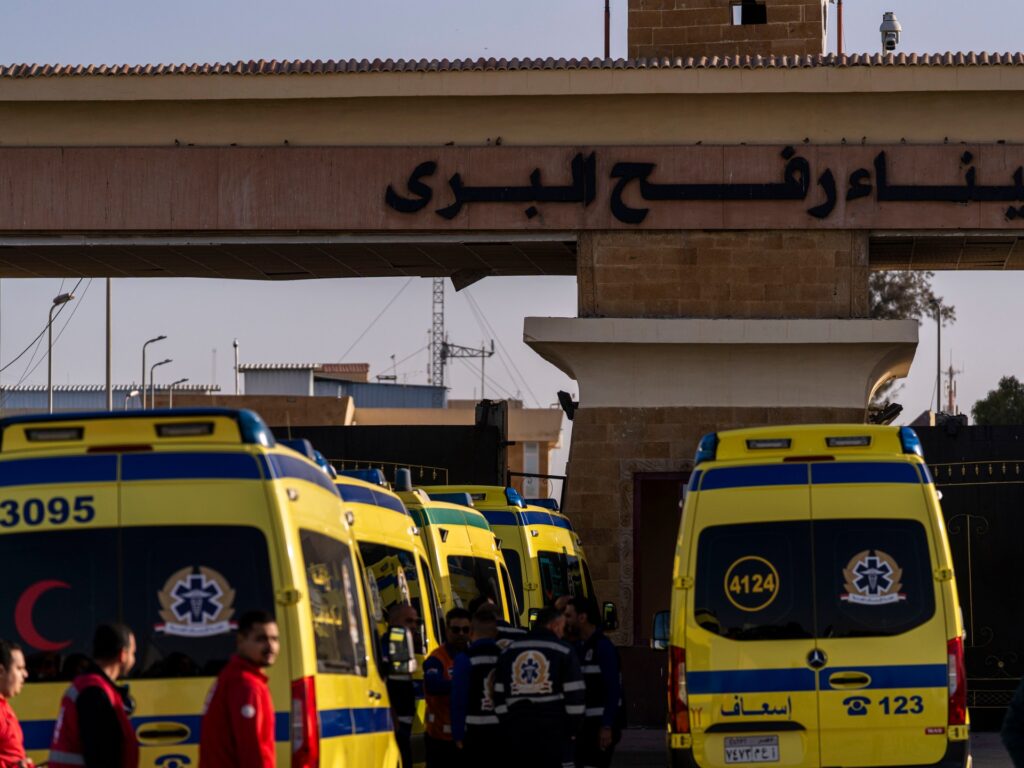
Israel has announced the partial reopening of the Rafah crossing, a crucial border point between Egypt and the Gaza Strip, as part of a new pilot program. This move comes amid ongoing tensions and humanitarian concerns in the region. According to Israeli authorities, the pilot initiative is set to begin with limited passage before expanding to allow Gaza residents to cross the border starting Monday.
The Rafah crossing has long been a critical gateway for residents of Gaza to travel for medical treatment, humanitarian aid, and family visits. Its closure in recent times has severely restricted movement, contributing to increased hardships in Gaza.
Officials have emphasized that the reopening is a cautious step, designed to monitor security and logistical arrangements carefully. The pilot program will initially allow a small number of Gaza residents to pass through, with the possibility of gradual expansion contingent on the situation’s stability.
This reopening is seen as a significant development in the ongoing efforts to ease the blockade on Gaza, which has been in place for several years due to security concerns. The crossing itself is controlled by Egypt on one side and was previously heavily restricted by Israeli authorities.
Humanitarian groups and international organizations have welcomed the move, viewing it as a positive gesture toward alleviating humanitarian suffering in Gaza. They hope it will pave the way for increased access and more comprehensive border management in the future.
Despite the optimism surrounding the reopening, there remain challenges. The political and security situation in the region is complex, with risks that any changes to border control could affect the delicate balance. Israeli authorities have stressed the need for rigorous oversight to prevent unauthorized movements and ensure security for all parties involved.
The pilot program also reflects growing cooperation between Israeli, Egyptian, and Palestinian authorities to manage border crossings more effectively. This collaboration aims to facilitate better humanitarian access while maintaining necessary security measures.
Residents of Gaza who are permitted to cross through Rafah will be subject to security checks and registration processes as part of the new protocols. Authorities expect that the pilot will provide valuable data and experience to inform future policies regarding the crossing.
The partial reopening of the Rafah crossing is a hopeful step amid a protracted conflict and blockade that have significantly impacted Gaza’s economy and daily life. It demonstrates a potential path forward for improved movement and humanitarian relief, albeit with caution due to ongoing security concerns.
As the pilot program begins, attention will focus on its implementation and impact, with international observers closely monitoring developments. The success of this initiative could influence broader discussions on border policy and humanitarian access in the region.
In summary, the partial reopening of the Rafah crossing marks a noteworthy moment in efforts to address the humanitarian situation in Gaza. With careful management and cooperation, it may set a precedent for future engagement and mobility for Gaza’s residents.