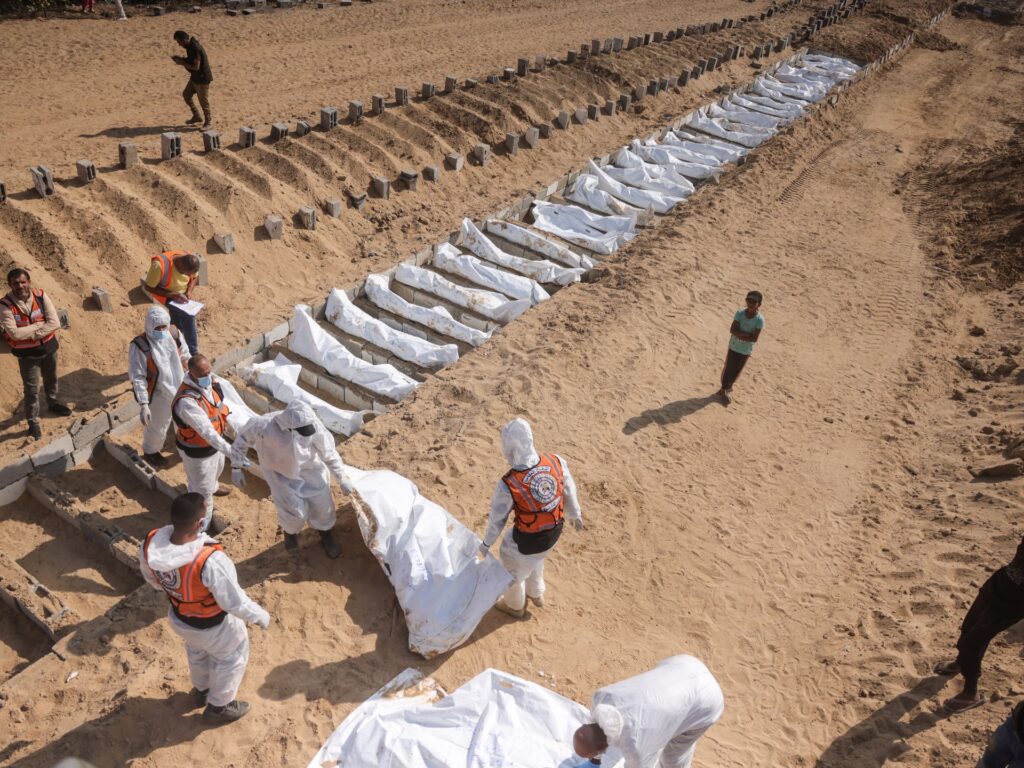
The ongoing conflict between Israel and Gaza has resulted in a heartbreaking asymmetry in human tolls and treatment of casualties. Over 10,000 Palestinians remain trapped under rubble, victims of relentless airstrikes and military operations. These individuals are often lost amid the devastation, with many bodies buried beneath destroyed buildings and lacking proper identification. The scale of destruction has led to a tragic humanitarian crisis, where thousands of Palestinian deaths remain unaccounted for, their identities unknown, and their families devastated by uncertainty and grief.
In stark contrast, the situation surrounding Israeli casualties is marked by intensively focused efforts. The Israeli government has reportedly razed 200 graves to facilitate the recovery of the body of a single captive soldier. This act underscores the highly prioritized and symbolic nature of Israeli lives within the conflict narrative. While the Palestinian dead are often aggregated as casualty statistics, the Israeli captive’s fate receives singular attention, revealing disparities in the treatment of the deceased and those missing on both sides.
This discrepancy highlights profound ethical and humanitarian challenges. Thousands of Palestinians killed are effectively lost in the rubble without proper funerals or acknowledgment, exacerbating the trauma for their communities and complicating efforts for post-conflict reconciliation. Meanwhile, the razing of cemeteries to retrieve one captive raises questions about respect for the dead and the costs of war on cultural heritage.
The destruction of Palestinian homes and cemeteries further compounds the crisis, as families struggle to recover any remnants of their lost loved ones amid ongoing conflict. Human rights organizations have voiced alarm about the violations involved, stressing the need for adherence to international humanitarian law, including the respectful treatment of bodies and the deceased.
The unequal visibility and recognition of victims in this conflict reflect broader patterns of power imbalance and political narratives. Palestinian casualties are often obscured by the scale of destruction and the chaos of war, while Israeli losses are accorded heightened attention, symbolizing national trauma and collective memory.
Efforts to document and identify Palestinian victims face immense challenges, including access restrictions, ongoing violence, and resource scarcity. This hinders families from achieving closure and perpetuates cycles of suffering across generations.
International observers and mediators continue to call for urgent humanitarian measures to protect civilians and ensure proper care for the dead and missing. The peace process remains fragile, with the disparity in casualty treatment serving as a poignant reminder of the deep divisions and humanitarian stakes involved.
Ultimately, the human cost of conflict is immeasurable. The story of Gaza’s unequal dead—over 10,000 Palestinians buried under rubble versus one Israeli captive whose body prompts extensive efforts to recover—captures the stark realities of this war. It calls for renewed commitment to human dignity, respect for all lives lost, and an end to the cycle of violence that has devastated countless families on both sides.