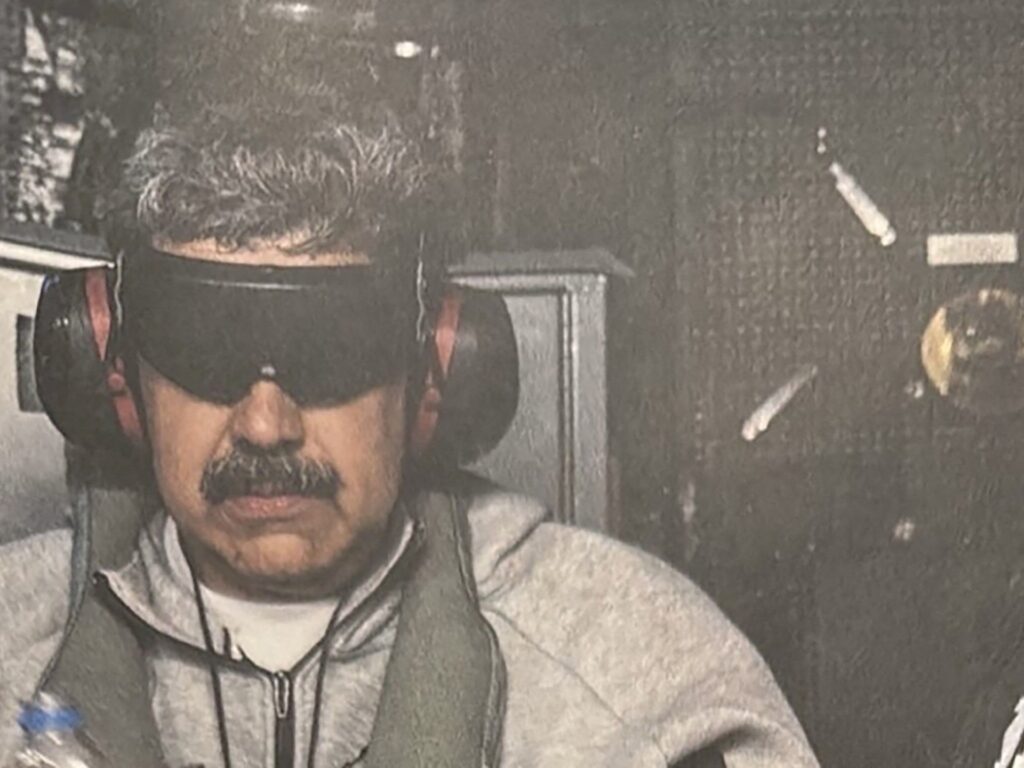
From humble beginnings in a working-class neighbourhood to an authoritarian presidency, here is a look at Maduro’s life.
Nicolas Maduro Moros was born on November 23, 1962, in Caracas, Venezuela. Raised in a working-class family, his early life was marked by his involvement in student politics and later, in the nascent Venezuelan trade union movement. Before entering mainstream politics, Maduro worked as a bus driver for the Caracas Metro system, an experience that profoundly shaped his populist appeal and connection with ordinary Venezuelans.
His political awakening came with his fervent support for Hugo Chávez, a charismatic paratrooper who attempted a coup in 1992. After Chávez’s release from prison and his subsequent rise to power in 1999, Maduro quickly became a key figure within the Bolivarian Revolution. He served as a representative in the National Assembly from 2000 to 2005, where he demonstrated a staunch loyalty to Chávez and his socialist policies.
Maduro’s ascent continued, and he was appointed Minister of Foreign Affairs in 2006, a position he held until 2013. During his tenure, he became known for his diplomatic efforts to strengthen Venezuela’s ties with left-wing governments in Latin America and beyond, often echoing Chávez’s anti-imperialist rhetoric. His calm demeanor and perceived reliability contrasted with Chávez’s more flamboyant style, making him a trusted confidant.
In 2012, as Chávez battled cancer, Maduro was elevated to Vice President, solidifying his position as the chosen successor. Chávez famously named Maduro as his preferred heir, a pivotal moment that paved the way for his presidency. Following Chávez’s death in March 2013, Maduro assumed the interim presidency and subsequently won a special election in April 2013, albeit by a narrow margin and amidst accusations of irregularities from the opposition.
His presidency has been defined by a deepening economic crisis, marked by hyperinflation, severe shortages of food and medicine, and a massive exodus of Venezuelans. Critics attribute these woes to his government’s mismanagement, corruption, and adherence to socialist economic policies. Under his leadership, Venezuela has experienced a dramatic decline in oil production, historically the backbone of its economy.
Maduro has faced widespread international condemnation for what many describe as an increasingly authoritarian rule. His government has been accused of human rights abuses, suppressing dissent, and undermining democratic institutions. Key events include the controversial 2017 election of a Constituent Assembly, which effectively sidelined the opposition-controlled National Assembly, and his re-election in 2018, which was widely boycotted by the opposition and not recognized by numerous international bodies.
He has skillfully consolidated power, often relying on the unwavering support of the military and the use of state resources to maintain control. Despite immense pressure from within Venezuela and from the international community, including sanctions imposed by the United States and other countries, Maduro has clung to power, frequently denouncing foreign interference and rallying his base against perceived external threats.
Nicolas Maduro’s journey from a bus driver and union leader to the president of a nation in crisis is a testament to the turbulent political landscape of Venezuela. His legacy remains fiercely debated, seen by supporters as a defender of national sovereignty and Chávez’s socialist vision, and by opponents as a dictator responsible for the nation’s catastrophic decline. His story is intrinsically linked to the complex and often tragic trajectory of modern Venezuela.