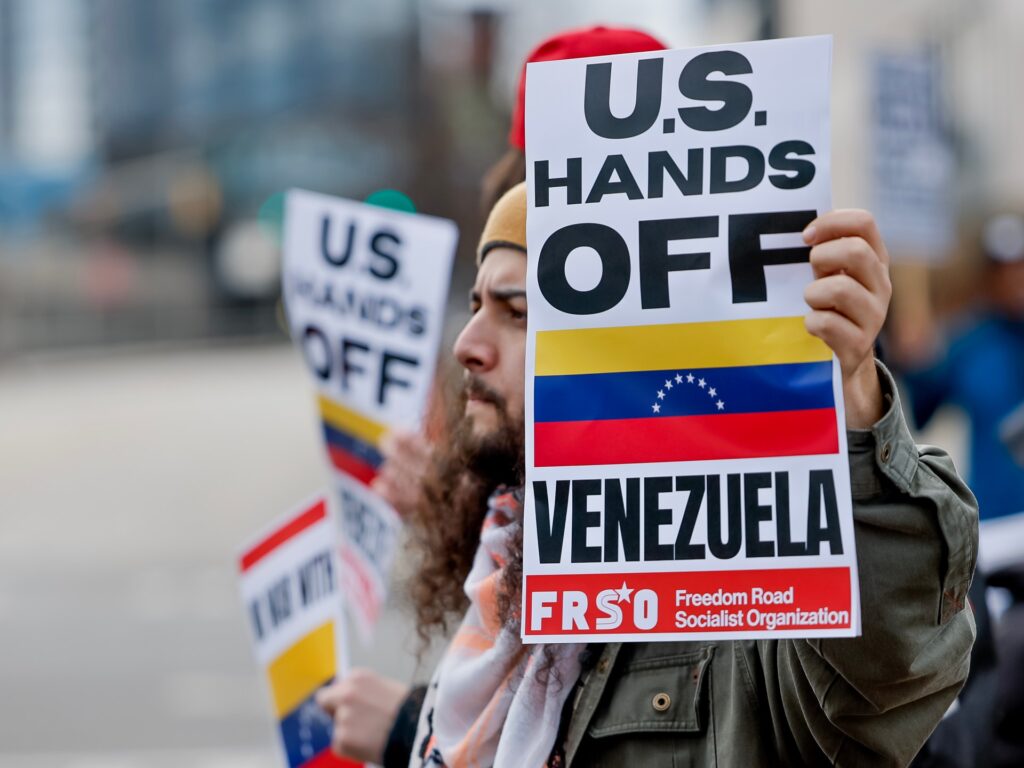
The contemporary geopolitical arena, perpetually shaped by intricate power dynamics and often divergent national interests, finds itself once again at the nexus of a profound ideological and legal debate. This discourse centers critically on the inviolability of national sovereignty and the precise, permissible boundaries of external intervention in the internal affairs of independent states. In a particularly incisive and widely noted critique, a leading expert in international law has unequivocally condemned the previous Trump administration’s stated justifications for potential military engagement and its sustained, forceful efforts aimed at orchestrating the removal of Venezuelan President Nicolas Maduro from office. These audacious initiatives, according to the expert, not only constituted an “illegal use of force” but, more starkly, amounted to an unambiguous “act of war.” This formidable censure resonates deeply across academic institutions and diplomatic channels alike, serving to amplify a growing international disquiet regarding unilateral actions that threaten to dismantle the painstakingly constructed framework of established international legal norms and undermine the very foundation of peaceful diplomatic engagement.
This powerful condemnation originated from a distinguished professor whose scholarly work is dedicated to international law, human rights, and global security. Addressing a keenly anticipated global affairs symposium, the professor meticulously articulated a compelling argument: that any military intervention, whether overt or clandestine, expressly designed to induce regime change and proceeding without a clear, unequivocal mandate from the United Nations Security Council, represents a profound and utterly indefensible breach of Venezuela’s inherent sovereign rights. Furthermore, the expert contended that such actions fundamentally corrode the foundational principles meticulously enshrined within the UN Charter – a seminal document conceived and designed to safeguard international peace and collective security in the post-war era. “To attempt to rationalize, or indeed to deliberately mischaracterize, the forceful removal of a recognized head of state through external military might as anything less than an egregious act of war is not merely an intellectual oversight; it is a calculated and exceedingly perilous distortion of the gravest breaches imaginable against international peace and security,” the professor declared with palpable conviction, their words reverberating with the deep-seated concerns shared by numerous proponents of a rules-based global order.
The professor’s comprehensive analysis directly challenges the prevailing narrative advanced by the former US administration, which consistently invoked a diverse spectrum of rationales. These included prominent claims of an escalating humanitarian crisis within Venezuela, strong assertions regarding the illegitimacy of President Maduro’s government following contested elections, and the perceived moral imperative to re-establish democratic governance within the economically beleaguered nation. It is a matter of public record that, during its tenure, the Trump administration openly explored a broad array of policy options, explicitly extending to contemplating direct military avenues, all with the stated objective of exerting maximum pressure on Caracas. This aggressive strategy encompassed the implementation of severe and economically crippling sanctions, alongside the highly controversial diplomatic decision to formally recognize opposition figure Juan Guaidó as Venezuela’s interim president—a move that subsequently created significant and lasting diplomatic fissures across the international community. Nevertheless, the expert adamantly contended that these multifaceted actions, despite being superficially presented as indispensable interventions aimed at protecting regional stability or safeguarding human rights, inherently and precariously traversed a perilous boundary, veering dangerously close to outright illegality. More alarmingly, they concurrently established deeply troubling and potentially disastrous precedents that could severely impact the future trajectory of international relations and the conduct of states globally for decades to come.
“The frequently referenced ‘Responsibility to Protect’ (R2P) doctrine, a concept often introduced into discussions concerning external interventions in situations of mass atrocities, possesses exceptionally specific and rigorously defined thresholds for its legitimate activation. Crucially, its application unequivocally necessitates a broad multilateral consensus and explicit approval from the international community, typically mediated through the UN Security Council,” the professor painstakingly elaborated during their insightful address. “What we have consistently observed in the context of Venezuela, and what regrettably endures as an omnipresent and looming threat, is not a collective, legally sanctioned international effort aligned with R2P principles. Instead, it manifests as a unilateral and often unapologetic assertion of raw state power. This particular approach, fundamentally bereft of genuine international legal substantiation, carries the immense and inherently unquantifiable risk of further destabilizing an already exceptionally fragile region, potentially plunging its vulnerable populations into even more profound humanitarian crises and untold suffering.” The professor underscored the critical and immutable importance of the principle of non-intervention in the domestic affairs of sovereign states, characterizing it as an inviolable cornerstone of modern international law, painstakingly forged in the harrowing aftermath of two devastating global conflicts specifically to prevent more powerful nations from arbitrarily dictating the political trajectory and internal governance of less powerful or developing ones.
Furthermore, the esteemed professor highlighted that while undeniably legitimate and profoundly grave concerns exist regarding the state of governance, the pervasive human rights situation, and the profound economic hardship afflicting the Venezuelan populace—issues that indeed demand urgent global attention and concerted international efforts—these pressing realities, however dire, do not automatically confer upon any single nation the unfettered right or the necessary legal authority to unilaterally impose a military solution or to actively orchestrate a change in leadership through external, coercive force. Such unilateral actions, the expert firmly contended, almost invariably serve to exacerbate existing and already complex problems within the target nation and the broader region. They frequently unleash a cascading series of unforeseen and deleterious consequences, often leading to protracted instability and increased human suffering. Moreover, and perhaps most critically, they severely erode the dwindling trust placed in multilateral international institutions that were specifically designed and painstakingly constructed over decades to manage global disputes through peaceful, diplomatic means, thereby weakening the entire system of global governance and international cooperation.
Critics of the aggressive US posture toward Venezuela, with the prominent international law expert being a leading voice among them, frequently draw compelling parallels to a long and often contentious historical pattern of interventions carried out by powerful nations in Latin America. These historical precedents, they meticulously argue, have regrettably left an enduring legacy of profound political instability, deep-seated resentment, and prolonged social unrest across the entire continent. The very premise that one sovereign nation possesses the inherent right to unilaterally determine who governs another, based purely on its own perceived strategic interests or its subjective interpretations of justice and democratic principles, is increasingly viewed as an anachronistic relic of a bygone imperialistic era. Such an approach, the professor asserted, is fundamentally and irreconcilably incompatible with the core principles underpinning a truly equitable and rules-based international order—an order that ideally should be built upon mutual respect, sovereign equality, and strict adherence to shared legal frameworks among all nations. “This profound and critical debate is not, at its core, about an endorsement or a defense of any particular regime or political ideology currently dominant within Venezuela; rather, it is unequivocally about safeguarding and defending the foundational integrity of international law itself,” the expert emphatically stressed, reiterating the far-reaching implications of the discussion for global stability and the future of international relations. “When powerful nations consciously choose to disregard these meticulously established laws and universally accepted norms of international conduct, they not only directly invite an escalation of chaos and instability within specific regions but, more perilously and broadly, they actively undermine the very architectural framework of global governance that was painstakingly designed and incrementally constructed over many decades to prevent large-scale international conflict and to foster cooperative, peaceful coexistence among diverse states.”
Therefore, the articulate and profoundly forceful rejection of the Trump administration’s past rationales by this leading expert serves as an urgent and potent reminder of the inherent complexities, profound ethical dilemmas, and very real, tangible dangers that invariably permeate international relations, especially when the ominous specter of military options begins to loom large on the geopolitical horizon. This critical stance compels a comprehensive re-evaluation, not solely of the specific and highly contentious policies that were directed towards Venezuela, but more significantly, of the broader and potentially far-reaching implications for the delicate global order. This re-evaluation becomes paramount when the universally recognized and sacrosanct principle of national sovereignty is brazenly challenged and potentially overridden by unilateral applications of coercive force. A steadfast and unwavering adherence to the fundamental tenets of international law, a renewed and genuine commitment to multilateralism as a primary mode of global engagement, and the unequivocal prioritization of diplomatic solutions as the first resort, the professor concluded with unwavering conviction, collectively represent the only legitimate, truly sustainable, and ethically sound path forward for effectively resolving such incredibly intricate and sensitive geopolitical challenges. This approach is essential for safeguarding the precious commodity of global peace and, crucially, for rigorously preventing truly devastating and entirely unwarranted “acts of war” that invariably bring immense suffering, long-term instability, and a pervasive erosion of trust on the world stage.