amid-an-overcast-somber-scene-of-vast-devastation-a-solemn-procession-led-by-a-figure-in-papal-whi.jpg
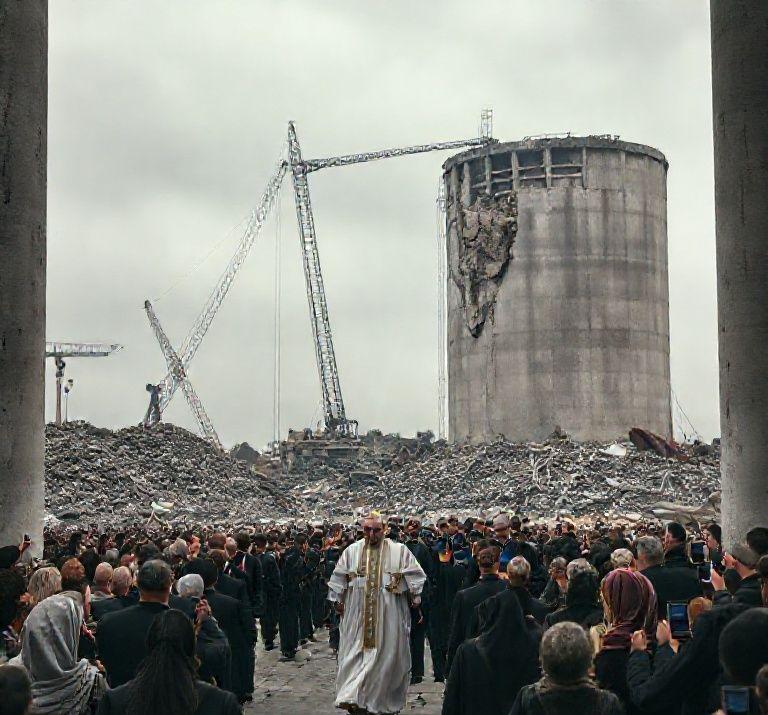
Pope Leo XIV concluded his three-day visit to Lebanon with a poignant stop at the site of the devastating Beirut port explosion, where he led a silent prayer and called for justice for those affected. The Pontiff expressed profound emotion following his visit to the blast site, stating he was “deeply moved” and shared “the thirst for truth and justice, of so many families, of an entire country.”
During his time at the memorial, His Holiness met with relatives of the 218 individuals who tragically lost their lives in the massive August 4, 2020, blast, which ravaged a significant portion of the capital. No one has yet been held accountable for the catastrophe, which occurred when 2,750 tonnes of ammonium nitrate, unsafely stored in a port warehouse for nearly six years, detonated after a fire.
Public sentiment suggests that officials and politicians were aware of the combustible chemical’s presence and the inherent danger it posed but failed to secure or remove it. Millenium TV has learned that victims’ relatives and activists believe the domestic investigation into the disaster has faced significant obstacles due to political leadership efforts to shield those responsible from scrutiny.
Cecile Roukoz, whose brother Joseph was among the victims, emphasized the importance of the Pope’s presence at the memorial. She explained, “We know that he raises his voice for justice, and we need justice for our brothers and all the victims of this explosion.” Tatiana Hasrouty, who mourned her father Ghassan, echoed these sentiments, noting, “He’s trying to help us find the truth in some sort of way, in his way, maybe in praying and maybe in just looking at us… We, the families, now, after five years, we need people to look at us.”
Following his prayer at the blast site, Pope Leo XIV celebrated the final Mass of his trip before an estimated 150,000 worshippers gathered on Beirut’s waterfront. Addressing the large crowd, he lamented that Lebanon’s inherent beauty had been “overshadowed by poverty and suffering, the wounds that have marked your history.” He urged the nation’s diverse communities to unite in addressing its challenges. “Let us cast off the armour of our ethnic and political divisions, open our religious confessions to mutual encounter and reawaken in our hearts the dream of a united Lebanon,” the Pope appealed, envisioning “A Lebanon where peace and justice reign, where all recognise each other as brothers and sisters.”
Upon his return to Rome, the Pope told reporters that Lebanon stands as an example of “a land where Islam and Christianity are both present and are respected.” He added that these are “lessons that would be important to be heard in Europe or North America – that we should perhaps be a little less fearful, and look at ways of promoting authentic dialogue and respect.”
Since the last papal visit in 2012, Lebanon has endured multiple crises, including one of the worst economic depressions in modern history beginning in 2019, pushing millions into poverty. This period was followed by mass anti-government protests, the coronavirus pandemic, and then the Beirut port explosion. Political deadlock has also stalled crucial economic and structural reforms required by foreign donors for billions of dollars in aid. More recently, the nation was heavily impacted by a 13-month conflict between the Shia Muslim Hezbollah movement and Israel, which concluded with a ceasefire a year ago.
© Millenium TV