Skip to content
October 14, 2026
  • Facebook
  • Twitter
  • Instagram
  • Youtube
  • tiktok
MILLENNIUM NEWS 24/7

MILLENNIUM NEWS 24/7

Bridging The Community’s World Wide

  • Home
  • IP TV LIVE
  • U.S.News
  • LOCAL ELECTION
  • State News
    • Alabama
    • Alaska
    • Arizona
    • Arkansas
    • California
    • Colorado
    • Connecticut
    • Delaware
    • Florida
    • Georgia
    • Hawaii
    • Idaho
    • Illinois
    • Indiana
    • Iowa
    • Kansas
    • Kentucky
    • Louisiana
    • Maryland
    • Massachusetts
    • Michigan
    • Maine
    • Minnesota
    • Mississippi
    • Missouri
    • Montana
    • Nebraska
    • Nevada
    • New Hampshire
    • New Jersey
    • New Mexico
    • New York
    • North Carolina
    • North Dakota
    • Oregon
    • Pennsylvania
    • Rhode Island
    • South Carolina
    • South Dakota
    • Tennessee
    • Texas
    • Virginia
    • Washington
    • West Virginia
    • U.S. Virgin Islands
  • Politics
  • World News
  • Sports
  • Entertainment
  • Weather
  • Business
  • Health News
  • Urban Cultural Programs
  • ADVERTISEMENT
  • About Us
  • Contact us
Live TV

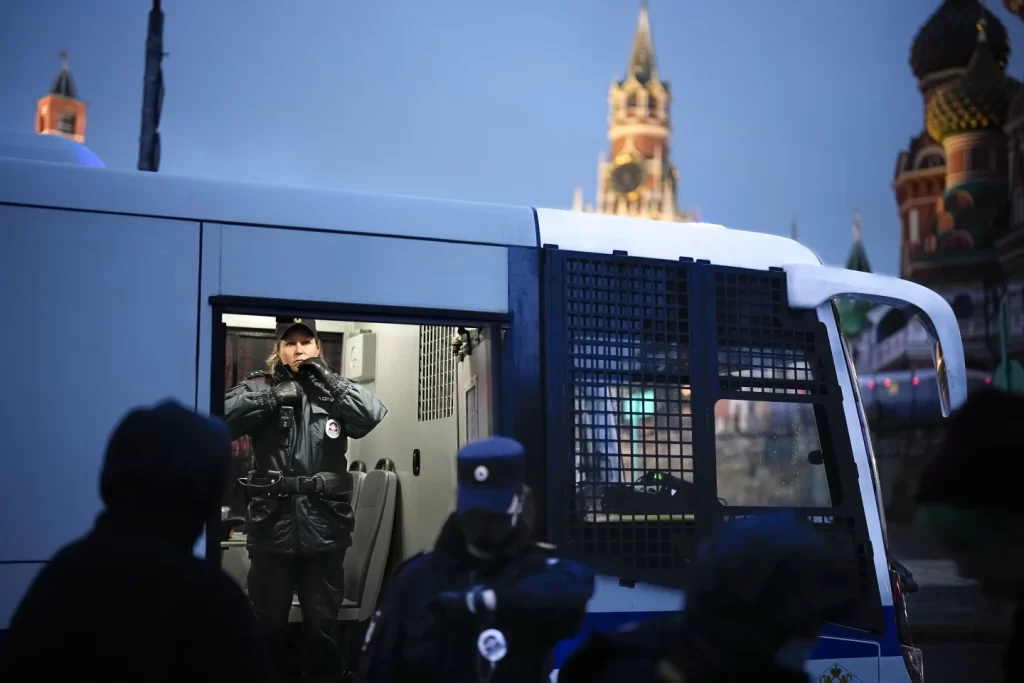
A timeline of restrictive laws that authorities have used to crack down on dissent in Putin’s Russia

TALLINN, Estonia— As part of Russian President Vladimir Putin’s ever-increasing clampdown on dissent, authorities in recent years have adopted a slew of laws restricting fundamental human rights, including freedom of speech and assembly, as well as the rights of minorities and religious groups.

These laws have taken aim at “foreign agents” allegedly seeking to exert influence on Russia, members of the LGBTQ+ community, and organizations spreading information critical of the Kremlin or contrary to official narratives, especially regarding Russia’s invasion of Ukraine.

They have helped the Kremlin to maintain tight control over the country’s political system, and as a result, Putin is expected to extend his rule virtually unchallenged in a presidential election this month. Human rights advocates worry that more repressions are ahead.

July 2012 — Russian authorities adopted a law that allows them to label nonprofit and nongovernmental organizations as “foreign agents,” if they receive foreign funding and engage in loosely defined “political activity.” The designation required the organizations to submit detailed reports on their finances to authorities and carried strong negative connotations, which often scared away their sponsors, partners and advertisers.

In the years that followed, the label was also applied to media outlets and individuals, and it has been used primarily to target Kremlin critics, independent news outlets and rights groups. There are currently more than 770 NGOs, news outlets and individuals in the registry of “foreign agents,” and the list is regularly updated with new additions.

June 2013 — Russia adopted a law that stigmatizes gay people and bans giving children any information about homosexuality. The law — which banned “propaganda of nontraditional sexual relations” to minors — resulted in restrictions on books, movies and media, and fueled attacks on LGBTQ+ activists.

December 2013 — Putin signed a law allowing media regulator Roskomnadzor to block websites disseminating calls for protests and other allegedly extremist content with just an order from the Russian Prosecutor General’s office, rather than a court. Scores of websites were blocked in the years that followed, including many critical news outlets, opposition pages and sites run by rights groups.

May 2015 — A law was adopted prohibiting “undesirable organizations” from operating in Russia, with criminal penalties ranging from large fines to eight years in prison. The designation applies to foreign organizations that authorities viewed as threatening Russia’s “constitutional order, defense capability or security,” but in reality it has been used to shut down foreign and Russian NGOs, opposition groups and critical news outlets, including such popular ones as the Dozhd TV channel and the Meduza news site.

As of February 2024, a total of 142 groups were outlawed as “undesirable organizations.” July 2016 — The Kremlin adopted a law that significantly expanded the powers of law enforcement agencies, allowing surveillance and collection of data about citizens under the pretext of fighting terrorism and extremism.

The law introduced a ban on the use of uncertified encryption tools, obliged telecom operators to store calls and messages for three years, and sharply tightened the conduct of religious missionary activities. It has been heavily criticized by freedom of speech advocates.


About Author

Habib Habib

See author's posts

Post navigation

Previous Biden and Trump dominate Super Tuesday races and move closer to a November rematch
Next Global hot streak continues. February, winter, world’s oceans all break high temperature marks

Related Stories

Costa Rica Opens Mega-Prison Embracing Bukele’s Tough-on-Crime Model Across Latin America

Costa Rica Opens Mega-Prison Embracing Bukele’s Tough-on-Crime Model Across Latin America

US Destroys Iran-Affiliated Dhow in Gulf of Oman over Surveillance Accusations

US Destroys Iran-Affiliated Dhow in Gulf of Oman over Surveillance Accusations

Iran Conflict Escalates: Tehran Vows Resistance as Maritime Tensions Rise in the Strait of Hormuz

Iran Conflict Escalates: Tehran Vows Resistance as Maritime Tensions Rise in the Strait of Hormuz

Entertainment

Sally Rooney’s Books Pulled from UK Stores Over Support for Palestine Action 1

Sally Rooney’s Books Pulled from UK Stores Over Support for Palestine Action

Jerry Seinfeld Responds with Dance Amid Pro-Palestine Protester Disruption 2

Jerry Seinfeld Responds with Dance Amid Pro-Palestine Protester Disruption

Ex-Gang Leader Sentenced to 40 Years to Life for Tupac Shakur’s 1996 Murder 3

Ex-Gang Leader Sentenced to 40 Years to Life for Tupac Shakur’s 1996 Murder

Duane ‘Keffe D’ Davis Sentenced to 40 Years in Prison for Tupac Shakur’s 1996 Murder 4

Duane ‘Keffe D’ Davis Sentenced to 40 Years in Prison for Tupac Shakur’s 1996 Murder

Keffe D Sentenced for the Murder of Tupac Shakur: Decades-Long Mystery Finally Solved 5

Keffe D Sentenced for the Murder of Tupac Shakur: Decades-Long Mystery Finally Solved

US Scientist Karl Deisseroth’s Children Erupt in Joy After Nobel Prize Win 6

US Scientist Karl Deisseroth’s Children Erupt in Joy After Nobel Prize Win

Acclaimed Indian Actor Nana Patekar Dies at 75 7

Acclaimed Indian Actor Nana Patekar Dies at 75

Top News

ICE Rejects Government Watchdog’s Recommendation on Body Camera Policy

ICE Rejects Government Watchdog’s Recommendation on Body Camera Policy

Costa Rica Opens Mega-Prison Embracing Bukele’s Tough-on-Crime Model Across Latin America

Costa Rica Opens Mega-Prison Embracing Bukele’s Tough-on-Crime Model Across Latin America

US Destroys Iran-Affiliated Dhow in Gulf of Oman over Surveillance Accusations

US Destroys Iran-Affiliated Dhow in Gulf of Oman over Surveillance Accusations

Iran Conflict Escalates: Tehran Vows Resistance as Maritime Tensions Rise in the Strait of Hormuz

Iran Conflict Escalates: Tehran Vows Resistance as Maritime Tensions Rise in the Strait of Hormuz

  • Home
  • About Us
  • Facebook
  • Twitter
  • Instagram
  • Youtube
  • tiktok
Editor: Nur M Tofader, Office: 250 Park Avenue, 7th Floor, New York, NY 10177 & Tell: 718 893 0002 (Office), 7188441300, +1212 401 6266, e-mail: Info@millenniuamtv24.com, e-mail: Info@millenniuamnews24.com, Copyright © Millennium News 24/7 | DarkNews by AF themes.