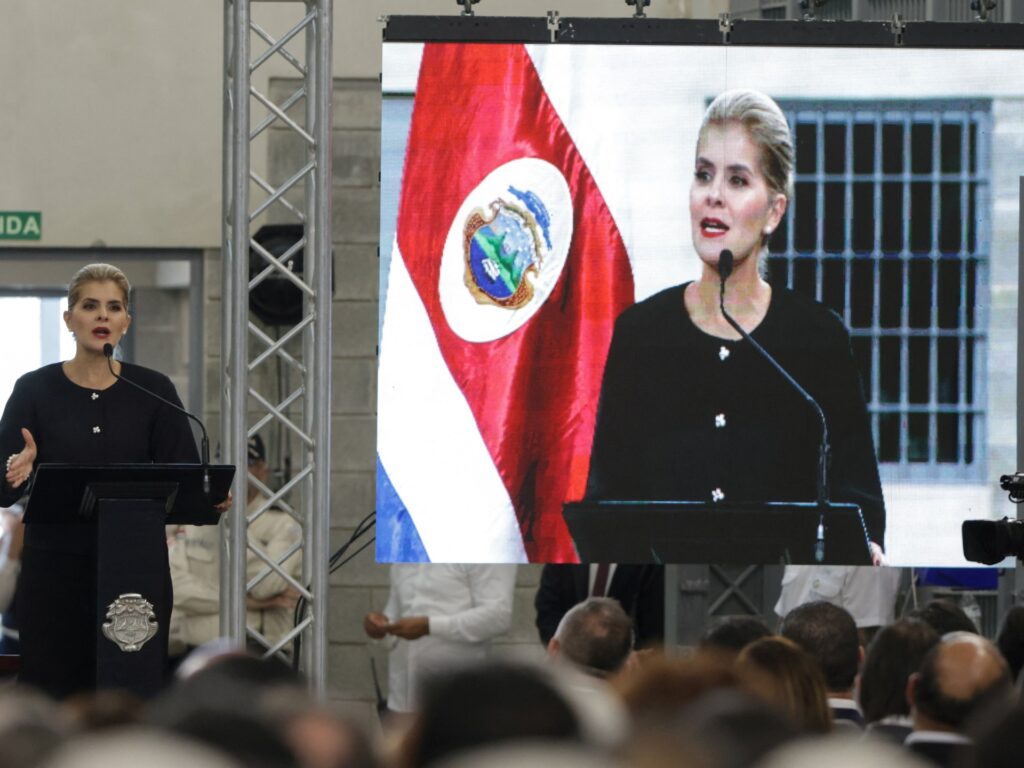
Costa Rica has officially inaugurated a mega-prison, signaling a decisive shift towards a tougher approach on crime, following a trend increasingly seen across Latin America. President Laura Fernandez announced the opening of the facility, emphasizing that this initiative aligns with her government’s commitment to a ‘tough-on-crime model’ inspired by El Salvador’s President Nayib Bukele.
The newly opened mega-prison is one of the largest in the region, designed to house thousands of inmates and facilitate greater control and management of high-risk prisoners. Its establishment comes amid growing concerns about crime rates and gang violence that have long posed challenges to public safety in Costa Rica.
President Fernandez articulated that the government’s strategy centers on strengthening law enforcement capabilities and enhancing prison infrastructure to better isolate and rehabilitate offenders. The mega-prison is equipped with modern security technologies and advanced surveillance systems aimed at preventing escapes and curbing the influence of organized crime within the prison walls.
This approach mirrors policies championed by El Salvador’s Bukele, whose administration has aggressively tackled crime through mass arrests and heightened penalties for gang members. Bukele’s model has inspired other Latin American governments seeking to combat persistent violence and instability in their countries.
The decision to adopt Bukele’s tough stance comes as Costa Rica confronts escalating criminal activity, including drug trafficking and gang-related violence. Authorities believe that upgrading detention facilities and implementing stricter control measures can significantly reduce crime rates and improve public safety.
Critics of the mega-prison and tougher crime policies warn about potential human rights violations and question the long-term effectiveness of mass incarceration. However, supporters argue that modern facilities and decisive actions are necessary to dismantle organized crime networks that have long operated with relative impunity.
Costa Rica’s mega-prison not only represents a physical infrastructure investment but also symbolizes a broader ideological shift in the region’s approach to crime and justice. It reflects the growing trend of prioritizing security and law enforcement over rehabilitation and restorative justice in Latin American criminal policy.
As more countries in Latin America look to El Salvador’s model for inspiration, Costa Rica’s move could signify a regional pivot towards more stringent crime-fighting measures. The mega-prison sets a precedent that may influence prison and crime policies in neighboring nations facing similar security challenges.
The inauguration ceremony included speeches from top government officials and law enforcement leaders, underscoring the facility’s role as a cornerstone of the national security strategy. They highlighted the prison’s capacity to house some of the most dangerous offenders and stressed the importance of collaboration between judicial, police, and correctional systems.
Building the mega-prison also created numerous jobs and boosted local economies, further solidifying community support for the government’s crime reduction agenda. While implementation details continue to unfold, Costa Rica’s embrace of the Bukele model clearly signals a commitment to adopting harsher strategies in the ongoing battle against crime.
Overall, Costa Rica’s decision to open the mega-prison under President Laura Fernandez’s leadership marks a significant development in the region’s security landscape. It highlights the influence of Presidential Nayib Bukele’s governance style beyond El Salvador and underscores the growing appetite among Latin American countries to adopt more robust and uncompromising policies towards crime and public safety.