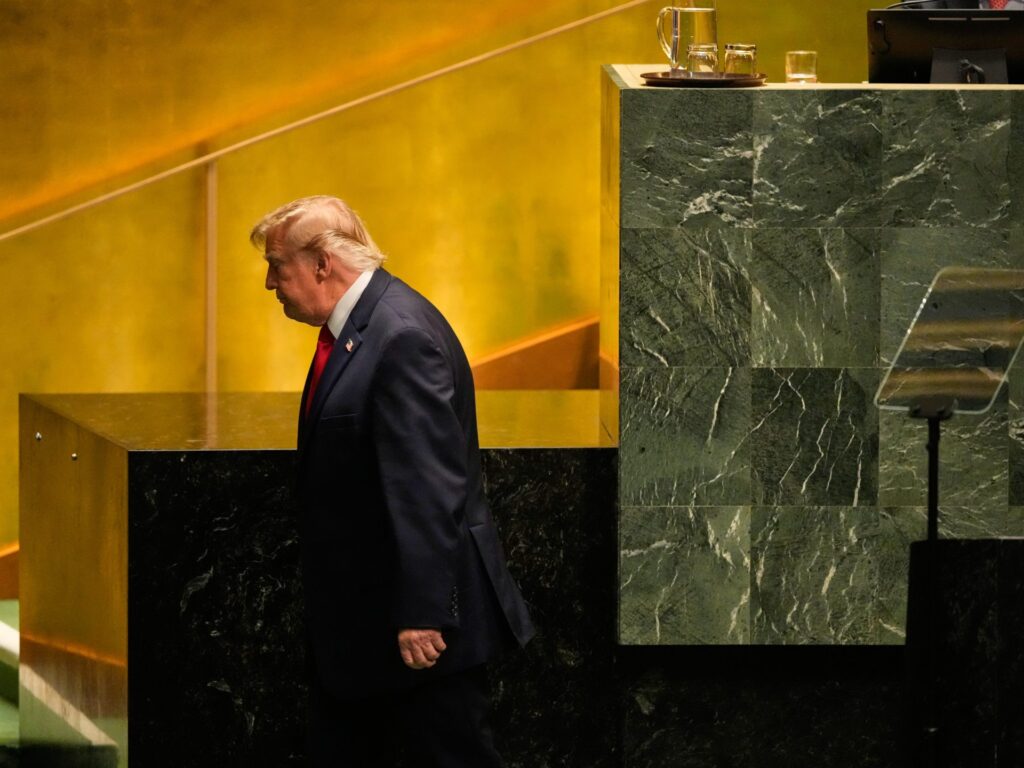
In a significant development at the United Nations General Assembly (UNGA) in New York, the United States and Iran engaged in mediated talks aimed at ending ongoing hostilities and reopening the strategically critical Strait of Hormuz. These discussions are being carefully overseen by UN representatives, reflecting the international community’s keen interest in stabilizing the region.
The Strait of Hormuz, a vital conduit for global oil shipments, has been a flashpoint for tensions, as naval blockades and security threats have disrupted maritime traffic, impacting worldwide energy markets. The recent talks signify a rare diplomatic engagement between the two nations which have had strained relations for decades.
Iran has linked any progress in the negotiations to the lifting of shipping blockades and the unfreezing of its assets. Tehran asserts that these conditions are essential to ensuring mutual trust and creating a conducive environment for peace talks. The Iranian delegation has emphasized that easing economic pressures through asset unfreezing can pave the way for constructive dialogue and eventual resolution of the conflict.
The United States, on the other hand, has expressed willingness to engage but insists on verifiable steps from Iran to address security concerns in the region and other contentious issues. Washington’s approach focuses on safeguarding the free flow of commerce through the Strait and ensuring that Iran’s actions do not threaten regional stability.
Diplomatic sources indicate that the mediated talks are still in the early stages, with both sides cautiously exploring avenues for compromise. The involvement of third-party mediators at the UNGA aims to foster an environment of dialogue and reduce the risk of escalation.
Analysts suggest that the success of these negotiations could have far-reaching implications for Middle East geopolitics and global energy security. Resolution of the conflict and reopening of the Strait would potentially ease oil supply worries and reduce prices, benefiting the international economy.
However, challenges remain, including deep-seated mistrust, political pressures within both countries, and differing strategic objectives. Observers are closely monitoring developments, recognizing that any breakthrough at these talks could mark a turning point in US-Iran relations.
In conclusion, the UNGA mediated negotiations between the US and Iran represent a critical attempt to address longstanding conflict issues and restore stability to a key maritime passage. The international community hopes that these dialogue efforts will lead to tangible outcomes, promoting peace and security in the volatile region.