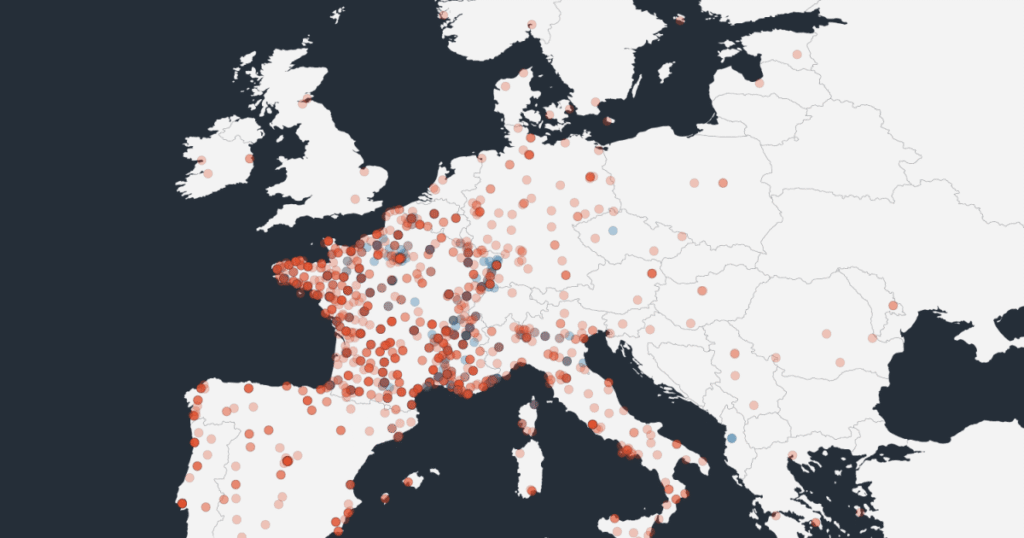
Since mid-September, Europe has witnessed a significant wave of cost-of-living protests, with over 1,700 demonstrations erupting in 31 countries. This widespread unrest is largely driven by soaring living expenses, affecting millions of citizens across the continent. France stands at the forefront of this movement, where initial protests sparked a chain reaction felt deeply across neighboring nations.
The origins of these protests can be traced back to the increasing economic pressures on households, including rising energy costs, inflation, and stagnant wages. In France, the public outcry was particularly intense. Demonstrators organized large-scale marches, strikes, and sit-ins, demanding government intervention to alleviate the financial burdens on ordinary citizens.
France’s influential role in this wave of unrest is evidenced by its early and aggressive actions, which inspired similar movements throughout Europe. Countries such as Spain, Italy, Germany, and the United Kingdom subsequently reported their own mass demonstrations, implicating widespread dissatisfaction with national responses to economic hardships.
Each country’s protests bear unique characteristics shaped by local political, social, and economic contexts. For instance, Spain saw a combination of labor union-led strikes and grassroots activism, while in Germany, protests were marked by a blend of environmental concerns alongside economic grievances.
Mapping this protest wave reveals a pattern of rapid diffusion, highlighting the interconnectedness of European societies and economies. Social media platforms have played a crucial role in mobilizing supporters and spreading protest tactics, effectively shrinking the distance between disparate groups facing similar challenges.
Government responses have varied across Europe, ranging from policy proposals aimed at reducing energy costs to outright bans on demonstrations. In many cases, authorities have been caught off guard by the scale and persistence of the unrest, prompting emergency measures and dialogues with protest leaders.
The sustained activism points to deeper structural issues within European economies, notably the struggle to balance market dynamics with social welfare responsibilities. Experts argue that without comprehensive reforms, such waves of social unrest could recur, potentially destabilizing political landscapes.
Moreover, the cross-border nature of these protests underlines the importance of collaborative European efforts in addressing cost-of-living crises. Joint strategies focusing on energy security, inflation control, and social support mechanisms could mitigate the root causes triggering widespread discontent.
In conclusion, the protest movement originating in France and spreading across Europe exemplifies the powerful role of collective action in responding to economic challenges. As these demonstrations continue, they serve as a potent reminder of the ongoing need for policies that ensure equitable living standards and robust socio-economic protections for all Europeans.