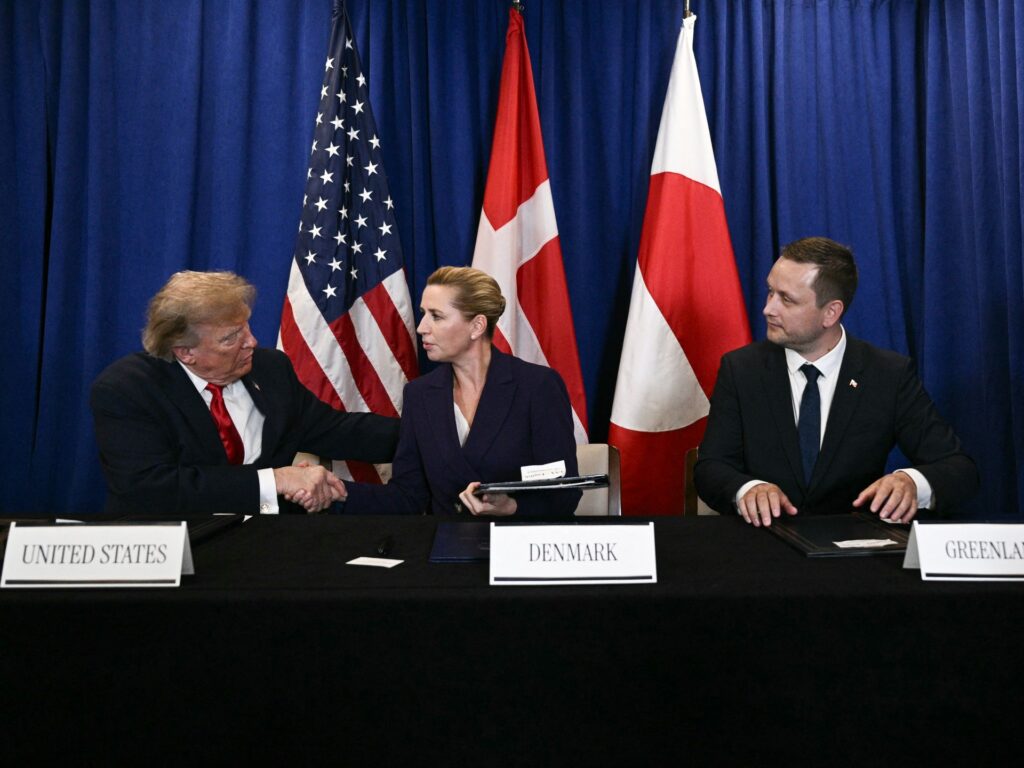
In a significant development that marks the end of a months-long standoff, former U.S. President Donald Trump has signed a landmark Arctic security agreement with Denmark and Greenland. The accord, which has been widely welcomed by NATO and the European Union, is seen as a major step forward in ensuring stability and cooperation in the strategically vital Arctic region.
The background to this new deal includes a tense episode earlier when Trump threatened to seize Greenland, speculating its vast untapped natural resources and strategic importance. This declaration had strained relations between the United States and Denmark, of which Greenland is an autonomous territory. However, diplomacy ultimately won the day, leading to constructive discussions and a formal agreement.
According to official statements, the new agreement will enhance security collaboration and establish protocols for joint military exercises, surveillance, and emergency response. The deal underscores the commitment of the United States, Denmark, and Greenland to maintaining peace in the Arctic, especially amid increasing interest from other global powers such as Russia and China.
NATO’s Secretary-General praised the deal as “tremendous,” emphasizing that it strengthens the alliance’s northern flank. Similarly, the European Union expressed support for the accord, highlighting its potential to promote environmental protection and sustainable development in the fragile Arctic ecosystem.
Experts view this agreement as a timely response to the evolving geopolitical landscape in the Arctic, where melting ice is opening new shipping routes and access to natural resources. The United States’ engagement alongside Denmark and Greenland consolidates a strategic partnership aimed at balancing regional power dynamics and ensuring that the Arctic remains a zone of peace and cooperation.
Greenlandic officials have welcomed the deal, seeing it as a positive step towards greater international recognition and security. This accord also aligns with Greenland’s aspirations for increased autonomy and influence on the world stage.
This Arctic security deal represents a breakthrough in transatlantic relations after months of diplomatic uncertainty. It solidifies a cooperative approach to addressing the challenges and opportunities presented by one of the Earth’s last frontiers. Moving forward, continued collaboration will be essential to uphold the stability and environmental integrity of the Arctic region.
In summary, the signing of the Arctic security agreement between the United States, Denmark, and Greenland marks a new chapter in international relations. It resolves previous tensions and sets the stage for cooperative security efforts, benefiting NATO members and their partners. As global powers watch closely, this accord is a clear message of unity and shared responsibility for the Arctic’s future.