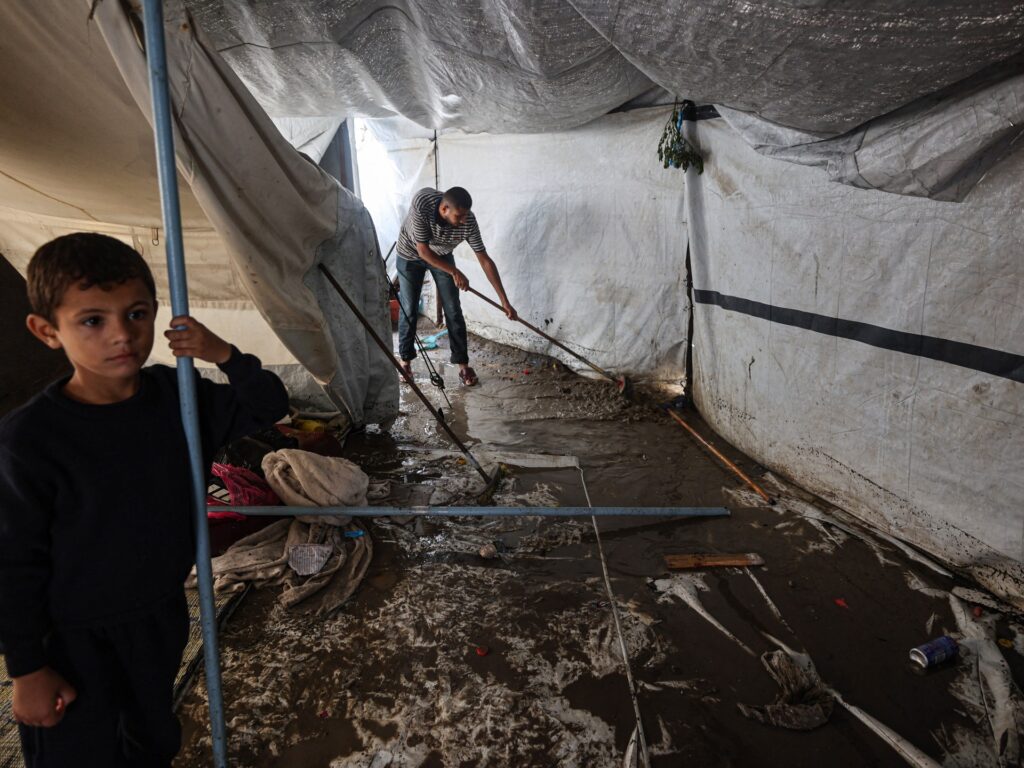
Gaza Strip has been severely impacted by recent heavy rains leading to catastrophic flooding. The Civil Defence authorities have reported receiving over 1,500 emergency calls over the past days, underscoring the emergency faced by the local population. The floods have resulted in widespread destruction, with thousands of tents and makeshift shelters completely destroyed, leaving tens of thousands of people without safe housing.
The heavy rains, unusual for the region’s typically dry climate, have overwhelmed infrastructure and emergency services, complicating rescue and relief operations. The immediate impact has been felt most acutely in vulnerable refugee camps where many residents rely on tents and temporary shelters.
Civil Defence teams are working tirelessly in difficult conditions to respond to calls for help, conduct evacuations, and provide emergency assistance to affected families. Authorities and humanitarian organizations are coordinating to deliver essential aid, including food, clean water, and medical supplies, to those displaced by the floods.
Local health officials have raised concerns about the risk of waterborne diseases following the floodwaters contaminating local water supplies. Efforts are underway to distribute water purification tablets and increase medical outreach.
The international community has been called upon to provide urgent support to mitigate the humanitarian crisis unfolding in Gaza. With winter conditions expected to continue, experts warn that conditions could worsen without immediate intervention.
The flooding has compounded existing challenges faced by the Gaza Strip, including political instability, economic hardships, and limited access to resources. Reconstruction and recovery efforts are expected to take months, with the need for durable, weather-resistant housing becoming a pressing priority.
This disaster highlights the vulnerability of Gaza’s population to climate-related events and underscores the need for enhanced preparedness and resilient infrastructure to withstand similar events in the future. Governments, non-governmental organizations, and international bodies are mobilizing resources to address the critical needs of the displaced population.
As rescue teams continue their work, the focus remains on providing immediate relief and planning for long-term solutions to protect residents from such disasters. Affected families are encouraged to seek shelter in designated safe zones and authorities are maintaining continuous updates to keep the public informed.
Overall, the flooding in Gaza serves as a stark reminder of the ongoing humanitarian challenges in the region and the urgent need for comprehensive support to aid recovery and prevent further suffering.