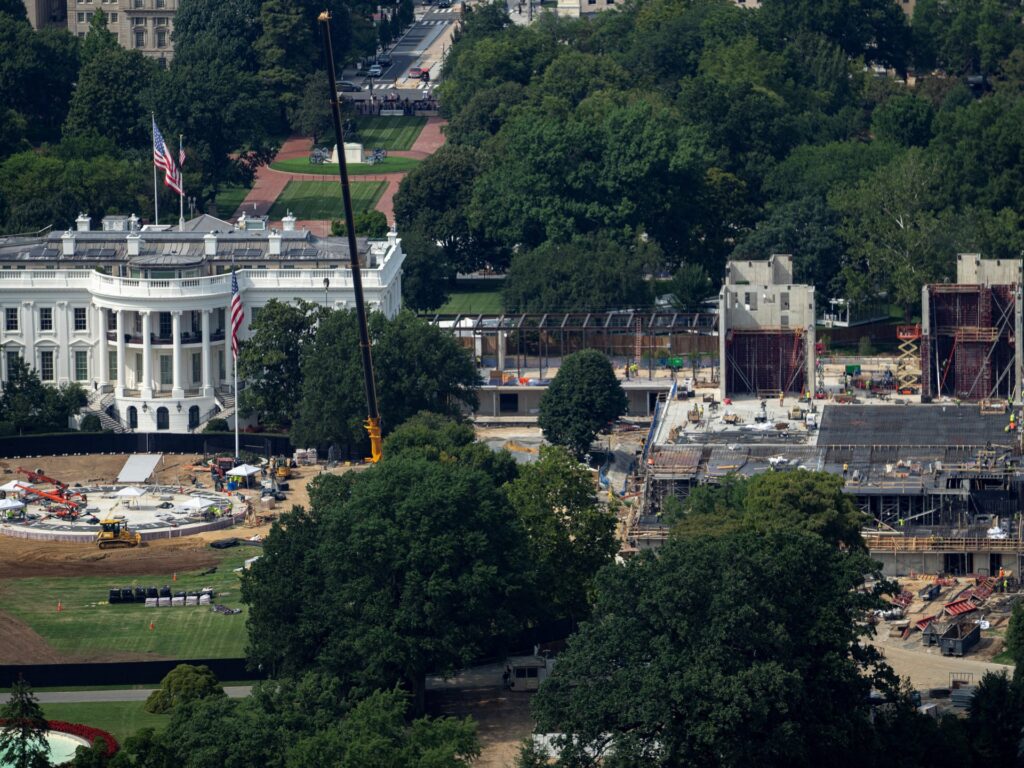
The US Supreme Court has granted a temporary reprieve, allowing the continuation of the Trump administration’s ambitious $400 million White House ballroom project. This decision comes amid ongoing debates over the project’s necessity and its implications.
The Trump administration has defended the project, emphasizing its importance for national security purposes. Officials argue that the new ballroom will serve as a crucial venue for high-level government functions and international diplomatic events, enhancing the operational capabilities of the White House.
Despite the Supreme Court’s decision, the project has faced criticism from various quarters. Opponents question the justification of such a sizable expenditure on what they describe as a luxury addition. Concerns have been raised about the budget, transparency, and potential misuse of public funds.
The $400 million cost is substantial, drawing attention to the administration’s prioritization of this initiative during a period of significant national and global challenges. Supporters, however, believe that the investment will yield long-term benefits, facilitating important gatherings that contribute to national security and governance.
The Supreme Court’s temporary allowance means construction and related activities can proceed while legal and political discussions continue. This interim decision does not represent a final ruling on the project’s overall legitimacy or future.
In recent months, the Trump administration has repeatedly underscored the ballroom’s strategic value. Officials have highlighted its potential role during national emergencies and as a secure site for critical meetings and briefings.
The ballroom is envisioned not only as an event space but also as a fortified extension of the White House complex. Enhanced security measures and advanced infrastructure integration are key components of the design plans.
Critics, including advocacy groups and some members of Congress, have vowed to keep pushing for a reevaluation of the project. They cite the need for fiscal responsibility and caution against unnecessary expansion of governmental facilities.
The Supreme Court’s involvement underscores the complexity of the issue, blending legal challenges with political and public policy considerations. The court’s decision to allow continued progress temporarily reflects a balance between maintaining operational continuity and addressing legal questions.
This development leaves the door open for further judicial scrutiny and potential legislative action. Observers anticipate ongoing debates as more details and impacts of the ballroom project come to light.
As the project moves forward under the court’s current stance, public attention remains keenly fixed on the evolving story. The White House ballroom project represents a unique intersection of governance, security, and national priorities, capturing broad interest across the nation.
Looking ahead, the administration will likely need to provide additional justification and transparency to secure broader support. Meanwhile, legal and political stakeholders prepare for what could be an extended contest over the project’s future.
The Supreme Court’s decision is a significant milestone in this saga, marking a pivotal moment that balances immediate project needs with ongoing oversight.
In summary, the US Supreme Court’s allowance for the Trump administration’s $400 million White House ballroom project to continue is a temporary but important decision. It highlights the project’s strategic intentions while acknowledging the contested nature of its implementation and funding. The outcome of this high-profile issue remains to be seen, as various parties continue to weigh in on the project’s long-term impact on national policy and security.