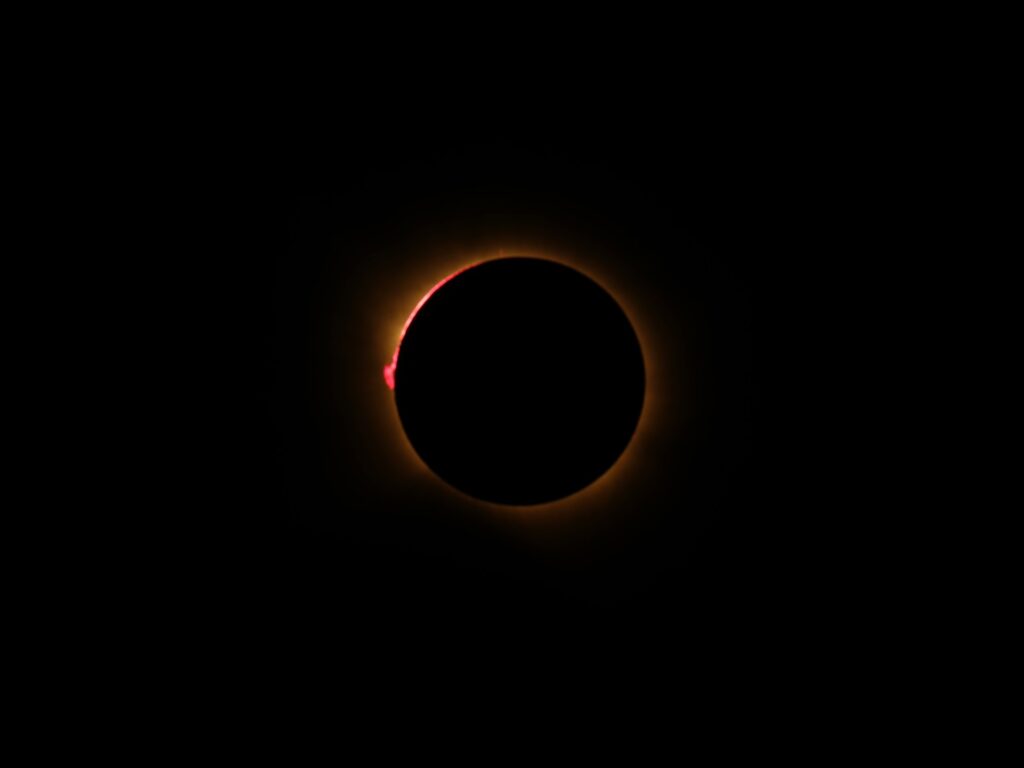
On a rare and captivating astronomical event, Iceland and Spain were plunged into darkness during a total solar eclipse. This celestial phenomenon occurred as the Moon passed directly between the Earth and the Sun, temporarily obscuring the Sun’s light and casting a shadow across the affected regions.
Thousands of astronomy enthusiasts, tourists, and locals gathered in various locations across both countries to witness this spectacular sight. In Iceland, known for its dramatic landscapes and clear skies, the eclipse provided a breathtaking backdrop against glaciers and volcanic terrain.
In Spain, cities and rural areas alike experienced the eerie twilight that accompanies totality. Special viewing events were organized, complete with educational talks and safe eclipse glasses, ensuring that observers could enjoy the event without risking eye damage.
The total solar eclipse lasted for several minutes at its peak, during which the day turned into night and stars became visible in the darkened sky. Such events offer unique opportunities for scientific observation, as well as inspiring awe and curiosity among the public.
Experts highlighted the importance of safety when viewing solar eclipses, reminding people to use appropriate protective eyewear. Regular sunglasses are not sufficient protection against the Sun’s intense rays.
The event also ignited interest in astronomy and space science, with many attendees expressing a renewed fascination with the universe. Educational institutions used the occasion to engage students in related topics.
Solar eclipses are relatively rare occurrences that happen when the alignment of the Sun, Moon, and Earth is just right. The next total solar eclipse visible in this region is eagerly anticipated by both scientists and the public alike.
Overall, the total solar eclipse offered a moment of wonder and connection, uniting people in Iceland and Spain under a shared experience of natural beauty and cosmic alignment.