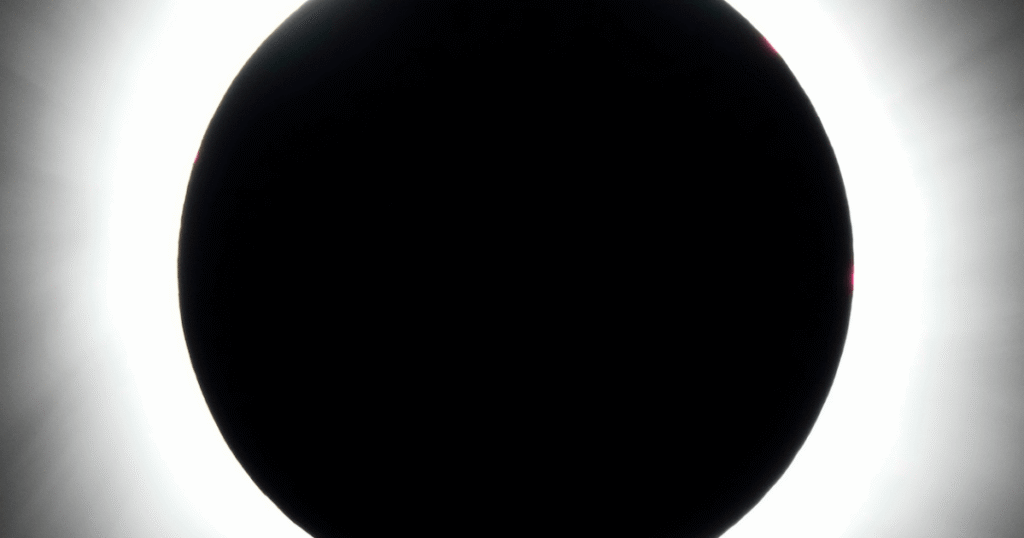
Europe is on the verge of witnessing a celestial event that hasn’t graced its skies for nearly three decades — the first total solar eclipse in 27 years. This rare astronomical phenomenon is generating a great deal of excitement and anticipation among astronomers, skywatchers, and the general public across the continent.
A solar eclipse occurs when the moon passes directly between the Earth and the Sun, casting a shadow that partially or fully blocks the Sun’s light to certain parts of the Earth. A total solar eclipse, specifically, is when the Moon completely covers the Sun, turning day into night for a brief period and revealing the Sun’s corona.
The upcoming total solar eclipse will traverse parts of Europe, offering a spectacular sight for millions. This event is significant not just for its rarity but also for the scientific opportunities it presents. Researchers will be studying the Sun’s corona – the outer atmosphere – which is typically obscured by the bright solar surface.
Cities and countries in the eclipse path are preparing extensively to enable safe viewing of the eclipse. Special glasses, telescopes with solar filters, and public viewing events are being organized. Schools and astronomy clubs are planning educational programs to teach people about this extraordinary event.
The last total solar eclipse visible in Europe occurred 27 years ago, making this upcoming event a generational experience. Weather conditions will play a crucial role in the visibility of the eclipse, and meteorologists are closely monitoring forecasts to provide guidance to eclipse watchers.
Beyond the scientific and educational aspects, the eclipse is also expected to have significant cultural and social impacts. Festivals and public gatherings celebrating the eclipse are being planned in various parts of Europe, fostering a sense of communal awe and curiosity.
Experts emphasize the importance of using proper eye protection while viewing the eclipse to prevent serious eye damage. As interest surges, governments and health organizations are disseminating awareness about safe practices.
The upcoming total solar eclipse is not just a celestial spectacle but also a reminder of our planet’s dynamic relationship with the cosmos. For many Europeans, it represents a rare opportunity to look skyward in wonder and reflect on the vastness of the universe. As the countdown begins, anticipation is building for an event that promises to be both beautiful and enlightening.